
Ghana's informal economy trap: 92% of businesses operate outside formal system, threatening job creation
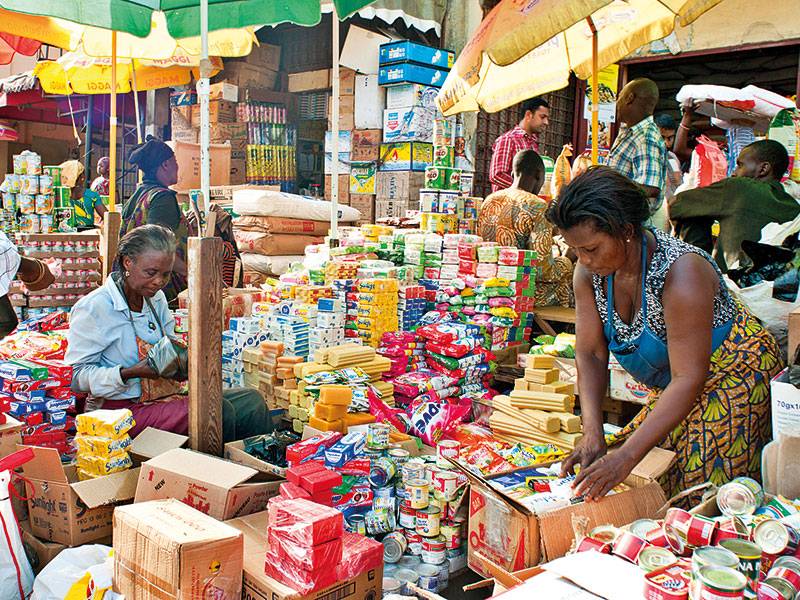

Ghana faces a critical structural challenge in its economy: despite a near tripling of business establishments over the past decade, the vast majority operate outside the formal system, raising alarm bells about job creation and sustainable growth. According to the Ghana Statistical Service's inaugural Integrated Business Establishment Survey, released during the launch of 'Ghana in Numbers 2025' in Accra, only 7.7% of Ghana's estimated 2.64 million businesses are formally registered—meaning 92% operate in the shadows of the informal economy.
Government Statistician Dr Alhassan Iddrisu presented findings that paint a troubling picture: whilst business establishments nearly tripled between 2014 and 2024, the workforce within those businesses merely doubled. "Businesses are multiplying faster than the jobs inside them," Dr Iddrisu warned, highlighting a fundamental mismatch between entrepreneurial growth and employment generation that threatens to undermine the nation's economic progress.
The youth employment crisis
The data reveals an especially acute problem for Ghana's young people. Approximately 12 million Ghanaians aged 15–35 represent a potential demographic dividend, yet nearly one in three jobseekers aged 15–24 cannot secure employment. More alarming still, close to 2 million young people are neither working nor in education or training—with more than 60% of this group being young women. This represents not only a loss of human potential but also a social and economic risk if left unaddressed.
Whilst official unemployment figures have improved, falling from 14.6% in 2023 to 12.8% in 2025, more than 70% of all jobs remain informal. These positions typically lack security, benefits, pension contributions and workplace protections—conditions that leave workers vulnerable and unable to build stable livelihoods.
Why this matters for Ghana
The informal economy's dominance represents both a symptom and a constraint on Ghana's development. Informal businesses contribute significantly to GDP and employment but remain largely invisible to tax systems, regulatory frameworks and official statistics. This invisibility prevents government from collecting adequate revenue for public services whilst denying small entrepreneurs access to credit, formalised supply chains and growth capital they need to scale operations.
Dr Iddrisu emphasised that Ghana's ability to harness its demographic advantage—what economists call the "youth dividend"—depends on urgent policy action. "Ghana's youth window is open, but it is closing," he cautioned. "Our choices on schooling, skills and jobs in the next 10 years will decide whether it becomes a dividend or a burden." The implicit warning is clear: without intervention, the current trajectory risks converting economic potential into unemployment, underemployment and social pressure.
The data also reveals contradictions within Ghana's economic recovery. Inflation has plummeted dramatically from 54.1% in December 2022 to 5.4% in December 2025—a genuine macroeconomic achievement. Yet food insecurity has worsened, rising from 37.7% in 2024 to 39.8% in 2025, affecting approximately 13 million Ghanaians. Dr Iddrisu acknowledged bluntly: "The progress is real. But it is not shared evenly."
Cross-border trade and formalisation challenges
The report also highlights GH¢38.4 billion in informal cross-border trade with Togo, Burkina Faso and Côte d'Ivoire—a figure that reveals substantial economic activity flying beneath the radar of official trade statistics. These flows represent both opportunity and challenge: whilst they demonstrate entrepreneurial dynamism and regional integration, they also underscore how much economic activity escapes formal measurement and taxation.
Dr Iddrisu called for deliberate policies to support formalisation, stating that "helping small firms grow and formalise deserves serious attention." The GSS has committed to translating these statistics into action, emphasising that evidence-based policymaking at national and district levels is essential to turning the data into improved outcomes for Ghanaian workers and enterprises.
Source: MyJoyOnline




Comments (0)
Be the first to comment.