
MIIF and Forestry Commission Join Forces to Restore 50 Hectares of Forest in Sekyere Krobo


The Minerals Income Investment Fund (MIIF) and Ghana's Forestry Commission have partnered to restore 50 hectares of degraded forest land in Sekyere Krobo, in what marks a significant step towards reversing environmental damage in one of the country's mining-affected regions. The project was commissioned on 29th October 2026 and forms a central pillar of MIIF's Environmental, Social and Governance (ESG) Biodiversity Reforestation Project.
What the project involves
The reforestation initiative is designed to rehabilitate forest cover that has been lost or degraded, with a specific focus on areas surrounding Ghana's mining zones. By targeting 50 hectares in Sekyere Krobo, the project aims to bring back native vegetation, restore ecological balance, and provide habitats for wildlife that have been displaced by industrial activity over the years.
The collaboration between MIIF and the Forestry Commission brings together financial firepower and technical expertise. The Forestry Commission, as the country's lead agency for forest management and conservation, will provide the on-the-ground knowledge and oversight needed to ensure that the reforestation effort is carried out sustainably and effectively. MIIF, which manages Ghana's mineral royalty revenues, contributes funding and strategic direction through its ESG framework.
ESG principles — covering environmental responsibility, social accountability and sound governance — have become increasingly important benchmarks for investment funds worldwide. MIIF's adoption of these standards signals a growing recognition that the revenues generated from Ghana's natural resources must be reinvested in ways that protect, rather than further deplete, the environment.
Why it matters for Ghana
Ghana's forest cover has declined significantly over recent decades, driven by a combination of illegal logging, agricultural expansion and, critically, small- and large-scale mining activities. The Ashanti and forest belt regions have been particularly affected, with galamsey — illegal artisanal mining — causing widespread destruction to water bodies and forest ecosystems alike.
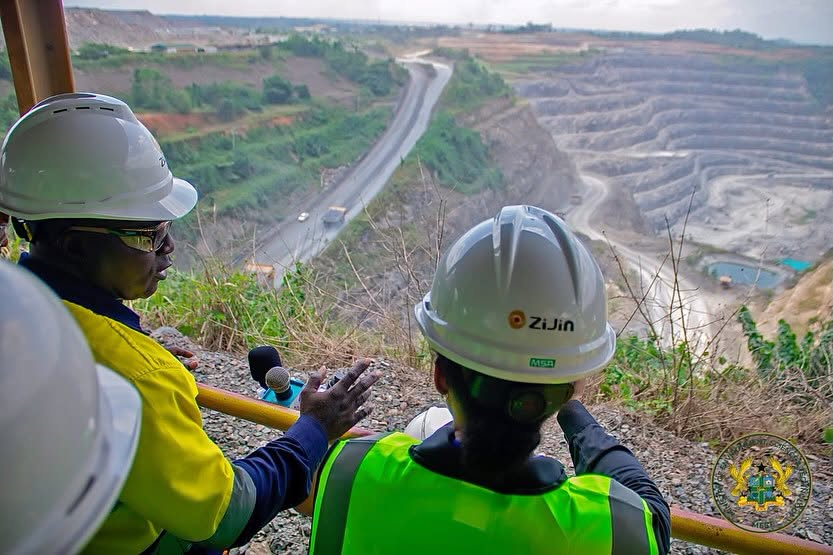
Sekyere Krobo, located in the Ashanti Region, sits within an area that has experienced considerable environmental pressure from mining activities. Restoring 50 hectares of forest there is therefore not merely a symbolic gesture — it addresses a real and urgent ecological need in a community that has lived with the consequences of resource extraction.
Beyond the environmental benefits, reforestation projects of this nature carry significant socio-economic value for local communities. Restored forests help regulate water cycles, reduce soil erosion and support the livelihoods of farmers who depend on healthy ecosystems. In the longer term, they also contribute to Ghana's commitments under international climate agreements, including its nationally determined contributions to reducing carbon emissions.
A broader push for responsible mining governance
This initiative reflects a broader shift in how Ghana is approaching the governance of its mineral wealth. Rather than treating environmental restoration as an afterthought, institutions like MIIF are increasingly embedding sustainability into their core mandates. The ESG Biodiversity Reforestation Project is not a standalone effort — it represents a commitment to ongoing environmental stewardship across Ghana's mining regions.
For communities near mines who have long borne the environmental costs of extraction with little to show for it, projects like this offer a measure of accountability. They also demonstrate that the institutions managing Ghana's mineral income are beginning to take seriously their responsibility to future generations.
- The project is part of MIIF's wider ESG Biodiversity Reforestation framework targeting mining regions.
- Ghana's forest cover has faced severe pressure from galamsey and industrial mining activity.
- Reforested land supports water regulation, soil health and local farmer livelihoods.
Source: 3News




Comments (0)
Be the first to comment.