Mahama demands health sovereignty: Ghana leads push for Global South control over own health systems
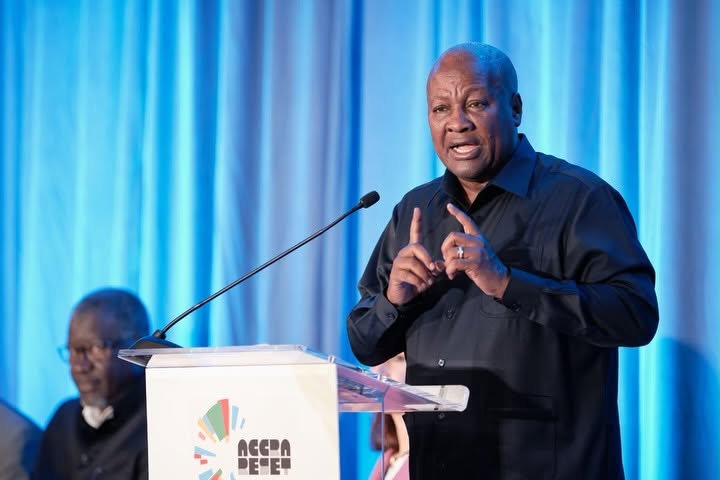
President John Dramani Mahama has issued a forceful call for transforming how developing nations approach health systems, arguing that countries in the Global South cannot genuinely own their health infrastructure without direct control over financing, resources and manufacturing capacity. Speaking in New York on Monday at the 81st United Nations General Assembly, Mahama launched the High-Level Panel Report of the Accra Reset, titled "A Sovereign Future for Health," which outlines a radical reimagining of global health partnerships.
The initiative represents a departure from decades of development models in which African and other developing nations have relied heavily on external funding and international decision-making for critical health programmes. Mahama used striking language to describe the current system, saying developing countries were "handed a broken cauldron and asked to own a soup cooked entirely in someone else's kitchen."
Ghana's health sovereignty roadmap
The Accra Reset framework proposes a managed transition toward self-sufficiency rather than an abrupt severance of international partnerships. Central to Ghana's approach will be strengthening fiscal management, combating corruption and building local pharmaceutical production capacity. Mahama emphasised that sovereignty demands reciprocal accountability—countries claiming control over their health systems must demonstrate rigorous domestic governance.
Specific initiatives underway include Mother Africa and Business United for Mothers, Babies and Youth (BUMBY), targeted at reducing the persistently high maternal mortality rates across sub-Saharan Africa. The government aims to enable Ghanaian pharmaceutical companies to manufacture essential medicines locally, reducing dependence on external supplies and expertise.
Why health sovereignty matters for Ghana
Ghana's position on this issue carries particular weight at the global level. As a relatively stable democracy with a functioning health system, Ghana can credibly advocate for restructuring international health architecture while demonstrating the domestic accountability required to make sovereignty work. The Accra Reset addresses a genuine challenge facing African nations: donor-dependent health systems often reflect the priorities of external funders rather than local populations' needs.
For Ghanaians, this agenda has immediate implications. Strengthening local pharmaceutical manufacturing could create jobs and reduce medicine costs. Building regional health capabilities means investing in African institutions rather than exporting expertise and revenue to international bodies. Improved maternal health outcomes, particularly in rural areas, depend partly on systems designed by and answerable to Ghanaians rather than international donors.
The framework proposes establishing country-led health compacts within twelve months and independent follow-up mechanisms within six months. It calls for stronger regional institutions, coordinated procurement systems and regional health manufacturing networks—infrastructure that would need Ghana's active participation and investment.
The broader vision for African development
The High-Level Panel Report reflects growing consensus among African leaders that the post-colonial model of development assistance must evolve. Rather than rejecting international cooperation, the Accra Reset proposes rebalancing it—external support should protect essential services during transition periods whilst nations build sustainable, locally-driven capabilities.
This approach addresses three fundamental principles: ownership with genuine control over resources and production; cooperation based on equal partnerships and human dignity; and domestic accountability ensuring public resources serve citizens. The framework acknowledges that sovereignty without accountability is meaningless, but control without sovereignty is mere dependency.
Ghana's leadership in articulating and implementing this vision positions the nation as a catalyst for broader African health system transformation. Success will depend on sustained investment in local capacity, rigorous governance and regional coordination—challenges that extend beyond any single nation's borders.
Source: MyJoyOnline


-800x450.webp)
Comments (0)
Be the first to comment.