
Madina's Sanitation Crisis and Pedestrian Chaos: Residents Demand Leadership and Accountability
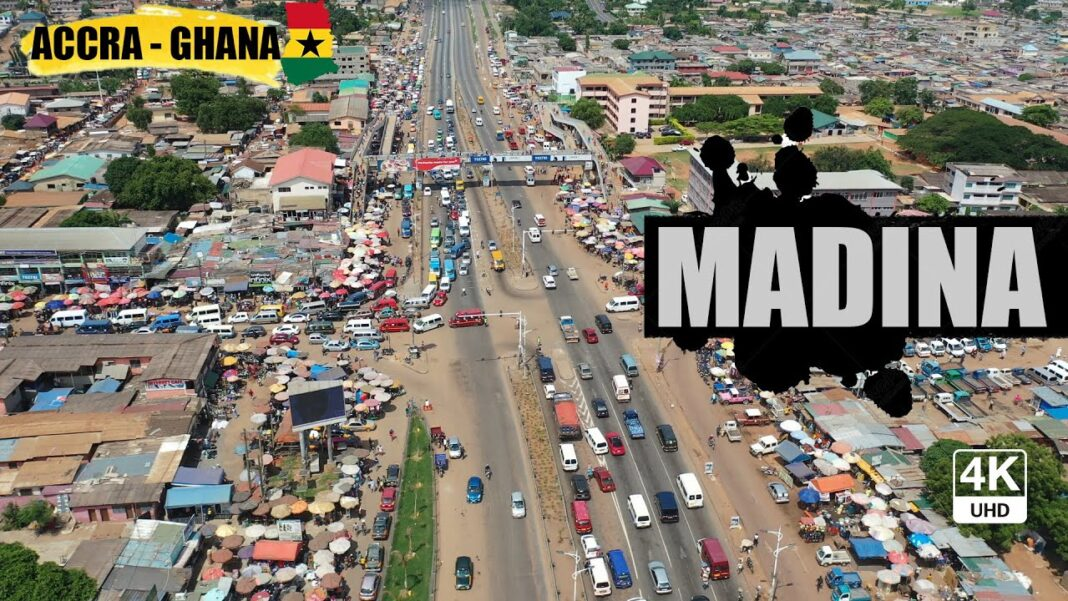

Concerns are mounting among residents and observers in Madina, one of Accra's busiest urban communities, over what many describe as a growing culture of indiscipline along the Madina Zongo Junction stretch of the Madina-Adenta main road. Two specific issues — indiscriminate refuse dumping and the deliberate avoidance of a pedestrian overpass — have come to the fore, raising serious questions about the effectiveness of local governance and law enforcement in the area.
Refuse Piling Up While Authorities Look On
At least ten heaps of refuse have been identified scattered along the roadside stretch, deposited by market traders and some residents who have effectively converted a major public road into an open dumping site. What has frustrated many observers is not just the dumping itself, but the response to it: waste management company Zoomlion reportedly collects the refuse each morning, an arrangement that, rather than discouraging the behaviour, appears to have normalised it.
Critics argue that the approach sends entirely the wrong message. If residents know their illegally dumped waste will simply be collected without consequence, there is little incentive to change. The call from concerned community members is clear — designated refuse disposal sites must be provided for traders and residents in the area, and those caught dumping indiscriminately on roadsides must face sanctions under Ghana's existing sanitation laws.
The situation poses real public health risks. Rotting refuse along busy roads attracts pests, contaminates the surrounding environment and contributes to the spread of disease — particularly during the rainy season when floodwaters can carry waste into drains and homes.
A Pedestrian Bridge Built, Then Ignored
The second concern is perhaps even more troubling given its direct link to human safety. Residents of Madina previously staged protests — including tyre-burning demonstrations — to demand a solution to dangerous road-crossing along the stretch. Authorities responded by constructing a pedestrian overpass. Yet, despite this intervention, many pedestrians continue to cross dangerously, jumping over concrete barriers that separate opposing lanes of traffic.
More alarming still, wire mesh installed specifically to prevent such crossings has reportedly been deliberately cut or damaged, making it easier for people to bypass the bridge entirely. Public infrastructure, provided at significant cost and in direct response to community demands, is being wilfully destroyed by some of the very people it was built to protect.
Residents and commentators are asking a pointed question: must authorities wait for a fatality before enforcing the proper use of this infrastructure?
Why It Matters for Ghana
Madina is far from unique in facing these challenges. Across Ghana's urban centres — from Kumasi's Kejetia area to Tema's market zones — the tension between providing infrastructure and ensuring it is properly used remains a persistent governance problem. The Madina situation is a sharp reminder that development cannot be measured in construction alone. Roads, bridges and sanitation facilities only deliver value when people use them correctly and when authorities enforce the rules that govern their use.
Ghana has sanitation laws and by-laws at the municipal level that empower local assemblies to act against illegal dumping and the destruction of public property. The Madina Municipal Assembly, the Member of Parliament for the area, and the Ghana Police Service all have roles to play. Residents are calling for a coordinated enforcement exercise involving these bodies, backed by consistent public education campaigns to shift behaviour over the long term.
Some have also suggested that a temporary, well-structured operation involving security personnel could help restore order — though the consensus is that sustained law enforcement and community accountability, rather than one-off crackdowns, are what will bring lasting change.
Madina's residents deserve a clean, safe and functional environment. The infrastructure is there. What is urgently needed now is the political will and institutional commitment to ensure it serves the purpose for which it was built. Local leaders — elected and appointed — are being put on notice: the community is watching, and it expects results.
Source: MyJoyOnline

Comments (0)
Be the first to comment.