Inside Africa's Hidden Battle Against Polio: How Community Health Workers Are Closing the Gap
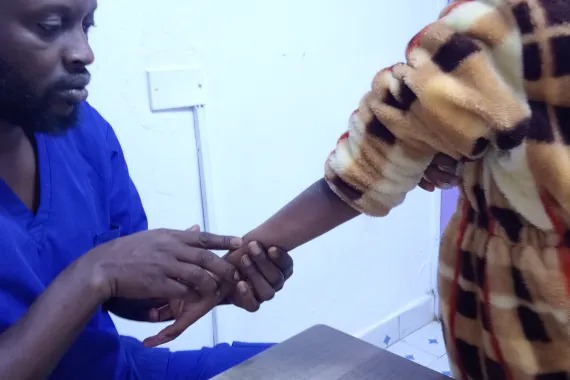
In the dusty expanses of northern Kenya, community health workers are fighting a battle against polio that rarely makes headlines. While wealthy nations have nearly eradicated the disease, pockets of Africa remain vulnerable—not because of vaccine failure, but because the virus hides in places formal health systems cannot easily reach.
Eroi Lemarkat's job is to find it before it spreads. On his motorbike, he chases rumours across remote settlements and nomadic camps, searching for children with sudden paralysis. For Lemarkat and thousands of volunteers like him across Kenya's high-risk counties such as Turkana and Samburu, every report could signal an outbreak that demands an immediate response.
A Two-Pronged Surveillance System
Kenya's polio detection strategy relies on two very different approaches. In Nairobi and other urban centres, health officials regularly test wastewater for traces of poliovirus, often catching the disease before any child falls ill. This method has proven remarkably effective where modern sewage infrastructure exists.
But in Kenya's sparsely populated north, there are no sewers to sample. Instead, the Ministry of Health depends entirely on community volunteers who investigate reports of acute flaccid paralysis—the telltale sign that polio may be circulating. These workers collect stool samples within a critical 14-day window after paralysis begins. Miss that window, and the opportunity to confirm the virus vanishes.
According to Dr Galm Glelo, the Ministry of Health's national point person for polio surveillance, this ground-level intelligence is invaluable. "The information gathered by community health volunteers in high-risk counties allows the ministry to respond quickly with targeted interventions," he explained. Without these volunteers, entire clusters of cases could go undetected.
Why This Matters for Ghana and West Africa
Ghana, like much of West Africa, declared polio-free status in 2014, but the disease remains endemic in parts of Africa. Kenya's experience demonstrates a critical lesson: surveillance systems that depend only on formal health facilities will miss cases in hard-to-reach communities. This is directly relevant to Ghana and other ECOWAS nations, many of which share similar challenges with nomadic pastoralist populations, cross-border movement, and limited health infrastructure in rural areas.
If polio were to re-emerge, it would likely surface first in exactly these types of communities—through informal networks and word-of-mouth, not through hospital admissions. Countries across the region must invest in community-based surveillance systems now, while the virus remains absent, rather than scramble to build them during an outbreak.
Additionally, the cross-border dimension highlighted by Kenya's experience is crucial for West African health authorities. Families moving between Ghana, Côte d'Ivoire, Burkina Faso, and other neighbours create invisible pathways for disease transmission that transcend official healthcare jurisdictions. Dr Emmanuel Okunga, who heads disease surveillance at Kenya's Ministry of Health, notes that "nomadic pastoralist communities constantly move back and forth across international borders in search of water and pasture—they are completely oblivious to regional healthcare jurisdictions."
Trust as a Tool
Lemarkat's work reveals another dimension often overlooked in disease surveillance: trust. Parents in remote communities may fear outsiders, distrust medical procedures, or be unwilling to allow stool samples to be taken from their children. After more than five years of patient relationship-building, Lemarkat understands that a single misstep can undo months of work.
"If a volunteer fails to handle these conversations with absolute respect and care, a family might simply pack up their shelter and vanish into the bush before a sample can be collected," he said. That lost opportunity could leave a potential outbreak unmapped and uncontained.
For Ghana's health authorities, this underscores the need to recruit and train community health workers from within the communities they serve, individuals who speak local languages and understand cultural sensitivities around health interventions. Top-down surveillance systems fail without this human element.
Kenya's experience also highlights the importance of cross-border coordination. Dr Pius Mutuku of the Ministry of Health's Public Health Emergency Operations Centre emphasises that "teams on both sides of the international border must move in perfect tandem to ensure that no migratory child slips through the cracks undetected." A child can carry polio across a border in a matter of hours; detection and response must be equally swift.
Source: The Ghana Report
Comments (0)
Be the first to comment.