
GIS Warns Street Begging Funds Terrorism — Here Is What Ghanaians Need To Know
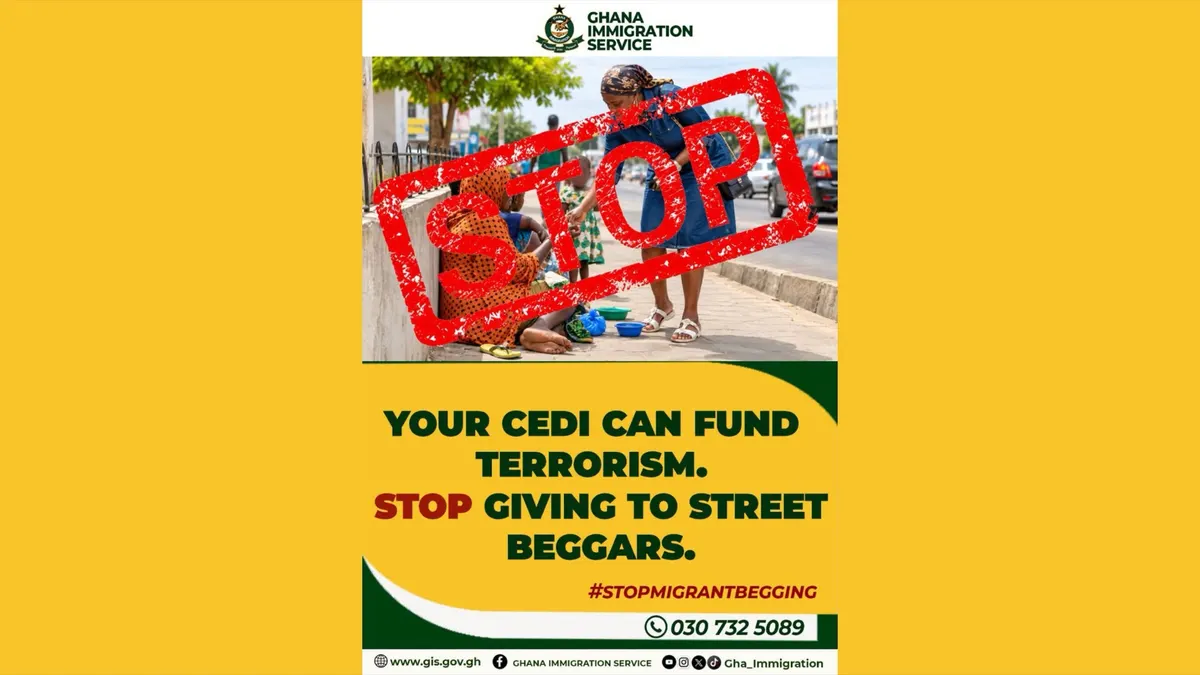

The Ghana Immigration Service (GIS) has launched a stark public awareness campaign urging Ghanaians to think twice before handing money to street beggars, warning that funds given to such individuals could ultimately end up financing terrorism. The campaign, carried under the hashtag #StopMigrantBegging, is being promoted through flyers circulating across the country and targets what authorities describe as an organised network of migrant begging operations.
What the GIS campaign is saying
At the heart of the GIS message is a simple but alarming claim: your cedi could fund terrorism. The immigration service is not suggesting that every person begging on the street is a terrorist, but rather that organised migrant begging syndicates — some of which operate across West African borders — are known in some cases to channel collected funds back to criminal or extremist organisations.
The #StopMigrantBegging flyer specifically calls out migrant begging as a structured activity, implying that many of those soliciting money on Ghanaian streets are part of coordinated groups rather than individuals acting alone out of personal hardship. Authorities are asking the public to redirect their charitable impulses toward registered organisations and legitimate charities rather than giving cash directly on the street.
Why it matters for Ghana
Ghana sits in a region under increasing security pressure. Countries immediately to the north — Burkina Faso, Mali and Niger — have experienced significant instability and jihadist insurgency in recent years, and security analysts have long warned that the violence is creeping steadily toward coastal West African nations, including Ghana. In that context, any potential financial pipeline that could benefit extremist groups, however indirect, is taken seriously by Ghanaian security agencies.
The GIS campaign also speaks to a broader concern about irregular migration and the exploitation of vulnerable people. Organised begging rings often recruit or coerce individuals — including children — to solicit funds on behalf of a handler or syndicate leader. Well-meaning Ghanaians who give money may therefore be inadvertently sustaining a system that exploits the very people they intend to help.
Beyond the security dimension, street begging has become a visible social issue in Accra and other major Ghanaian cities, with many of those involved appearing to be migrants from neighbouring Sahelian countries. The GIS campaign is an attempt to address this through public behaviour change rather than enforcement alone.
What Ghanaians can do instead
The GIS is not asking Ghanaians to abandon their well-known culture of generosity and community support. Instead, the service is channelling that generosity toward more accountable avenues. Members of the public are being encouraged to:
- Donate to registered charities and non-governmental organisations with transparent operations.
- Report suspected organised begging syndicates or irregular migrants to the Ghana Immigration Service.
- Avoid giving cash directly to individuals on the street, particularly in circumstances that appear coordinated or organised.
The campaign is part of a wider GIS effort to manage irregular migration and raise public awareness about the security implications of activities that may appear harmless on the surface. Ghanaians are reminded that supporting legitimate institutions working with vulnerable populations is a far more effective — and safer — way to show compassion. If you encounter what appears to be an organised begging operation, the GIS encourages you to contact their offices rather than engage directly.
Source: 3News




Comments (0)
Be the first to comment.