Ghana tightens vehicle import standards from October 1 — non-compliant cars will be turned away
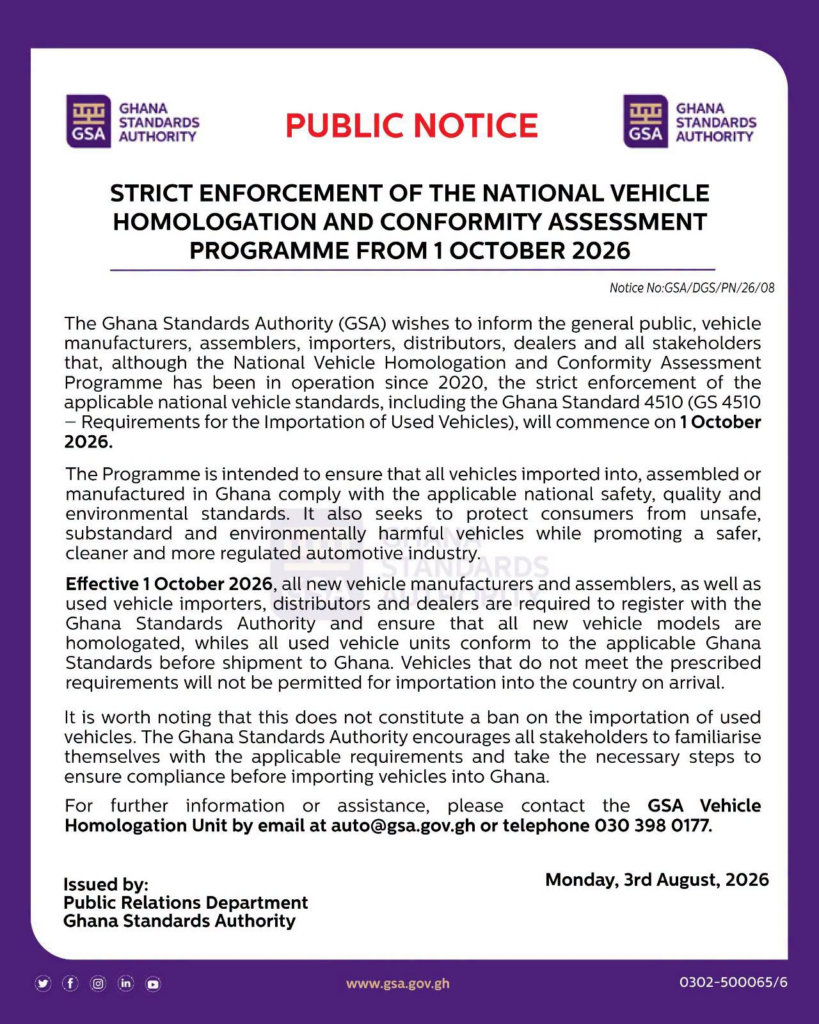
Ghana's automotive market faces a major shake-up next month as the Ghana Standards Authority (GSA) prepares to enforce a long-standing but unenforced vehicle standards programme that will fundamentally change how cars enter and circulate in the country. From October 1, any vehicle—whether new, used, locally assembled or imported—that fails to meet Ghana's prescribed safety, quality and environmental benchmarks will be barred from entry, potentially disrupting the second-hand car market that has historically dominated Ghana's roads.
The National Vehicle Homologation and Conformity Assessment Programme, which has technically existed since 2020, will now move from voluntary compliance to mandatory enforcement. This means importers, manufacturers, assemblers, distributors and dealers must all register with the GSA and ensure their vehicles conform to Ghana Standard 4510 and related technical requirements before shipping or selling them locally.
What the new rules require
Under the enforcement regime, manufacturers and assemblers of new vehicles must submit each model for homologation—a formal certification process that verifies vehicles meet technical and safety standards. Used vehicle importers face equally strict requirements: all second-hand vehicles destined for Ghana must be verified as compliant with applicable Ghana Standards before they leave their port of origin. The GSA has been explicit that vehicles arriving without this certification will be rejected at Ghana's borders.
Stakeholders including dealers, importers and distributors have been given until October 1 to register with the Authority and familiarise themselves with the compliance framework. The GSA has urged the industry to act now rather than wait until the deadline, signalling that enforcement will be rigorous from day one.
Why it matters for Ghana
The enforcement has significant implications for Ghana's motoring public and automotive sector. Road safety has been a persistent challenge in Ghana, with vehicle defects contributing to accidents. By enforcing homologation standards, the GSA aims to reduce unsafe vehicles on Ghanaian roads—a move that aligns with broader public health and safety objectives.
The second-hand vehicle market, which supplies the majority of cars to ordinary Ghanaians, will likely face disruption. Many used vehicles previously imported without formal certification may no longer qualify. This could temporarily reduce the supply of affordable vehicles and potentially raise prices for consumers, though it may also improve the average quality of vehicles in circulation.
Environmentally, the standards require vehicles to meet emissions criteria, supporting Ghana's climate and air quality goals. Economically, formalising the automotive import sector should encourage legitimate business practices and reduce informal trading that has characterised the industry.
It is important to note that the GSA has clarified this is not a blanket ban on used vehicle imports—a distinction that matters given public concern. Used vehicles can still enter Ghana provided they meet the standards. The focus is on quality and safety, not the age of the vehicle.
Industry adjustment ahead
Manufacturers, importers and dealers must now navigate a tighter regulatory environment. Those already compliant will gain competitive advantage. Those importing or assembling non-compliant vehicles face a hard deadline: get compliant or lose market access from October 1. The GSA's firm language suggests grace periods or extensions are unlikely.
For consumers, the immediate effect may be limited supply and potentially higher prices as the market adjusts. Long-term, however, a safer, cleaner vehicle fleet could reduce accident-related costs and healthcare burdens while improving air quality in urban areas.
Source: MyJoyOnline


Comments (0)
Be the first to comment.