
Speed Cameras Won't Catch You Off Guard: NRSA Promises Warning Signs Ahead of Traffictech Rollout
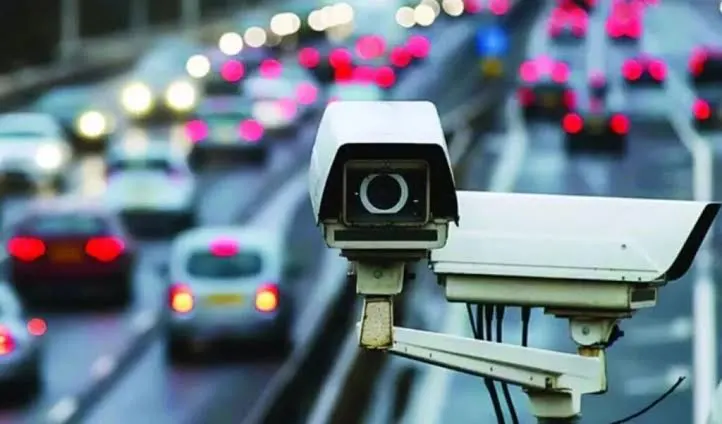

Ghanaian motorists will be given fair warning before they encounter speed cameras on the country's roads, the National Road Safety Authority (NRSA) has assured. The Director-General of the Authority, Abraham Amaliba, made the commitment during an appearance on Joy FM's Super Morning Show, responding to growing public concern that the Traffictech-GH digital traffic enforcement system could be used to trap unsuspecting drivers rather than genuinely improve road safety.
What the NRSA is promising
Mr Amaliba confirmed that the NRSA would engage road infrastructure agencies — specifically the Department of Urban Roads, the Department of Feeder Roads and the Ghana Highway Authority — to erect signage on stretches where speed cameras are deployed. These signs would alert drivers that camera monitoring is in operation on a given road, giving them the opportunity to comply with posted speed limits before any enforcement action is taken.
"Once you have the signage which says 50 km/h, as a driver, you should know that with the rollout of Traffictech, a camera will be there watching you," Mr Amaliba said. He acknowledged, however, that more specific notice was necessary. "I agree that we need to give motorists notice a fair time, and we'll consider that," he added.
The Director-General was keen to stress that the responsibility for erecting warning signs does not rest solely with the NRSA. "We have the road infrastructure agencies like Urban Roads, Feeder Roads, Highways. So they have the responsibility to put those signs there to indicate that on this road we have a camera watching you," he explained.
A three-pronged camera system
Mr Amaliba also shed light on exactly how the Traffictech-GH system will operate on the ground, clarifying that it will not rely on a single type of camera technology. Instead, the system will deploy three distinct forms of monitoring equipment working in tandem:
- Fixed cameras mounted permanently on poles at strategic, high-risk locations across the road network.
- Mobile units fitted onto vehicles that can be repositioned to areas identified as speeding hotspots — particularly roads that lack permanent camera infrastructure.
- Tripod-mounted cameras that can be set up along roadsides in a manner similar to surveying equipment, offering flexible short-term monitoring.
Mr Amaliba was emphatic that none of these technologies would replace the others. "So you also have the vehicles, and then we have the fixed one. So all of this is the gamut of technology that we are using. So none is going to replace the other," he said. The mobile units, in particular, are intended to extend the reach of enforcement to roads where it would be impractical or cost-prohibitive to install permanent cameras.
Why it matters for Ghana
Road safety remains one of Ghana's most persistent public health challenges. The country consistently records thousands of road traffic fatalities and injuries each year, with excessive speeding identified as a leading contributing factor. The Traffictech-GH system represents one of the most significant steps towards digital, evidence-based traffic enforcement in Ghana's history, moving away from the largely manual and inconsistently applied methods of the past.
The concern raised by critics — that speed cameras deployed without adequate notice amount to a revenue-collection exercise rather than a safety intervention — is a legitimate one that authorities must address head-on if the system is to enjoy public trust. International best practice generally supports the use of advance warning signs, with evidence suggesting that visible enforcement encourages sustained behavioural change among drivers, as opposed to mere avoidance of known camera spots.
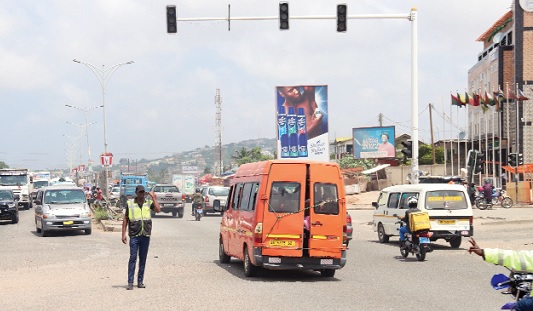
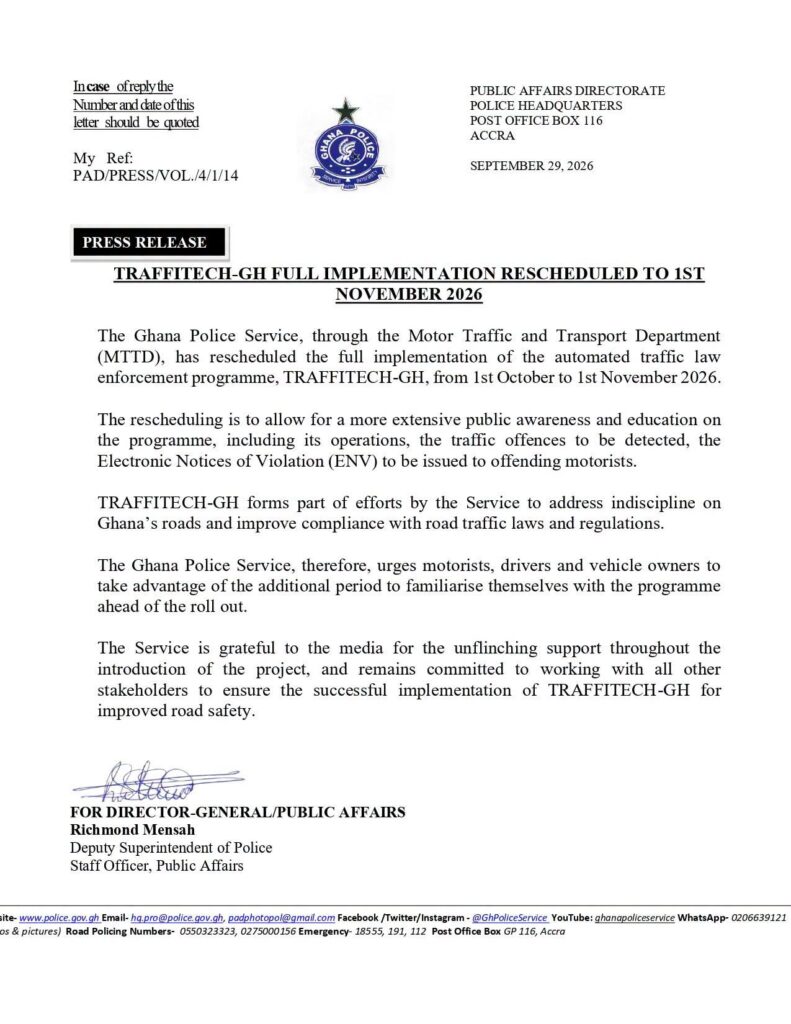
For everyday Ghanaian drivers, the immediate practical takeaway is straightforward: obey posted speed limits on all roads, because any stretch displaying a speed sign is now a potential enforcement zone. The NRSA's pledge to coordinate with road agencies on warning signage is a step in the right direction, but civil society and road user groups will likely want to see concrete timelines and accountability measures before the system goes into full operation.
Source: MyJoyOnline


Comments (0)
Be the first to comment.