Ghana to Ban Flood-Damaged and Over-Aged Cars: New Vehicle Import Rules Begin October 2026

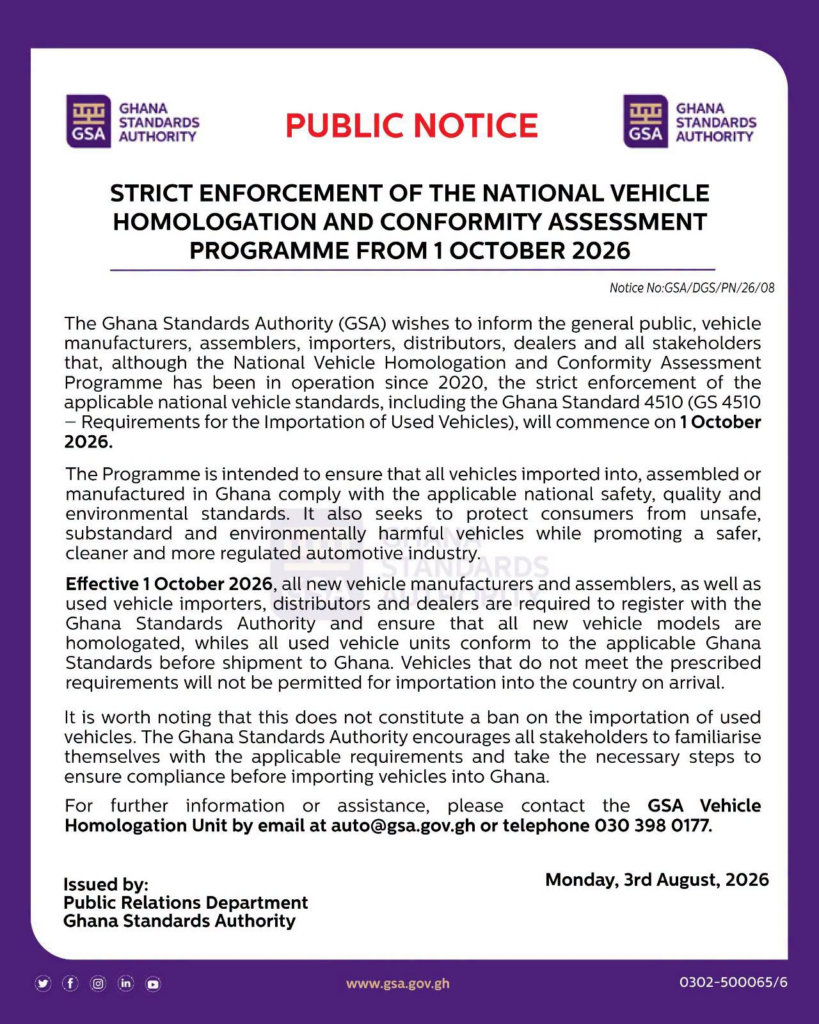
Ghana's automotive import market is set for a major overhaul next year, with the Ghana Standards Authority announcing sweeping new rules to block damaged and substandard vehicles from entering the country. From October 1, 2026, all used vehicles destined for Ghana must undergo Pre-Export Verification of Conformity (PVoC) inspections before leaving their country of origin, marking the most significant tightening of vehicle import standards in recent years.
The move targets a persistent problem: Ghana has long been a destination for vehicles deemed unfit for use elsewhere. Under the new regime, cars that have been submerged in floodwater, damaged by fire, or have structural damage to chassis or safety cages will be outright rejected. The standards also exclude originally manufactured right-hand-drive vehicles, vehicles over 10 years old, and cars assembled from spare parts.
What the New Standards Mean for Importers and Buyers
The enforcement hinges on compliance with GS 4510, Ghana's national standard for used vehicle imports. Third-party accredited inspectors will conduct all evaluations based on this standard before shipment occurs, effectively preventing unsuitable vehicles from ever reaching Ghanaian ports. Samuel Abdulai Jabanyite, Deputy Director-General at the GSA, stressed that whilst major safety issues are non-negotiable, vehicles with repairable defects will still be permitted if they meet required standards once repaired.
For consumers, the intention is clear: better value for money and enhanced safety on Ghana's roads. The GSA expects the programme to formalise the used-vehicle market, improve access to financing for legitimate imports, and boost investor confidence in the sector. Currently, the prevalence of substandard vehicles contributes to road accidents and environmental hazards that disproportionately affect Ghanaians.
Digital Integration: VEDIS and Cross-Agency Data Sharing
Beyond PVoC, the GSA is introducing the Vehicle Dealer Information System (VEDIS), a digital platform that will connect data from the Driver and Vehicle Licensing Authority, insurance companies, Interpol, National Security and other institutions. This real-time verification system will detect stolen vehicles before registration and enable seamless information sharing across agencies. In essence, VEDIS will create an integrated network where vehicle data can be checked against multiple databases simultaneously, closing loopholes that currently allow unregistered or stolen vehicles into the country.
Why This Matters for Ghana
Ghana's second-hand vehicle market is substantial, with thousands of imported cars arriving monthly. Many of these have been rejected by stricter markets abroad, creating a dumping ground effect that undermines road safety and consumer trust. The PVoC programme addresses this directly by shifting quality control upstream, to the point of export rather than at Ghana's borders. This prevents importers from attempting to ship rejected vehicles and protects Ghanaian consumers from purchasing vehicles with hidden damage or safety risks.
The environmental angle is equally important. Flood-damaged and heavily damaged vehicles often leak hazardous fluids and emit higher pollution levels, contributing to Ghana's environmental challenges. By blocking these at source, the standards support both public health and environmental protection.
Notably, the GSA achieved stakeholder buy-in after initial resistance, indicating that industry players recognise the long-term benefits of market stabilisation. The formalisation of the used-vehicle market could also improve tax collection and reduce informal trade, benefiting government revenue.
With October 2026 as the enforcement date, importers and dealers have approximately 18 months to adjust their supply chains and processes. The combined implementation of PVoC and VEDIS represents Ghana's most comprehensive attempt to regulate vehicle imports and protect both consumers and the road network.
Source: MyJoyOnline

Comments (0)
Be the first to comment.