
Ghana's VP calls for pan-African city partnerships to drive economic growth at Sister Cities summit
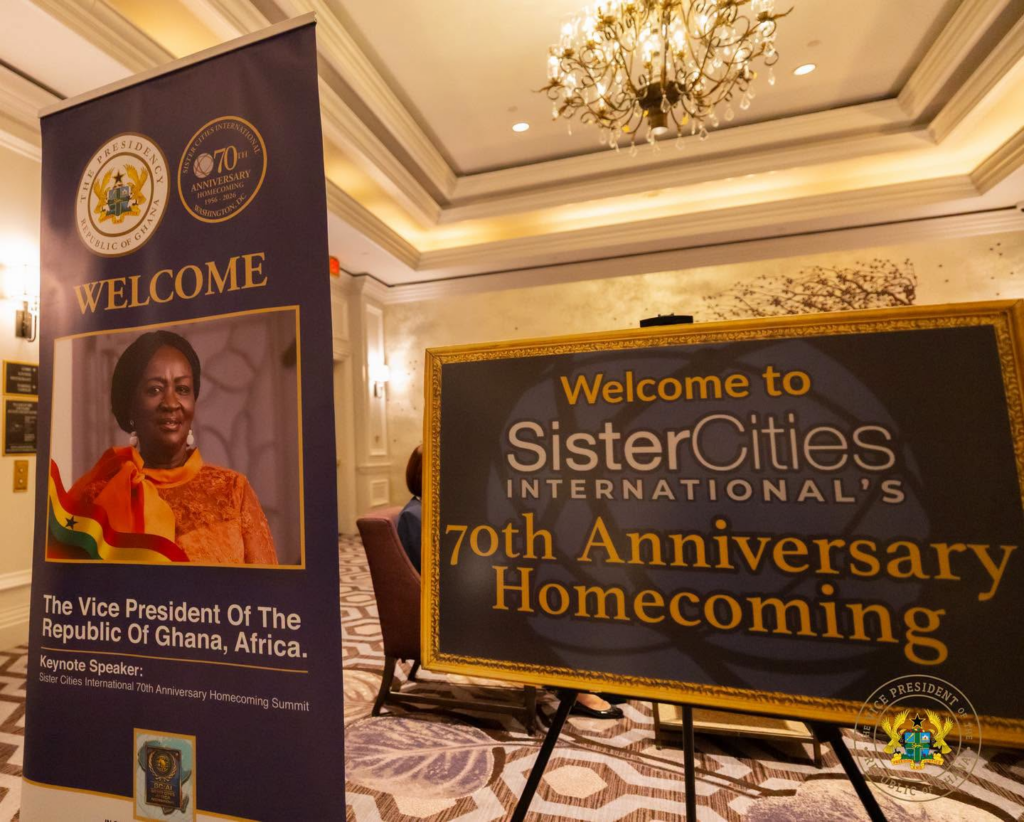

Vice President Professor Jane Naana Opoku-Agyemang has used Ghana's platform at a major international summit to push for stronger city-to-city partnerships across Africa, arguing that local-level collaboration is crucial for sustainable economic development. Speaking at the 70th-anniversary celebration of Sister Cities International in Washington, D.C., on Thursday, July 23, she delivered the keynote address focused on how African municipalities can work together to tackle shared challenges and unlock growth opportunities.
The Vice President's intervention highlighted a shift in Ghana's diplomatic approach under President John Dramani Mahama's administration, which has placed significant emphasis on decentralisation and strengthening the capacity of Metropolitan, Municipal and District Assemblies (MMDAs). According to Opoku-Agyemang, these local institutions are now receiving greater resources and responsibility to improve education, healthcare, infrastructure and essential services, positioning them as engines of national development rather than merely administrative bodies.
Ghana's unique leverage through AfCFTA hosting
A key dimension of the Vice President's address was Ghana's strategic advantage as host of the African Continental Free Trade Area (AfCFTA) Secretariat. She framed this position as a unique platform through which African cities can expand collaboration and drive trade integration across the continent. Opoku-Agyemang argued that city-level diplomacy—often called "sister city" partnerships—can catalyse entrepreneurship, innovation, digital transformation and investment while creating pathways for young people to participate in continental commerce and development initiatives.
The emphasis on youth and economic opportunity reflects a broader agenda to position African cities as competitive hubs rather than passive recipients of external aid. By promoting direct municipal partnerships, Ghana is signalling that development solutions need not flow only through national governments or international institutions, but can be generated through peer-to-peer engagement between local authorities facing similar urbanisation, infrastructure and service delivery pressures.
Why this matters for Ghana
Opoku-Agyemang's address has several implications for Ghana and the region. First, it underscores the government's commitment to institutional strengthening at the local level, a pledge that will likely be tested as MMDAs seek to translate policy into improved service delivery. Second, it positions Ghana as a thought leader in African urban development and governance at a time when the continent is urbanising rapidly and cities are becoming geopolitical actors in their own right.
Third, the emphasis on cultural and educational exchanges, and reconnection with the African diaspora, suggests Ghana intends to leverage people-to-people partnerships to build enduring ties with African and diaspora communities—a soft power strategy that complements its formal diplomatic efforts. This approach aligns with broader Ghanaian efforts to position itself as a gateway to Africa and a hub for continental integration.
The Vice President also stressed the urgency of municipal cooperation on cross-cutting challenges: rapid urbanisation, climate change, waste management, public health and disaster preparedness. These issues transcend borders and cannot be solved by individual cities acting alone, making the case for stronger institutional learning and knowledge-sharing networks among African municipalities.
Opoku-Agyemang's intervention at Sister Cities International reflects Ghana's broader diplomatic strategy under the current administration: leveraging the country's institutional capacity, continental positioning and democratic credibility to shape regional and global narratives around African development and partnership.
Source: MyJoyOnline




Comments (0)
Be the first to comment.