
Ghana's TV Licence Glut and a GH¢10m Fund: Can the Media Industry Really Be Saved?
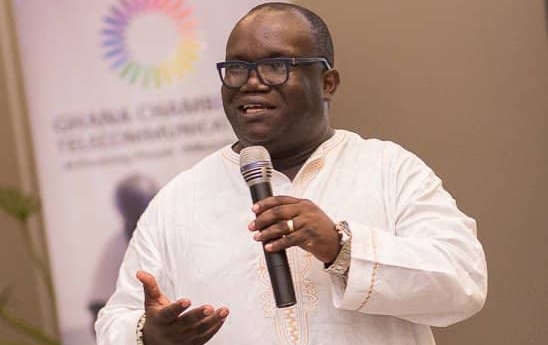

Ghana's media landscape faces a twin crisis of oversaturation and financial fragility, and a prominent industry voice is now demanding structural reform beyond what any single government fund can deliver. Dr Ken Ashigbey, former Chief Executive of the Graphic Communications Group, used a national television platform this week to issue a pointed warning: flooding the airwaves with television licences while hoping a GH¢10 million government fund will solve everything is a recipe for continued failure.
Too Many Licences, Too Little Accountability
Speaking on Joy News' PM Express, Ashigbey described the current approach to issuing television licences as reckless, likening it to handing them out "like confetti." His concern is that an oversupply of broadcasting outlets — many without the financial muscle or editorial rigour to operate sustainably — dilutes the industry rather than strengthening it. He also raised the related issue of restrictions placed on some media houses' reach, arguing that limiting the coverage of organisations weakens their capacity to perform their public interest role effectively.
These are not abstract concerns. Ghana currently has one of the most crowded media environments in West Africa, with hundreds of registered radio and television stations operating across the country. Many survive on razor-thin margins, making them vulnerable to commercial pressure, political patronage, or outright collapse. The result, critics argue, is an industry where professional standards can easily be compromised when survival is at stake.
Why It Matters for Ghana
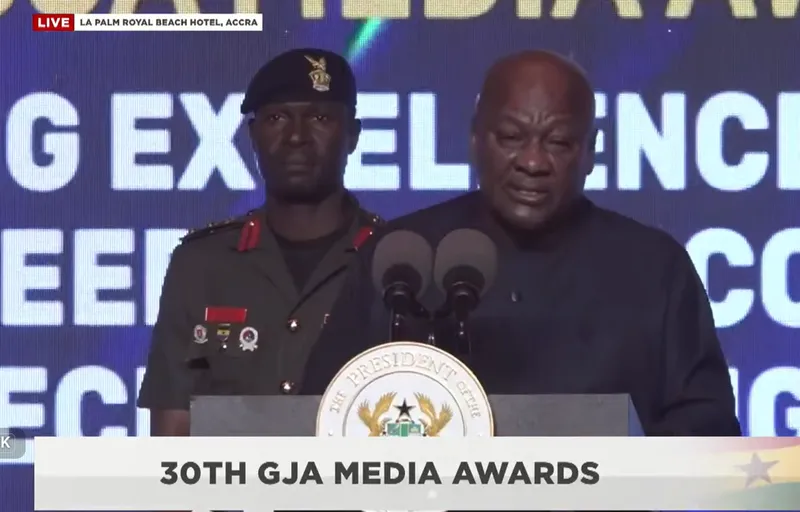
President John Mahama's administration has announced GH¢10 million in seed funding for the reactivated Media Development Fund, expected to feature in the 2027 Budget. The fund is designed to support journalists' welfare, training, investigative reporting, digital literacy and safety programmes — all areas where Ghana's media has historically been underfunded.
Ashigbey broadly welcomed the initiative but was emphatic that it cannot stand alone. His argument is that the fund must sit within a wider reform agenda that allows media businesses to generate revenue commercially, employ staff properly, pay competitive salaries and contribute taxes. Without that commercial foundation, he warned, media organisations will remain perpetually dependent on external support rather than becoming self-sustaining institutions.
He also backed a proposal by National Media Commission Executive Secretary George Sarpong to introduce a professional journalism index — essentially a tracking system that would distinguish trained, ethical journalists from those merely presenting themselves as media practitioners. Ashigbey argued that access to the Media Development Fund should be tied to a proven record of responsible, public-interest journalism, rewarding outlets that have demonstrably served national development rather than distributing money indiscriminately.
A Leaner, Smarter Fund Structure
On the administrative side, Ashigbey envisaged a lean operation: a small team of two or three people supported by technology, overseen by a diverse board, and structured to distribute support transparently. Such a design, he suggested, would not only reduce bureaucratic overhead but also attract additional funding from development partners or the private sector over time.
Crucially, he was careful to defend space for media entrepreneurship. Any reform framework, he insisted, must allow commercially minded operators to run viable media businesses alongside publicly supported journalism — not replace one with the other.
A proposed media bill currently under discussion addresses job security, fair pay, working conditions and journalist welfare. Ashigbey's message to lawmakers was clear: the bill is a welcome step, but legislation on its own cannot conjure a responsible, financially sustainable media ecosystem into existence.
- Dr Ken Ashigbey criticised Ghana's "confetti" approach to issuing TV broadcasting licences.
- President Mahama has pledged GH¢10 million in seed funding for the Media Development Fund in the 2027 Budget.
- Ashigbey called for a journalism index to link fund access to proven public-interest reporting.
Source: MyJoyOnline



Comments (0)
Be the first to comment.