
Mahama Sets Aside GH¢10 Million for Media Development Fund to Boost Journalism in Ghana
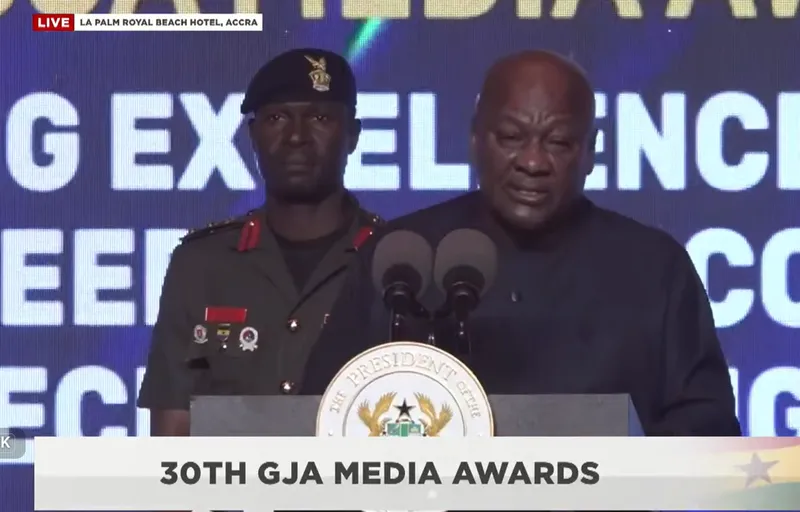

President John Dramani Mahama has announced a GH¢10 million allocation in Ghana's 2027 national budget to launch the long-awaited Media Development Fund — a move that could mark a turning point for the country's journalism sector, which has struggled with poor working conditions, limited resources and dwindling support for investigative reporting.
What the fund is designed to do
The Media Development Fund is intended to serve as a dedicated financial vehicle to address some of the most persistent challenges facing Ghanaian journalists. According to the announcement, the fund will support three key areas: the welfare of journalists, professional training and capacity building, and investigative journalism.
Investigative journalism in particular has faced serious headwinds across Ghana in recent years. Many media organisations, especially smaller and community-based outlets, have been unable to sustain the kind of deep, resource-intensive reporting that holds institutions accountable. A dedicated fund of this nature could provide grants or structured support to help journalists pursue stories that require time, travel and expertise — the kind of work that is increasingly difficult to finance through commercial advertising alone.
Beyond investigative work, journalist welfare has been a long-standing concern in Ghana. Reports from media industry groups have consistently highlighted low pay, lack of health insurance, and inadequate legal protection for reporters covering sensitive stories. The inclusion of welfare as a stated priority suggests the fund could go beyond training to offer more tangible support to working journalists across the country.
Why it matters for Ghana
Ghana has historically been regarded as one of Africa's strongest performers on press freedom, regularly ranking among the top countries on the continent in global press freedom indices. However, sustaining that reputation requires more than goodwill — it demands investment in the structures that allow journalism to thrive.
A well-resourced Media Development Fund could help level the playing field between large, well-funded media houses and smaller, independent outlets that often serve local communities but lack financial backing. It could also help professionalise the industry at a time when misinformation and unverified content continue to spread rapidly on social media, eroding public trust in traditional media.
Importantly, the creation of such a fund also raises questions about governance and independence. For the fund to genuinely strengthen the media, its administration must be insulated from political interference. Journalists and media advocacy groups are likely to scrutinise the fund's governance structure closely — particularly who controls disbursements and on what criteria support is granted. A transparent, independent board would be essential to ensuring the fund serves the press rather than the government of the day.
What happens next
The GH¢10 million allocation is described as a starting point to kick-start the fund, implying that further contributions — potentially from international development partners or the private sector — may be expected down the line. Ghana's media sector has previously benefited from support by organisations such as the United Nations and various international press freedom bodies, and a government-backed fund could attract additional co-financing.
Media stakeholders, including the Ghana Journalists Association and the National Media Commission, are expected to play a role in shaping how the fund operates. Civil society groups focused on press freedom will also be watching developments closely to ensure the initiative translates into genuine, on-the-ground support for journalists across all regions of Ghana — not just those based in Accra.
- The fund's success will ultimately depend on whether its governance is kept free from political influence.
- Community and regional journalists stand to benefit most if the fund prioritises equitable access.
- Ghana's strong press freedom record gives this initiative a credible foundation to build upon.
Source: 3News


Comments (0)
Be the first to comment.