
GJA Stands Firm Against Sam George's Jabs, Defends Mahama Intervention Over Media Closures
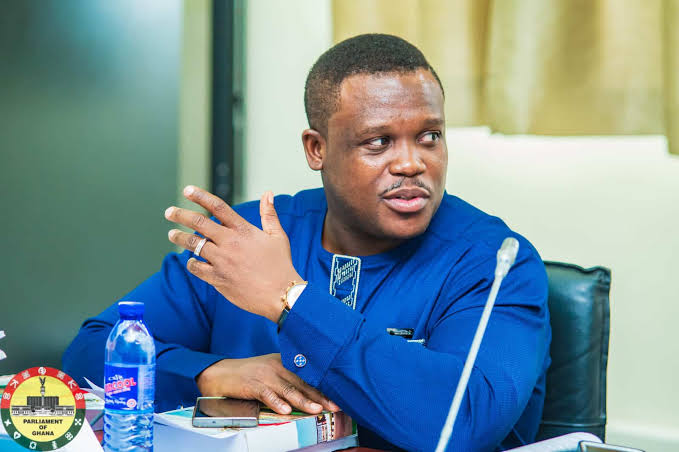

The Ghana Journalists Association (GJA) has openly criticised Communications, Digital Technology and Innovations Minister Samuel Nartey George, rejecting his suggestion that GJA President Albert Dwumfour privately ran to President John Dramani Mahama to protect personal interests following the minister's remarks about shutting down politically and religiously affiliated media houses. The sharp exchange has thrown a spotlight on the state of media freedom, regulatory authority, and the welfare of journalists in Ghana.
What sparked the row
The controversy traces back to remarks Minister Sam George made at a public forum in Accra on 2nd November, in which he stated that he would shut down media organisations with political or religious affiliations if he possessed the authority to do so. The comments rattled the broadcasting industry, raising fears about the futures of dozens of stations and the livelihoods of the journalists and staff employed by them.
Speaking at the 30th GJA Media Awards in Accra, Mr Dwumfour said the Association subsequently engaged President Mahama — himself a GJA member — to raise concerns about the potential impact of such closures. The minister, however, characterised that engagement as the GJA president personally seeking presidential protection, a framing the Association firmly rejects.
"We consider those comments unfortunate, particularly coming from a minister whose portfolio places him at the centre of the country's communications and media ecosystem," Mr Dwumfour said at the ceremony.
He emphasised that the GJA's engagement with the Presidency was entirely within its institutional mandate and had nothing to do with partisan politics or personal relationships. President Mahama, he noted, responded to the Association's appeal and issued clemency within two hours — an outcome the GJA praised as evidence of a "listening leader."
Jobs and press freedom at stake
At the core of the GJA's objection is a concern that heavy-handed regulatory action punishes ordinary media workers rather than media owners or management. Mr Dwumfour pointed out that as many as 64 media organisations were caught up in the closure threat, putting a significant number of journalists and support staff at risk of sudden unemployment.
"The fact that a media organisation may have breached a regulatory requirement should not automatically make the livelihood of its workers collateral damage," he argued, calling on authorities to ensure that any enforcement action is transparent, fair and proportionate.
The GJA does not oppose regulation of the broadcasting sector — a point Mr Dwumfour was careful to make — but insists that the manner in which rules are applied must not be used as a tool to silence media voices or leave practitioners destitute. Conditions of service across much of Ghana's media industry are already precarious, he noted, making abrupt closures especially devastating for affected workers.
Why it matters for Ghana
Ghana has long prided itself on being one of Africa's most vibrant media environments, consistently ranking among the top countries on the continent for press freedom. Any move perceived as threatening that openness tends to generate significant concern both domestically and internationally.
The dispute between the GJA and Minister Sam George arrives at a sensitive moment. The National Communications Authority has been stepping up enforcement of broadcasting licence conditions, and the broader question of how to handle politically aligned media — which critics argue can inflame public opinion along partisan lines — remains genuinely contested across much of West Africa.
For journalists on the ground, the debate is not abstract. Many work without formal contracts, with limited social protection, in newsrooms that could be shuttered overnight by a regulatory decision. The GJA's public stance signals that the Association intends to be a consistent and vocal advocate, regardless of which political party holds power.
Mr Dwumfour confirmed the Association will continue engaging the President, ministers, Parliament, regulators and media owners whenever developments threaten the safety, welfare and professional independence of journalists in Ghana.
Source: MyJoyOnline



Comments (0)
Be the first to comment.