Ghana's Teacher Unions Down Tools: Strike Action Begins Over Unresolved Demands
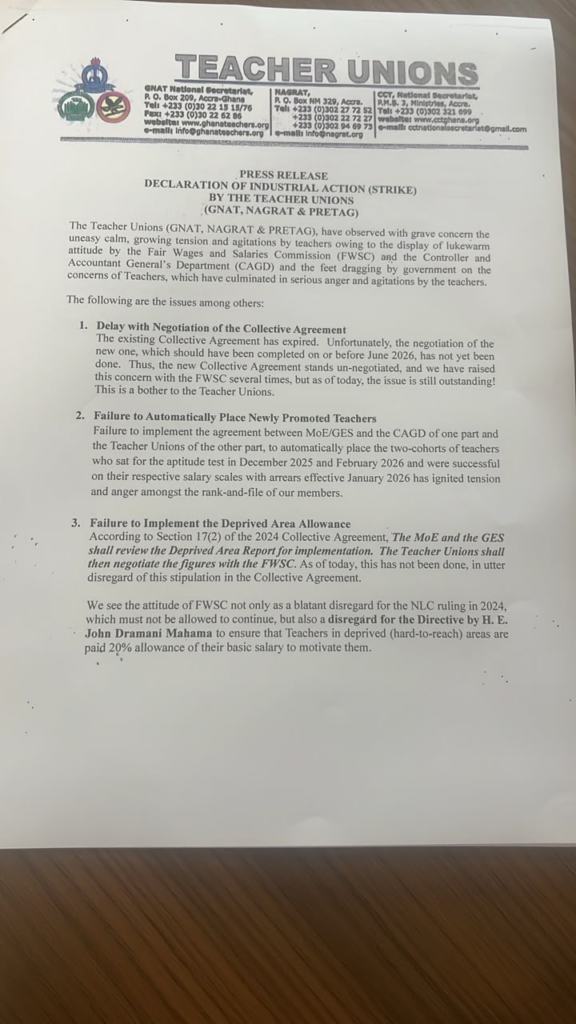
Ghana's teacher unions have initiated strike action, with members instructed to withdraw their labour effective immediately. The industrial action follows what union leaders describe as the government's failure to engage meaningfully on pressing issues affecting educators across the country's public school system.
The unions have set no predetermined end date for the strike, indicating that work stoppages will continue until the authorities formally address their grievances and move toward concrete resolutions. This represents a significant escalation in ongoing tensions between the teaching profession and the Ministry of Education.
What the unions are demanding
While specific demands were not detailed in the initial announcement, Ghana's teacher unions have historically raised concerns around several core issues. These typically include salary adjustments to match cost-of-living increases, improved conditions of service, professional development opportunities, and adequate provision of teaching and learning materials in schools.
The decision to strike comes after a period of advocacy and dialogue that union officials believe has not yielded meaningful progress. Teachers argue that their current compensation packages have not kept pace with economic realities, affecting both recruitment and retention of quality educators.
Impact on students and the education system
The strike will have immediate consequences for Ghana's education sector. Students across public schools will be affected as teachers remain away from classrooms. The timing of such action is particularly critical for pupils preparing for major examinations or those in examination years, potentially disrupting learning schedules and assessment preparations.
Parents and guardians will face the challenge of arranging alternative care and learning arrangements for their children. Schools may struggle to maintain normal operations without teaching staff, and any prolonged action could have cascading effects on the academic calendar and student achievement outcomes.
Why this matters for Ghana
The education sector is foundational to Ghana's development agenda and human capital formation. When strikes occur, they disrupt not only immediate learning but can compound existing challenges in educational quality and equity. Ghana's education system already faces pressures around infrastructure, curriculum delivery, and learning outcomes—a withdrawal of teacher labour exacerbates these challenges.
From a broader perspective, strike action reflects deeper systemic issues around public sector compensation, government-labour relations, and the prioritisation of education investment in national budgeting. How quickly the government and unions resolve this dispute will signal the administration's commitment to the teaching profession and education as a sector priority.
The strike also highlights the ongoing tension between public sector workers and government regarding real wages and working conditions. Resolution of this dispute could set precedent for how similar issues are handled across other critical sectors including health and civil service.
Stakeholders—including parents, students, school administrators, and policymakers—will be watching closely to see how swiftly negotiations resume and whether substantive progress can be achieved before classroom disruptions extend further.
Source: 3News

Comments (0)
Be the first to comment.