
Ghana's Stool Lands Office hits 75% revenue target in first half of 2026, expands services nationwide
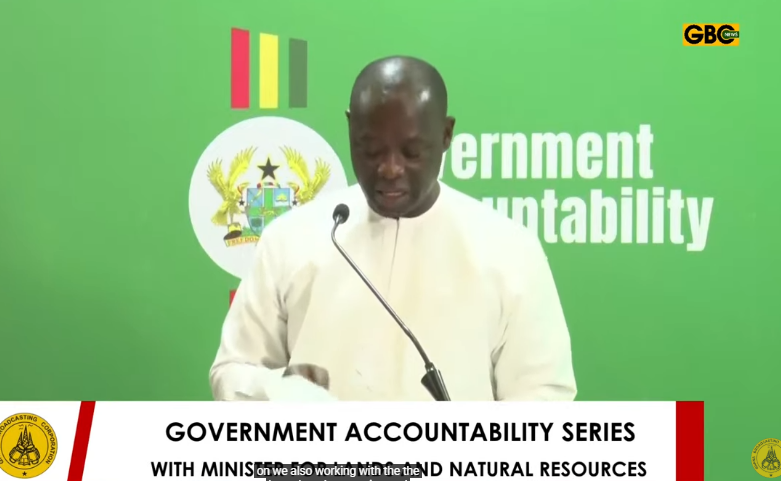
Ghana's land administration system is strengthening its grip on revenue collection and service delivery, with the Office of the Administrator of Stool Lands (OASL) reporting solid performance halfway through 2026. Lands Minister Emmanuel Armah Kofi Buah disclosed that the office has collected GH₵265.61 million in stool land revenue against an annual target of GH₵351.88 million, representing 75.48 per cent completion by end of June.
The results, presented during the Government Accountability Series in Accra, signal meaningful progress in Ghana's broader land sector reforms. The OASL manages customary land resources on behalf of traditional authorities and ensures revenue reaches district assemblies and local communities. In an economy facing headwinds, collecting three-quarters of annual targets within six months demonstrates improved administrative efficiency and tighter oversight of Ghana's vast stool land holdings.
Expanding access to land services across regions
A critical element of the government's land governance strategy is bringing administration services closer to citizens. The OASL has completed four of five planned new offices in 2026, located at Derma (Ahafo Region), Abesim (Bono Region), and two in Greater Accra—Kwabenya in Ga East Municipality and Amamole in Ga South District.
These new premises reduce travel burdens for landowners, buyers and traditional leaders seeking to process transactions or resolve disputes. The decentralisation effort recognises that citizens in remote areas face real barriers accessing centralised land offices in regional capitals. With local presence, the OASL can process applications faster, improve stakeholder engagement and strengthen customary land record management at source.
The expansion also bolsters the government's wider decentralisation agenda, which aims to redistribute public services and decision-making authority away from Accra toward district and local levels. Land administration remains fundamental to economic activity, property rights and dispute prevention across Ghana.
Strengthening customary land governance and dispute resolution
Beyond revenue and access, the OASL is enhancing institutional structures that manage customary land records and resolve conflicts. The government has established a new Customary Land Secretariat in the Sunyani Traditional Area and upgraded existing secretariats at Mim and Hwidiem. These bodies, mandated under the Land Act 2020, improve documentation, record-keeping and dispute handling within traditional areas.
More reliable land records reduce uncertainty about ownership and transactions, lowering disputes before they escalate to courts. The secretariats also enable use of Alternative Dispute Resolution (ADR) mechanisms—mediation and negotiation—which resolve conflicts faster and at lower cost than litigation whilst preserving relationships within communities. This approach is especially valuable in customary contexts where families and clans interact repeatedly.
Why it matters for Ghana
Land underpins Ghana's economy. Clear ownership, accessible administration services and fair dispute resolution encourage investment in agriculture, housing and business. For millions of Ghanaians, particularly in rural areas, land remains the primary asset and wealth store.
Stool lands account for a significant share of Ghana's land mass. Revenue from their management funds local development projects, supports traditional authorities and improves public services. A more efficient OASL therefore directly benefits ordinary Ghanaians through better-maintained roads, schools and health facilities in their communities.
The government's push to expand customary land secretariats and documentation also reduces the risk of land grabs, title disputes and fraud—problems that have historically delayed development projects and displaced families. Stronger governance builds confidence in Ghana's land markets, potentially attracting both domestic and foreign investment in agriculture, real estate and agribusiness.
For citizens planning to buy, sell or lease land, the OASL's expanded regional presence and improved record systems promise faster, more transparent transactions with lower risk of disputes.
Source: MyJoyOnline



Comments (0)
Be the first to comment.