Ghana's road fatalities fall as police step up speed enforcement ahead of automated system launch
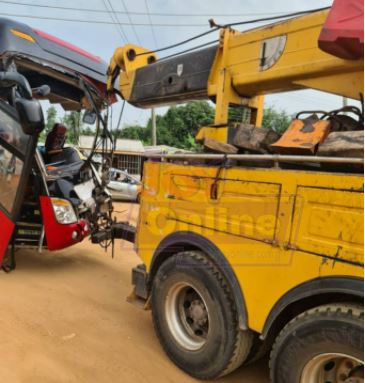
Ghana's road safety landscape is showing tangible improvement, with September 2026 recording a significant 9.48% decrease in crashes nationwide and a 7.82% reduction in fatalities, according to fresh data released by the Motor Traffic and Transport Department (MTTD). The encouraging figures come as police intensify enforcement operations ahead of the planned November 1 rollout of an automated speed detection system across the country.
The Police Service's focused approach is already yielding results. Beyond the overall crash reduction, motorcycle-related incidents dropped 7.14%, while injury cases fell by 15%. Police data also revealed a 12.19% decrease in the number of vehicles involved in crashes, suggesting drivers are becoming more cautious on Ghana's roads.
How the electronic enforcement system is working
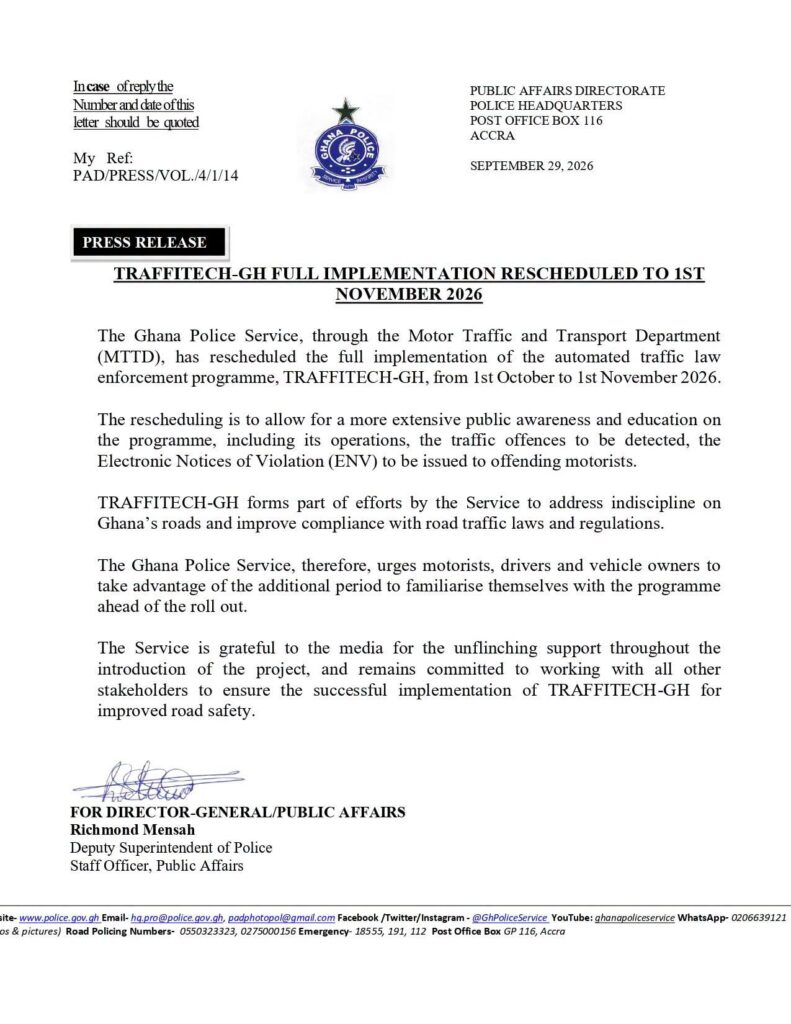
Since September 10, the Ghana Police Service has been testing electronic violation notices and caution notices with video evidence, preparing the ground for the full automated system launch next month. The approach targets speeding as the priority offence, using sensors to detect violations and immediately alerting both drivers and vehicle owners through electronic notices accompanied by footage of the actual breach.
This dual-notification strategy has proven effective. By involving vehicle owners in the enforcement process, police say owners are becoming advocates for safer driving, encouraging drivers to exercise greater caution on the roads. ACP Alexander Kwaku Obeng, the MTTD's Director of Education, Research and Training, explained the psychology behind the method: when confronted with video evidence of dangerous driving, owners take responsibility and push their drivers to comply.
The combination of monitoring, warnings and public education has created a cultural shift. Motorists are reducing speeds, knowing enforcement is active and systematic, with video proof backing every ticket issued.
Why it matters for Ghana
Road safety remains a critical public health issue in Ghana, where traffic crashes claim thousands of lives annually and cause immense suffering to families and communities. The September improvements, though modest, represent real lives saved and injuries prevented—outcomes that extend beyond statistics to families who get their loved ones home safely.
The transition to automated enforcement marks a significant shift in Ghana's approach to road safety. Unlike traditional manual policing, which depends on officer presence at specific locations, sensors operate 24/7 across key routes, creating consistent accountability. This technology removes discretion and human error from enforcement, making the system fairer and more effective at changing driver behaviour through certainty of detection rather than severity of punishment alone.
For motorists, commuters and pedestrians, the November launch signals a new era where speed limits will be actively monitored nation-wide. Commercial drivers, whose vehicles account for a substantial proportion of crashes, are likely to face particular scrutiny, with owners now incentivised to install governors or monitor driver behaviour. Public transport operators may pass compliance costs onto fares, but the trade-off—fewer deaths and injuries—is significant.
The Police Service's determination to maintain focus on speeding and complete the rollout as planned suggests the gains seen in September are not isolated. If the automated system functions as designed, Ghana could see sustained improvements in road safety metrics over coming months, potentially transforming public perception of law enforcement as protectors rather than merely revenue collectors.
Source: Today GH



Comments (0)
Be the first to comment.