
Ghana's Public Universities Are Underfunded and Overstretched — It's Time for an Honest Conversation About Who Pays

Ghana's public universities are caught in a painful contradiction: they are expected to produce world-class graduates capable of competing in a sophisticated global labour market, yet they operate under chronic financial constraints that make delivering even basic quality education a daily struggle. A timely commentary by FM Dzanku, published from Accra, cuts to the heart of this tension — and argues that the country's ongoing debate about hostel and tuition fees is merely treating symptoms of a far deeper crisis in higher education financing.
Overcrowded lecture halls and underpaid lecturers: The reality on campus
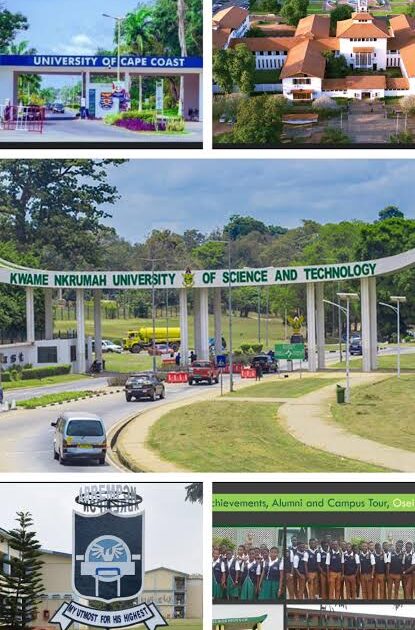
Walk into any lecture hall at the University of Ghana, Kwame Nkrumah University of Science and Technology, or the University of Cape Coast and the evidence is hard to miss. Student-to-lecturer ratios are unacceptably high, physical facilities are under severe strain, and universities routinely struggle to recruit and retain qualified academic staff because government funding simply does not stretch far enough. Those lecturers who do stay are, by most accounts, poorly remunerated relative to their responsibilities and have limited resources available for research.
The commentary draws a pointed comparison with Ashesi University, whose graduates consistently rank among the most sought-after by employers in Ghana and beyond. The difference, it argues, is not primarily about the talent of students or the calibre of lecturers — in fact, several Ashesi lecturers also teach at public universities. The difference lies in the conditions under which teaching and learning take place: smaller class sizes, better facilities, more contact hours, and meaningful opportunities for individual academic engagement. Undergraduate fees at Ashesi average around GH¢60,331, nearly seven times what students pay at the University of Ghana when accommodation is factored in. That gap in investment, the argument goes, inevitably produces a gap in outcomes.
Why it matters for Ghana
This debate has immediate and long-term consequences for Ghana's development. The Minister of Education recently directed the Ghana Tertiary Education Commission (GTEC) and the Rent Control Commission to look into regulating student hostel fees — a move that follows GTEC's earlier directive to the University of Ghana to reverse academic fee increases. While protecting students from arbitrary charges is entirely legitimate, critics warn that blanket fee suppression without a corresponding increase in government subventions simply deepens the resource crisis facing these institutions.
The stakes are significant. Ghana's public universities educate the overwhelming majority of the country's graduates — the doctors, engineers, teachers, civil servants and entrepreneurs who will drive national development. If those institutions are starved of resources, the consequences ripple across every sector of the economy and society.
There is also a subtler equality argument at play. The instinct to keep fees low is rooted in a genuine concern about access — and rightly so, given that socioeconomic background already plays a powerful role in determining who gets to pursue higher education in Ghana. But the commentary raises an uncomfortable counter-point: if students from wealthier households can access better-resourced private universities while those from less privileged backgrounds are confined to chronically underfunded public institutions, then low fees alone do not resolve educational inequality. They may, in fact, entrench a two-tier system.
A sustainable financing model — what could it look like?
The commentary stops short of simply calling for higher fees across the board. Instead, it makes the case for a comprehensive and equitable financing framework built on several pillars:
- Adequate and predictable government funding that reflects the true cost of delivering quality education
- Realistic cost-recovery fees set transparently and in accordance with proper statutory procedures
- Means-tested scholarships and grants targeted at students from lower-income households
- Accessible student loan schemes with income-contingent repayment arrangements, so graduates repay based on what they actually earn
- Strong accountability mechanisms to ensure additional resources translate into measurable improvements in quality
The underlying message is straightforward: higher education generates benefits both for individuals and for society as a whole, and the cost should be shared accordingly — with robust protections for those who genuinely cannot afford to contribute. What is not sustainable is demanding more from public universities while simultaneously preventing them from mobilising the resources needed to deliver. As the commentary bluntly puts it, someone has to pay. The question Ghana must now answer honestly is who, and how.
Source: MyJoyOnline

Comments (0)
Be the first to comment.