
Ghana's Judicial Overhaul: How the State is Dismantling Tribunal System to Fix Court Delays

Ghana's Long Battle with Court Delays
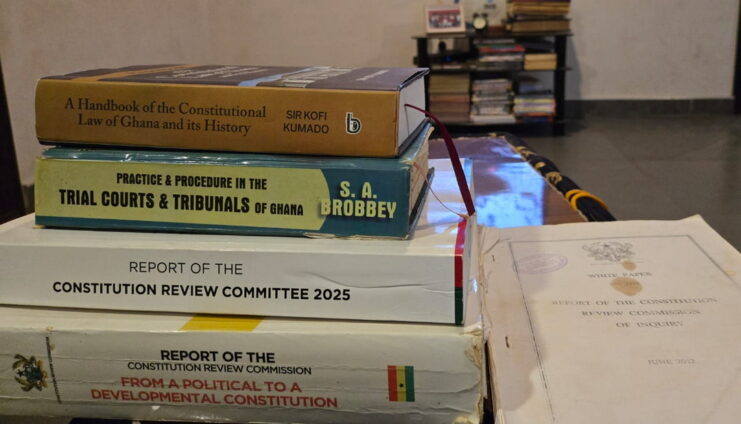
Ghana's judicial system has faced a mounting crisis of accessibility for over a decade. By 2011, the Constitution Review Commission's landmark report exposed a troubling reality: cases that should take months were dragging on for years before final disposal. Public frustration had reached a peak, with Ghanaians across all sectors demanding urgent reform to make justice more accessible and faster.
The roots of this problem lay in structural issues inherited from the 1992 Constitution, which fused parallel public tribunals into a single judiciary system headed by the Chief Justice. While this consolidation aimed to streamline operations, it inadvertently created operational bottlenecks that plagued courts at all levels for two decades.
The Commission's Rejection of Quick Fixes
When pressure mounted for constitutional amendments imposing rigid trial timelines—drawing inspiration from countries like the United States, Canada, and Nigeria—Ghana's Constitution Review Commission took a different stance. Rather than adopting what it called "cosmetic and pious declarations of intent," the Commission warned that merely changing legal text would fail unless accompanied by deep institutional reform.
Instead, the state embraced a two-pronged strategy. First, it shifted decisively toward Alternative Dispute Resolution (ADR) mechanisms including mediation and arbitration. The National ADR Programme was established in 2001, formalised through a dedicated Judicial Service ADR Directorate in 2009, and given legislative teeth through Parliament's Alternative Dispute Resolution Act in 2010. Today, pre-trial ADR is compulsory for commercial cases across all court levels, reducing both time and costs for disputants.
From Policy to Practice: Dismantling the Tribunals
The government's 2012 White Paper formalised a radical restructuring. Regional Tribunals—specialised courts that had operated for decades—would be abolished entirely, with their caseload absorbed into regular judicial tracks. The Chairmen of these tribunals were to be redeployed as High Court judges, ensuring no loss of experienced judicial personnel during the transition.
More symbolically, the White Paper accepted an amendment to Article 153(g) of the Constitution, replacing the representative of Regional Tribunal Chairmen on the Judicial Council with a representative from the Ghana Prisons Service—a shift reflecting the government's decisive pivot away from the tribunal model.
Why It Matters for Ghana
This reform carries profound implications for ordinary Ghanaians seeking justice. The combination of tribunal abolition and mandatory ADR processes represents an attempt to break the bottleneck that has strangled Ghana's courts for decades. By channelling cases through alternative mechanisms and consolidating remaining cases into streamlined regular courts, the state aims to deliver faster, cheaper justice.
However, a significant gap remains. As the 2025 Constitution Review Committee noted, while the 2012 White Paper set clear policy direction, formal constitutional amendments have lagged considerably. This disconnect between stated policy and constitutional law risks leaving reform efforts incomplete and vulnerable to reversal.
For citizens, businesses, and vulnerable groups historically underserved by formal courts, the success of this reform will determine whether they can access justice within reasonable timeframes. The shift toward problem-solving ADR approaches also signals recognition that Ghana's poorest and most marginalised populations often cannot afford the time and cost of traditional litigation—making alternative mechanisms potentially transformative for access to justice.
Source: The Ghana Report




Comments (0)
Be the first to comment.