
Ghana's Economy Grows 6.8% in August 2026 as Services Sector Powers Ahead
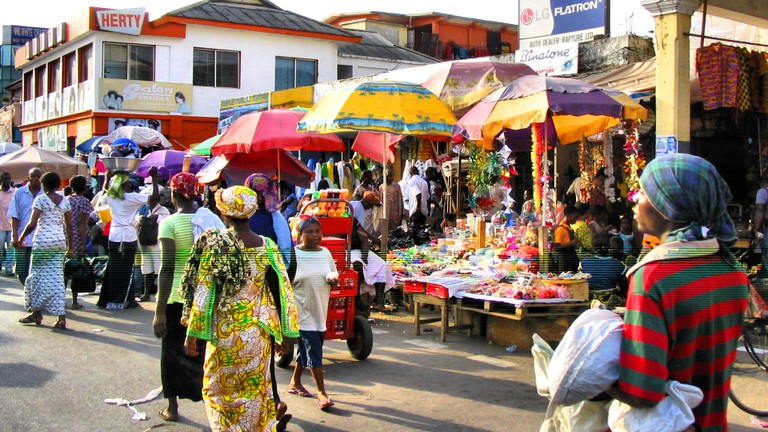

Ghana's economy is showing encouraging signs of sustained momentum, recording a 6.8 percent growth rate in August 2026 — up from 5.3 percent in the same month a year earlier. The latest data from the Ghana Statistical Service (GSS), published through its Monthly Indicator of Economic Growth (MIEG), points to a broadening recovery, though not all sectors are pulling their weight equally.
Services leads, Industry recovers, Agriculture lags
The services sector remains the undisputed engine of Ghana's economic expansion. It grew by 10.7 percent in August 2026, compared with 7.1 percent in August 2025, and contributed 4.8 percentage points of the overall 6.8 percent headline growth. In total, services accounted for 69.9 percent of all economic expansion recorded during the period, with information and communication activities identified as a particularly strong performer within the sector.
Industry also delivered a markedly improved showing. Growing at 4.5 percent — against a sluggish 0.8 percent recorded in August 2025 — the sector's recovery was underpinned by manufacturing activity and gains in mining and quarrying. Industry contributed 1.4 percentage points to the overall growth figure.
Agriculture, however, painted a more worrying picture. The sector grew by just 2.6 percent in August, a sharp slowdown from the 8.6 percent recorded in August 2025 and even below the 3.7 percent logged in July 2026. Agriculture contributed only 0.5 percentage points to overall growth, with net taxes accounting for the remaining 0.1 percentage point.
What this means for Ghana
The August figures carry important implications for how the broader Ghanaian economy is performing as it continues to recover from the economic turbulence of recent years, including the debt restructuring programme that accompanied Ghana's engagement with the International Monetary Fund.
A growth rate of 6.8 percent is a positive signal, particularly at a time when many economies globally are grappling with elevated interest rates and sluggish demand. The consistent expansion of the services sector — especially in information and communication — reflects a structural shift in Ghana's economy and suggests that digital infrastructure and technology-related activities are increasingly becoming reliable drivers of growth.
The recovery in industry is also welcome, given that manufacturing and mining are critical sources of employment and foreign exchange. Sustained growth in these areas would help reduce Ghana's dependence on commodity price cycles and strengthen the country's industrial base over the medium term.
That said, the slowdown in agriculture is a concern that policymakers cannot afford to overlook. Agriculture remains a source of livelihood for a significant portion of Ghana's population, particularly in rural communities. A deceleration from 8.6 percent to 2.6 percent in a single year suggests that challenges such as seasonal variation, input costs, or reduced investment in the sector may need urgent attention.
The bigger picture and what comes next
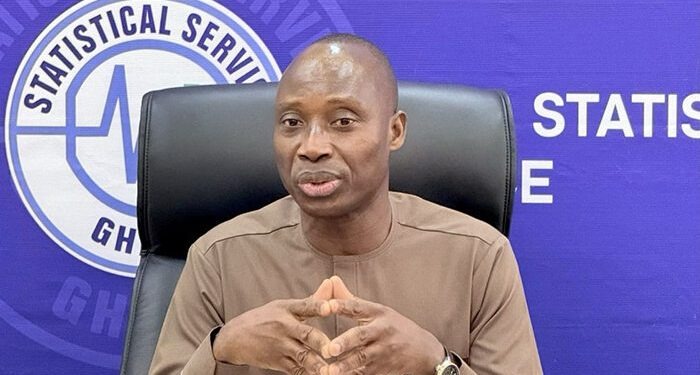
Government Statistician Alhassan Iddrisu noted that the MIEG is designed to provide an early read on economic activity ahead of official quarterly GDP releases. The August data, taken together with the July figure of 7 percent — which was itself revised downward from an initial estimate of 7.4 percent — gives an average growth rate of 6.9 percent for the two months. This serves as a useful early indicator of third-quarter 2026 economic performance.
Notably, both the MIEG and the official quarterly GDP measure recorded 6 percent growth in the second quarter of 2026, demonstrating that the monthly indicator has tracked quarterly performance closely — lending credibility to the August reading.
- The August figures are provisional and may be revised once additional data become available.
- The next MIEG release, covering September 2026, is expected in the second week of December.
- If the third quarter maintains the pace suggested by the July and August data, Ghana could be on track for one of its stronger full-year growth performances in recent memory — a development that would be closely watched by investors, creditors, and ordinary Ghanaians alike.
Source: MyJoyOnline



Comments (0)
Be the first to comment.