
Ghana's economy advisor: Africa must embrace cross-border mobility to unlock continental prosperity
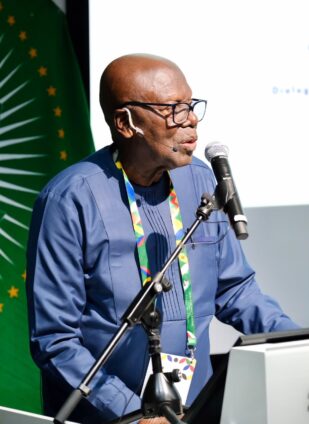

Ghana's economic future is inextricably linked to Africa's ability to allow people, skills and ideas to move freely across borders, according to Dr Ishmael Yamson, a key member of the Presidential Advisory Group on the Economy. Speaking at the Kgalema Motlanthe Winter Seminar in Johannesburg, Dr Yamson made a compelling case that continental integration cannot succeed through trade agreements alone.
The seminar, themed "Migration as a catalyst for African integration, innovation and shared prosperity," brought together African policymakers, business leaders and academics to reimagine migration beyond narratives of crisis. Dr Yamson's intervention underscores Ghana's stake in this continental conversation, particularly as the country seeks to leverage the African Continental Free Trade Area (AfCFTA) to accelerate economic growth.
Learning from West Africa's historical precedent
Dr Yamson drew on Ghana's own commercial heritage to illustrate his point. For centuries, Ghanaian traders and Yoruba merchants built thriving economic networks across West Africa long before formal systems like passports or digital banking existed. These traders did far more than exchange goods; they settled in new communities, learned languages, intermarried, and established vibrant markets that transformed entire regions.
"They proved that when West Africans cross borders, they do not bring scarcity; they bring a market," Dr Yamson noted, highlighting how mobility and trust created engines of economic development. This historical lesson is particularly relevant for Ghana, which has a strong tradition of cross-border entrepreneurship and could benefit from formalising and protecting such movement under modern frameworks.
Why it matters for Ghana and Africa
Dr Yamson's argument has direct implications for Ghana's development strategy. Intra-African trade currently lags far behind comparable regions globally, and AfCFTA is positioned as the mechanism to unlock this potential. However, he cautioned that removing tariffs and trade barriers is insufficient without parallel progress on skills mobility, digital connectivity, financial integration and infrastructure development.
The demographic argument is particularly critical for Ghana. With 70 percent of Africa's population under age 30, the continent faces both unprecedented opportunity and significant risk. Ghana's young population could drive innovation and entrepreneurship across the continent if equipped with proper education and opportunities. Conversely, without investment in technical skills, vocational training and digital capabilities, this demographic advantage could become a development crisis, driving migration born of desperation rather than aspiration.
Dr Yamson directly addressed the tendency to blame migrants for economic challenges. Instead, he reframed migration pressures as symptoms of inadequate domestic opportunity. When young Ghanaians or other Africans lack access to quality education, productive employment, reliable infrastructure and efficient markets, migration becomes a necessity rather than a choice. The solution, therefore, lies not in restricting movement but in creating sufficient opportunities across the continent.
The human dimension of continental integration
A critical insight from Dr Yamson is that continental trade and integration are fundamentally human endeavours. "Goods do not trade themselves; people trade, entrepreneurs trade, innovators trade, and ideas trade," he stated. This principle challenges the assumption that AfCFTA's success depends primarily on policy and infrastructure. Instead, it emphasises that Africa's integration depends equally on enabling talented individuals to pursue opportunity wherever it exists on the continent.
For Ghana specifically, this means rethinking policies around labour mobility, skills recognition across borders, and visa regimes within Africa. Ghanaian professionals—engineers, healthcare workers, educators and technologists—should be able to contribute their expertise across the continent seamlessly. Similarly, Africa's brightest minds should be attracted to Ghana's growing innovation hubs and industries.
Dr Yamson warned against complacency, noting that no African country, regardless of size, can achieve full potential in isolation. Ghana's fragmented markets, infrastructure gaps and development challenges are interconnected with those of neighbouring and regional partners. Prosperity emerges when Africa functions as an integrated whole.
The conversation at the Kgalema Motlanthe Winter Seminar reflects a growing consensus among African policymakers that continental development requires rethinking migration not as a threat but as an asset. For Ghana, embracing this perspective could unlock significant economic benefits whilst positioning the country as a hub for African talent and innovation.
Source: The Ghana Report




Comments (0)
Be the first to comment.