
Ghana's Democracy at Risk if Campaign Financing Goes Unchecked, Economist Warns
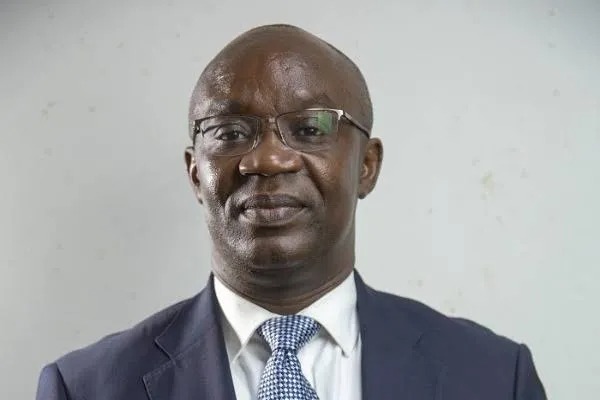

Ghana risks deepening the hold of powerful money interests over its democracy unless urgent reforms are introduced to limit how much candidates can spend on election campaigns and to compel political parties to be transparent about where their funding comes from. That is the central warning from development economist and chartered accountant Dr Valentin Kwasi Mensah, who has laid out a detailed case for restructuring the country's political financing framework.
When money talks louder than ideas
Dr Mensah argues that the financial cost of competing for political office in Ghana has risen to levels that make candidates heavily dependent on wealthy private sponsors. In his view, this dependency is not neutral — it creates an unspoken contract in which financiers expect tangible returns once their preferred candidate wins power. Those returns, he warns, often come in the form of government appointments, lucrative contracts and privileged access to state resources.
It is a concern that is far from new. Dr Mensah recalls that the late former President Jerry John Rawlings raised the same alarm as far back as November 2010, warning that political parties were leaning on financiers who "naturally expect to be rewarded when elections are won." The fact that this warning remains relevant well over a decade later suggests the underlying problem has only grown more entrenched.
Research by the Centre for Democratic Development (CDD-Ghana) and the Westminster Foundation for Democracy lends hard data to the concern: parliamentary campaign costs in Ghana rose by 59 per cent between 2012 and 2016 alone. Extrapolating that trajectory forward, the financial stakes of Ghanaian politics today are likely far higher still.
What the law says — and why it is not enough
Ghana is not without legal safeguards on political financing. Dr Mensah points to Article 55 of the 1992 Constitution and the Political Parties Act, 2000 (Act 574), both of which require political parties to submit financial statements and audited accounts for public scrutiny. On paper, the framework exists. In practice, enforcement has been largely ineffective.
Dr Mensah illustrated this gap starkly by recounting his own experience. On 28 January 2025, he formally requested the Electoral Commission to provide the 2023 financial returns and audited accounts of both the New Patriotic Party (NPP) and the National Democratic Congress (NDC). While the Commission acknowledged receiving his request, it had still not furnished the information despite repeated follow-ups as of November 2026 — a wait of well over a year and a half. That a researcher making a straightforward legal request cannot access public financial disclosures speaks volumes about the state of accountability in this area.
Why it matters for Ghana
The implications of unchecked political financing stretch far beyond election season. When elected officials owe their victories to private sponsors rather than to voters, the priorities of government inevitably shift. Public procurement decisions, regulatory appointments and national policy choices all become susceptible to the influence of those who bankrolled the campaign. Ghana's ongoing struggles with corruption, inflated government contracts and allegations of cronyism can, at least in part, be traced back to this structural vulnerability.
Dr Mensah's proposed remedies are practical and evidence-based. He calls for the establishment of an independent regulatory body with sufficient constitutional protection to oversee political party financing — one that cannot easily be neutered by the parties it is meant to supervise. He also advocates for clear campaign expenditure ceilings, mandatory and timely disclosure of large donations, stronger penalties for non-compliance and improvements to internal party democracy so that candidate selection is driven by merit rather than financial muscle.
Ultimately, his argument is a defence of democratic principle: that electoral competition should reward ideas, competence and commitment to public service — not the size of one's sponsor network. As Ghana continues to mature as a democracy, the question of who finances its politics — and what they get in return — deserves far more public and parliamentary attention than it currently receives.
Source: MyJoyOnline

Comments (0)
Be the first to comment.