Ghana's cocoa export puzzle: why ranking fourth in Europe hides a bigger problem
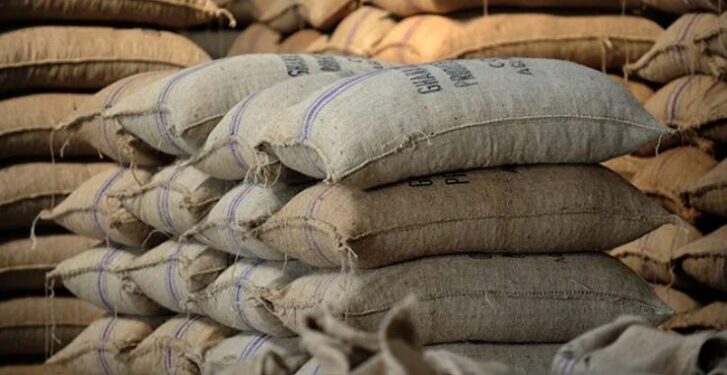
Ghana's position as a leading global cocoa producer masks a critical weakness: the country ranks only fourth among West African suppliers to Europe, and more troublingly, captures a fraction of the profits from its harvest. Between 2021 and 2024, just 53.7% of Ghana's cocoa bean exports reached European markets, trailing Cameroon (74.7%), Nigeria (57.8%) and Côte d'Ivoire (57.4%), according to analysis by Fitch Solutions.
The statistic itself raises an uncomfortable question for policymakers: if Ghana is the world's second-largest cocoa producer after Côte d'Ivoire, why is it sending a lower proportion of its beans to Europe's wealthy, high-value market compared to smaller competitors?
The raw bean trap
The real issue, however, is not geography but economics. West Africa collectively grows about 65% of the world's cocoa and exports more than half of global cocoa beans, yet the region captures only a fraction of the wealth generated. This is because most cocoa leaves Ghana and its neighbours as raw beans, bound for processing mills elsewhere—typically in Europe, Asia or North America—where chocolate makers, confectioners and food manufacturers extract the true value.
Ghana's export data reveals this imbalance starkly. In 2025, cocoa paste—a value-added product—earned $789.3 million in export revenue, whilst cocoa butter generated $635.7 million and cocoa powder brought in $233.8 million. These processed products represent a fraction of total cocoa exports and demonstrate where the money actually flows. A single chocolate bar made from Ghanaian beans in Belgium might generate ten times the revenue of the bean itself, yet Ghana sees almost none of that surplus.
Why it matters for Ghana
For a country where cocoa is the lifeblood of rural livelihoods and government revenue, this processing gap has profound implications. Thousands of smallholder farmers earn subsistence wages whilst multinational processors and chocolate manufacturers capture profits worth billions. Local processing capacity expansion could redirect billions of dollars into Ghana's economy, create manufacturing jobs in urban and semi-urban areas, and strengthen the supply chain from farm to finished product.
The European market remains critical. In 2024, Ghana held a significant share of EU cocoa imports, and processed products already comprised 46% of Ghana's cocoa exports to Europe—a sign that demand for higher-value goods exists. However, this is still insufficient; Ghana should be exporting substantially more cocoa paste, butter and powder, not raw beans.
New regulations add urgency
European Union sustainability and traceability requirements are tightening, creating both risk and opportunity. Stricter deforestation, labour and environmental standards could disadvantage suppliers unable to meet them—a threat to Ghana's raw bean exports. Conversely, locally processed cocoa products that meet EU standards could command premium prices and strengthen Ghana's competitive position.
The Fitch Solutions report arrives at a moment when Ghana's cocoa sector faces pressure from disease, climate stress and volatile global prices. Expanding processing capacity is not merely an economic luxury—it is essential to building a more resilient, profitable and sustainable cocoa industry. Without it, Ghana risks remaining locked in the role of a raw-material exporter, dependent on volatile commodity prices and vulnerable to buyers' whims.
Source: The Ghana Report



Comments (0)
Be the first to comment.