Ghana's Banking Sector Rebounds: Assets Hit ₵500bn as Recovery Gains Momentum
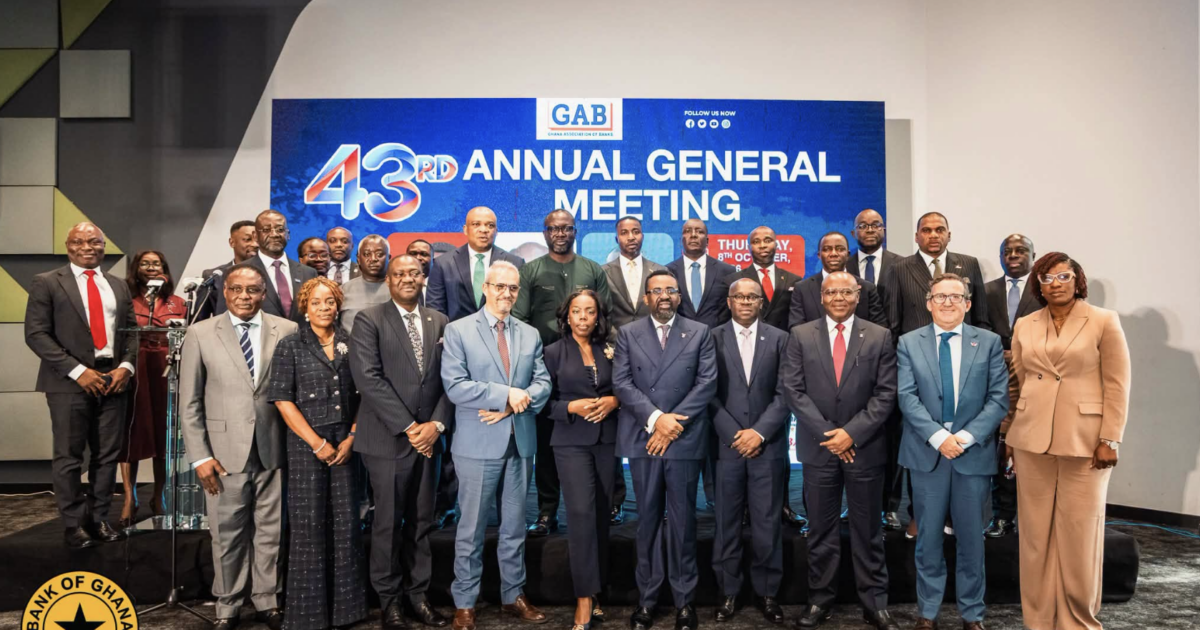
Ghana's banking sector has posted significant growth in total assets, reaching GH¢500.20 billion by the end of August 2026—a robust 20.47 per cent increase from the GH¢415.20 billion recorded a year earlier. The expansion marks a major milestone in the sector's recovery trajectory following the turbulent period triggered by the Domestic Debt Exchange Programme (DDEP) and broader economic pressures that forced capital injections across the industry.
Speaking at the 43rd Annual General Meeting of the Ghana Association of Banks in Accra, Bank of Ghana Governor Dr Johnson Pandit Asiama attributed the gains to improving macroeconomic conditions combined with targeted regulatory and supervisory reforms implemented by the central bank. The turnaround reflects coordinated efforts between financial institutions, shareholders, investors and government to stabilise the sector after the 2022-2023 shocks that left over half the banking system non-compliant with capital requirements.
Key Indicators Show Strengthened Resilience
Beyond raw asset growth, several critical health indicators demonstrate genuine sector improvement rather than superficial recovery. The banking sector's Capital Adequacy Ratio (CAR)—a crucial measure of banks' ability to absorb losses—improved from 18.28 per cent in August 2025 to 19.10 per cent in August 2026, maintaining comfortable headroom above the regulatory minimum of 13 per cent.
Perhaps most encouragingly, non-performing loans (NPLs) declined significantly from 20.77 per cent to 15.66 per cent over the same 12-month period. This reduction suggests banks are recovering from bad loan accumulation that plagued the sector during the crisis. However, Dr Asiama reminded banks that they must continue tightening: the prudential limit for NPL ratios stands at 10 per cent, a target banks must achieve by the end of December 2026.
All 23 licensed banks now meet regulatory capital requirements following restoration efforts, a dramatic turnaround from August 2022 when 13 institutions breached minimum thresholds in their audited financial statements. The collective recapitalisation campaign—involving new equity injections, retained earnings and shareholder support—represents one of the most significant interventions in Ghana's banking history.
Why It Matters for Ghana
A stable, well-capitalised banking sector is foundational to Ghana's broader economic recovery and growth ambitions. Banks serve as the transmission mechanism for monetary policy and the lifeblood of credit to businesses, especially small and medium enterprises (SMEs) that drive employment across the country.
When the sector weakened during 2022-2023, credit conditions tightened dramatically, hampering business expansion and job creation. The recovery signals that lenders now have greater capacity to extend affordable credit for productive investments—whether in agriculture, manufacturing, commerce or technology sectors. This should ease financial constraints for entrepreneurs and support the government's economic stabilisation efforts.
However, Dr Asiama's caution deserves careful attention. Capital restoration alone does not guarantee long-term stability. The BoG conducted a comprehensive thematic review of banks' business model viability in 2025 and identified vulnerabilities that required correction. A second round is planned for 2027. This suggests the central bank recognises that some banks may still be structurally fragile despite meeting regulatory ratios, and that profitability and operational efficiency must accompany capital adequacy.
The banking sector's performance also carries implications for Ghana's fiscal situation. Government revenue depends partly on bank stability and tax compliance; a weak sector constrains both. Additionally, the DDEP—which restructured domestic debt held by banks—represented a major haircut that banks absorbed. Their recovery demonstrates creditor confidence in Ghana's debt sustainability trajectory, a factor that influences borrowing costs and investor sentiment.
Road Ahead: Compliance and Sustainability
Regulatory priorities for 2026-2027 include achieving the 10 per cent NPL ceiling, completing business model assessments, and ensuring balance sheet strength translates into genuine support for the productive economy. The BoG's commitment to strengthening supervisory frameworks suggests a more proactive stance on early warning and corrective action, reducing the risk of surprise failures.
For ordinary Ghanaians, a healthier banking sector means more reliable access to savings accounts, credit facilities, and payment services. For businesses, it means an operating environment with greater credit availability and reduced interest rate premiums driven by sector risk.
Source: MyJoyOnline


Comments (0)
Be the first to comment.