Ghana's banking sector poised for stronger performance as dividend payouts resume and asset quality improves
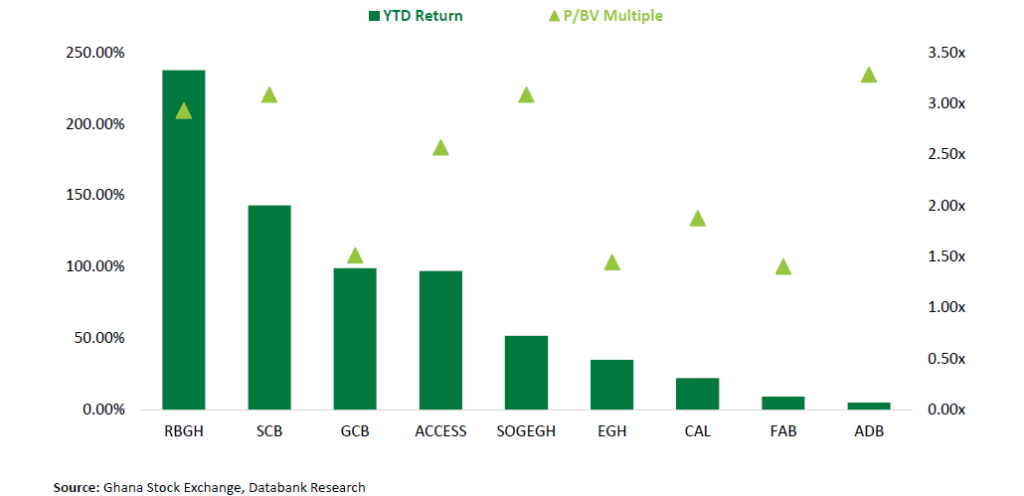
Ghana's banking sector is entering a period of renewed investor confidence, driven by the resumption of dividend payments and significant progress in repairing balance sheets damaged by the Domestic Debt Exchange Programme, according to fresh analysis from Databank Research.
The positive sentiment reflects a sector in transition: banks are moving past the acute stress of the DDEP while demonstrating stronger profitability and capital positions despite a challenging interest rate environment. Dividend resumption, approved by regulators, signals that lenders now have sufficient financial buffers to reward shareholders whilst maintaining operational stability.
Strong capital buffers and improving asset quality
Key metrics underscore the sector's recovery trajectory. Non-performing loan (NPL) ratios fell sharply to 16.1% in the first half of 2026 from 23.1% a year earlier, demonstrating meaningful progress in balance sheet cleanup. Although some banks still exceed the Bank of Ghana's regulatory NPL threshold of 10%, the downward trend suggests the sector is on track to meet the central bank's year-end deadline for compliance.
Capital adequacy ratios strengthened to 20.4% in H1 2026 from 19.7% in the prior-year period, indicating banks now have stronger capacity to absorb economic shocks and support credit expansion. This improvement matters because it signals reduced systemic risk and greater lending capacity—important factors for supporting broader economic growth.
Databank's outlook favours banks demonstrating three characteristics: strong capital positions, improving asset quality, and resilient profitability. Net income across the sector is expected to grow approximately 4% comparing the first halves of 2025 and 2026, a modest but steady performance given prevailing macroeconomic headwinds.
Why it matters for Ghana
The banking sector's recovery holds significant implications for Ghana's economy and households. A healthier banking system with stronger capital buffers is better positioned to extend credit to businesses and individuals, supporting job creation and entrepreneurship. The resumption of dividends also means Ghanaian investors—including pension funds, insurance companies, and retail shareholders—can expect income from their bank stock holdings, improving returns on long-term investments.
The sector's progress in reducing NPLs is particularly important. High non-performing loan ratios constrain banks' ability to lend and increase their risk profile. As asset quality improves, banks free up resources for productive lending rather than managing problem loans, which can stimulate economic activity.
However, challenges remain. Lower interest rates may compress net interest margins—the gap between what banks earn on loans and what they pay on deposits—potentially squeezing profitability if not offset by volume growth and cost management. The sector's success in the second half of 2026 will depend on disciplined lending practices, growing credit demand, and continued macroeconomic stability.
The outlook for investor returns
Databank Research expects further upside for banking stocks through the remainder of 2026, supported by improving macroeconomic conditions, clearer earnings visibility, and renewed dividend payments. For investors, this suggests that carefully selected bank stocks with strong fundamentals may offer attractive opportunities, though individual bank selection remains important given varying capital positions and asset quality across the sector.
Source: The Ghana Report




Comments (0)
Be the first to comment.