Ghana's AI Dreams at Risk: How Fibre Cable Cuts Are Sabotaging Digital Future

Ghana's ambition to become an artificial intelligence hub faces an unexpected enemy: damaged fibre-optic cables being cut across the country at an alarming rate. While the government has outlined plans to integrate AI across healthcare, agriculture, education and industry, the physical infrastructure needed to support these systems is under severe strain from recurring telecommunications network failures.
The scale of the problem is staggering. Between 2021 and 2025, Ghana's telecommunications operators recorded thousands of fibre cuts annually. In 2022 alone, operators documented 10,034 cuts, costing approximately US$17.4 million in repairs. Though numbers dipped to 5,600 cuts in 2024, the figure surged back above 8,000 in 2025 with repair costs reaching US$20 million. Industry data from the first half of 2026 shows 4,289 cuts already recorded, suggesting the annual total could exceed 8,000 again without urgent intervention. Over the five-year period from 2021 to 2025, telecommunications companies spent more than US$69 million simply repairing damaged fibre.
The Infrastructure-AI Connection
As Sylvia Owusu-Ankomah, CEO of the Ghana Chamber of Telecommunications, recently noted, "AI does not replace infrastructure, it depends on it." Fibre networks form the backbone of Ghana's digital economy, connecting businesses, government institutions, mobile networks, data centres and international gateways. When these cables are damaged, the consequences ripple across the entire economy—disrupting mobile-money services, rendering government platforms inaccessible, and affecting schools and hospitals that increasingly rely on digital systems.
The financial burden is particularly troubling because repair costs consume resources that could otherwise fund network expansion, improve service quality or build the additional data-centre capacity Ghana needs for its AI ambitions. Every million dollars spent fixing cuts is a million dollars not invested in future digital infrastructure.
Road Development and the Coordination Challenge
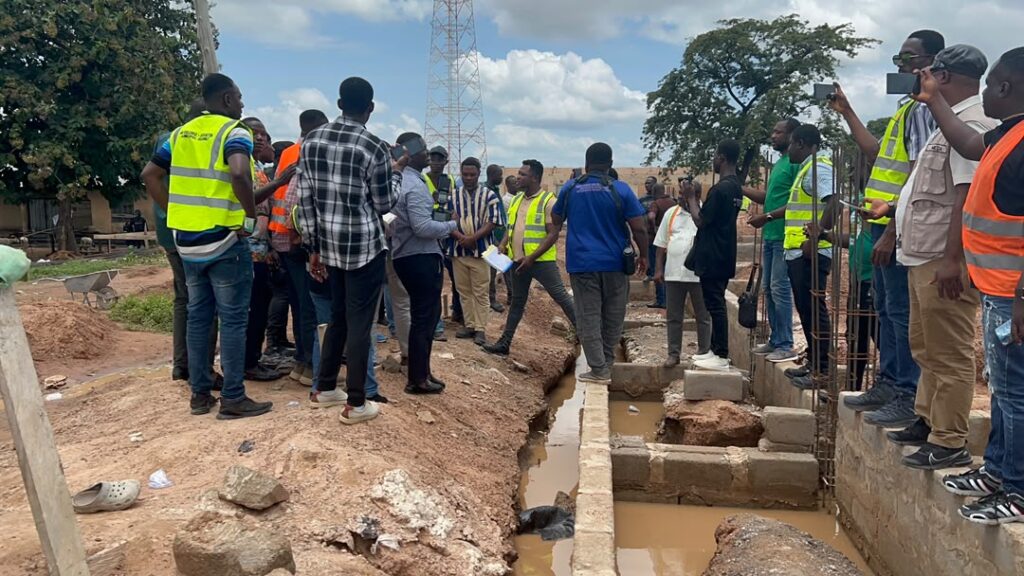
The fibre cuts are largely linked to Ghana's ongoing physical infrastructure development. Road construction projects involving excavation, drainage works and utility relocation frequently damage buried telecommunications networks when proper coordination is absent. Aerial fibre mounted on poles faces similar vulnerabilities from construction activity.
Rather than arguing against road development, telecommunications operators are calling for better planning. They propose that physical and digital infrastructure be designed together, with network operators consulted before excavation begins and existing fibre routes mapped and protected.
Why This Matters for Ghana
The proposed Dig Once Policy represents a practical solution to this coordination problem. The approach would incorporate empty fibre ducts and digital infrastructure directly into the design of new roads and major rehabilitation projects. This means Ghana could build roads once whilst simultaneously preparing them for the telecommunications networks the economy will need in future years.
Ghana's AI strategy gives the country a genuine opportunity to position itself within the global digital economy. However, government policy alone cannot deliver this vision. AI infrastructure requires robust data centres, reliable cloud systems, adequate electricity supply, international connectivity and resilient communications networks. The choice, therefore, is not between developing roads or protecting fibre—Ghana must have both. Protecting the infrastructure already in the ground may prove just as critical as building what comes next.
Source: Ameyaw Debrah

Comments (0)
Be the first to comment.