Ghana pursues BRICS Partner status, not full membership, Ablakwa clarifies
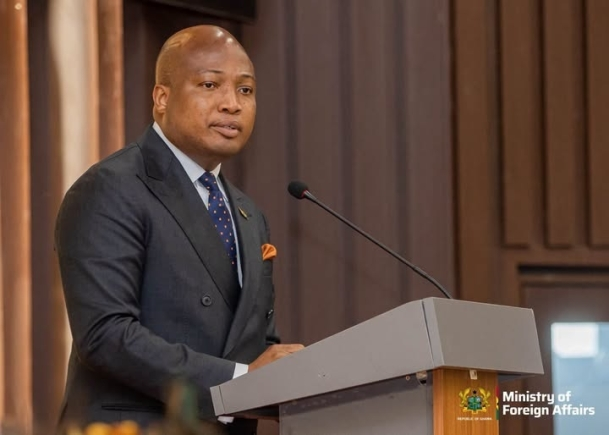
Ghana is positioning itself to join the BRICS bloc as a Partner Country rather than pursue full membership, Foreign Affairs Minister Samuel Okudzeto Ablakwa has clarified, signalling a strategic shift in the country's international alignment without abandoning traditional partnerships.
Speaking on TV3's Key Points programme on Saturday, October 10, Mr Ablakwa explained that the application represents Ghana's desire to align with natural allies among emerging markets while maintaining its longstanding relationships with Western nations. He emphasised that the decision is rooted in Article 40 of Ghana's 1992 Constitution, which prioritises the national interest in foreign policy.
Strategic diversification and non-alignment
The Minister stressed that Ghana's move reflects a continuation of the non-alignment doctrine pioneered by President Kwame Nkrumah during the Cold War era. He highlighted how Nkrumah secured development support from both the United States—funding the iconic Akosombo Dam—and the Soviet Union, which established Africa's first atomic energy programme in Ghana.
This historical precedent underscores Ghana's philosophy of engaging multiple strategic partners simultaneously rather than committing exclusively to one bloc. Mr Ablakwa noted that prior to the public announcement, Ghana had already engaged with European Union member states to explain the rationale behind the decision, framing it as a legitimate exercise of sovereignty to diversify development options.
BRICS currently comprises eleven major emerging economies: Brazil, Russia, India, China, South Africa, Indonesia, Egypt, Ethiopia, Iran, Saudi Arabia, and the United Arab Emirates. The bloc represents one of the world's largest trading platforms and serves as a forum for consultation on global and regional issues.
BRICS expansion and Ghana's position
BRICS has undergone significant expansion in recent years. The original four-nation bloc formalised at the 2006 UN General Assembly meeting eventually added South Africa in 2010 to become BRICS. By January 2024, five additional nations—Egypt, Ethiopia, Iran, Saudi Arabia, and the UAE—gained full membership status, followed by Indonesia in January 2025.
The bloc has also created a tiered membership structure, introducing Partner Country status for nations seeking closer ties without full membership obligations. Countries including Belarus, Bolivia, Kazakhstan, Cuba, Malaysia, Nigeria, Thailand, Uganda, Uzbekistan, and Vietnam joined as Partner Countries in 2025. Ghana's bid places it within this growing category of nations seeking deeper engagement with BRICS mechanisms.
Why it matters for Ghana
Ghana's pursuit of BRICS Partner status reflects broader shifts in African geopolitics and the continent's recalibration of international relationships. As a leading West African economy and democratic anchor, Ghana's moves carry symbolic weight across the region and influence how other African nations calculate their own strategic positioning.
The Partner Country status offers Ghana access to BRICS forums, trade mechanisms, and development initiatives without the full institutional commitments of membership. This allows the country to benefit from emerging market cooperation, particularly in areas such as infrastructure financing, technology transfer, and south-south development cooperation—increasingly important as global power dynamics evolve.
For Ghana, engagement with BRICS also provides leverage in bilateral negotiations with traditional partners whilst opening channels to high-growth economies in Asia and the Middle East. The decision demonstrates that African nations are no longer bound by historical alignments alone, but are actively diversifying their international portfolios to maximise development opportunities. Ghana's approach—balancing Western ties with emerging market engagement—may become a model for other African economies navigating similar geopolitical transitions.
Source: MyJoyOnline

Comments (0)
Be the first to comment.