
Ghana must treat road safety as economic priority, World Bank warns

The World Bank has issued a stark warning to Ghana's government: road safety must be treated as a critical macroeconomic and fiscal priority, not merely a public health concern. The international financial institution's assessment underscores the staggering economic toll of road traffic injuries on the nation's development prospects, with losses estimated at 2.1 per cent of Gross Domestic Product annually.
This figure represents billions of cedis that could otherwise be channelled into education, healthcare, infrastructure and poverty reduction. For context, Ghana's annual GDP hovers around $76 billion, meaning road traffic injuries are costing the country upwards of GH₵1.6 billion yearly in direct and indirect expenses.
The true cost of Ghana's road crisis
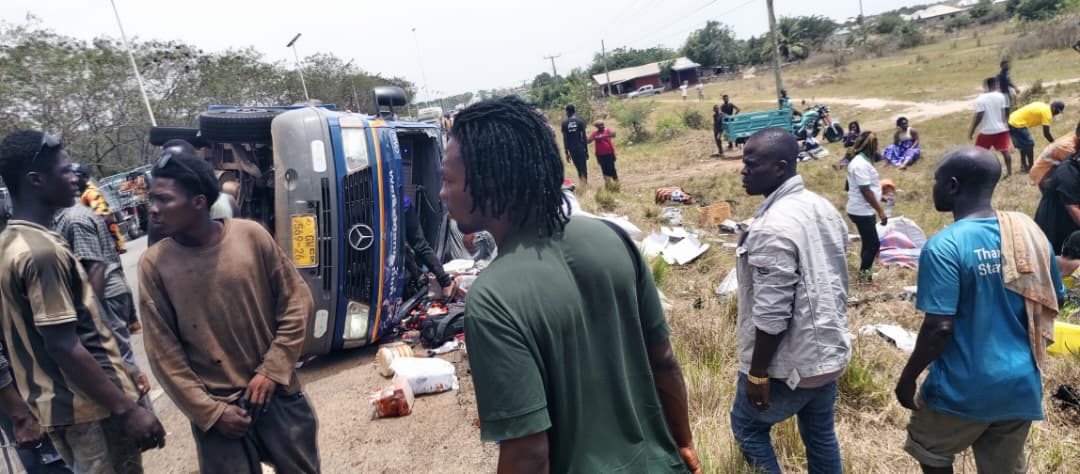
Road traffic injuries inflict damage far beyond immediate accident statistics. The World Bank's analysis captures the full economic burden: medical expenses, lost productivity from deaths and disabilities, vehicle damage, insurance claims, and the diversion of government resources to emergency response. When a breadwinner is killed or permanently disabled in a road accident, entire households slip deeper into poverty. When a young professional is lost to a road crash, Ghana loses years of potential economic contribution.
The country's road safety record has long been a concern. Ghana consistently ranks among nations with high fatality rates relative to vehicle ownership, reflecting a combination of factors: aging vehicle fleets, inadequate road maintenance, insufficient enforcement of traffic laws, poor driver training standards, and low public awareness of safety practices.
Why it matters for Ghana's development
The World Bank's recommendation to elevate road safety to macroeconomic and fiscal policy level signals that this is not a marginal issue—it is a development imperative. Countries that have successfully reduced road fatalities have typically achieved significant improvements in economic productivity and poverty reduction outcomes.
Ghana's National Road Safety Strategy exists, but implementation has been inconsistent. The World Bank's push suggests that without sustained fiscal investment and policy commitment at the highest levels, road safety will continue to undermine the nation's broader development goals. This means:
- Increased government budgeting for road infrastructure maintenance and safety upgrades
- Stronger enforcement mechanisms and penalties for traffic violations
- Investment in driver licensing and training systems that meet international standards
- Public awareness campaigns targeting high-risk behaviours
- Data collection systems to track progress and identify problem areas
The World Bank's intervention also carries weight with international lending institutions and development partners. A credible commitment to road safety can strengthen Ghana's case for concessional financing for infrastructure projects and demonstrate responsible fiscal management.
Moving from rhetoric to action
Ghana's government has acknowledged road safety challenges in policy documents and speeches. However, translating acknowledgement into sustained budgetary prioritisation remains the critical gap. The World Bank's framing—linking road safety to macroeconomic health—provides government officials with a powerful argument for competing budget allocations.
Implementation will require coordination across multiple agencies: the Ministry of Transport, National Road Safety Authority, Ghana Police Service, and local government authorities. It will also require political will to enforce unpopular measures, such as strict penalties for speeding and drink-driving, that disproportionately affect powerful constituencies.
The World Bank's message is clear: Ghana cannot afford—literally and economically—to treat road safety as a secondary concern. With 2.1 per cent of GDP bleeding away annually, every delay in meaningful action has a measurable cost in both human life and national wealth.
Source: 3News



Comments (0)
Be the first to comment.