Ghana joins Dutch crackdown on fugitive drug lord's cocaine empire
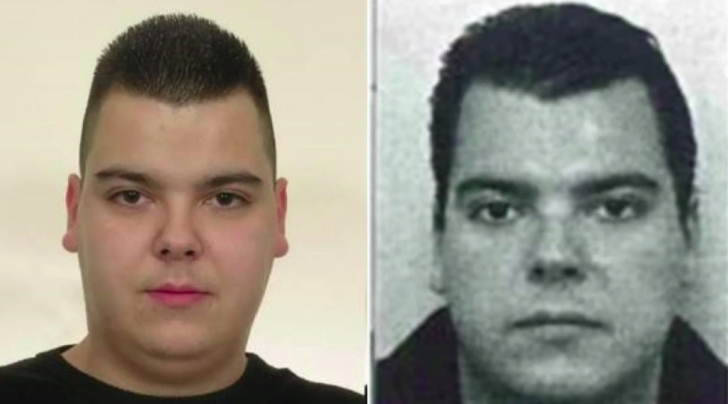
Ghana has been drawn into an international manhunt for one of Europe's most wanted drug traffickers, as the Dutch government seeks to dismantle a sprawling cocaine smuggling operation that has used West African ports to flood European markets with narcotics.
The target is Jos Leijdekkers, a Dutch national known as Bolle Jos, who faces more than 80 years in prison across the Netherlands and Belgium for industrial-scale drug trafficking. Though believed to be sheltering in Sierra Leone with connections to high-level political figures, his network has developed deep roots in Ghana—a critical transit hub for his operations.
Dutch Minister of Justice and Security David van Weel has personally backed efforts to involve Ghanaian authorities in disrupting Leijdekkers' supply lines. While details remain confidential, the cooperation could extend to deploying Dutch police officers to Ghana to work alongside local law enforcement agencies in tracking and dismantling the criminal infrastructure.
The Dunkirk seizure and Ghana connection
The urgency intensified after French customs officers uncovered nearly 3.9 tonnes of cocaine at the Port of Dunkirk in September 2026—the largest single interception linked to this network. The drug was hidden inside containers ostensibly carrying recycled plastic waste shipped from Ghana, with an estimated street value of approximately US$260 million.
The seizure has direct Ghanaian implications. Four Ghanaians have been brought before the High Court in Accra in connection with the shipment. Among them is Desmond Koranteng Curiel, identified as a key Ghana-based operative within Leijdekkers' organisation. All four have pleaded not guilty to charges of conspiracy to export narcotics and drug exportation, and their trial will likely expose how deeply the network has penetrated Ghanaian port systems and logistics infrastructure.
Why this matters for Ghana
This case represents a critical test of Ghana's commitment to combating international drug trafficking. The country has long faced scrutiny for serving as a transshipment point for cocaine destined for Europe, with traffickers exploiting relatively porous port security and corruption networks. The involvement of an accused Ghanaian operative suggests that Leijdekkers' network has successfully recruited local facilitators, undermining Ghana's own drug control efforts.
Ghana's Narcotics Control Commission has stated unequivocally that the country will not become a safe haven for international trafficking organisations. However, the Dunkirk seizure demonstrates that preventing such operations requires not just rhetoric but sustained, coordinated enforcement and international cooperation. The Dutch deployment of police officers signals that external partners no longer view Ghana's institutions as fully capable of handling this challenge alone—a reputational cost that extends beyond drug enforcement to perceptions of institutional capacity and integrity.
The geopolitical pressure being applied to Sierra Leone offers a template. The European Commission has already suspended €18 million in budget support to Freetown, with a further €22.5 million earmarked for 2027 at risk, specifically to pressure that government to extradite Leijdekkers. Such economic leverage, if applied to Ghana, could carry significant consequences for a nation dependent on international development assistance.
Regional pressure and asset freezes
The Dutch government is pursuing a multi-pronged strategy to isolate Leijdekkers. Beyond seeking Ghana's cooperation, it is mobilising additional European measures to freeze his assets and restrict his international movements. Officials are also engaging other African nations to build regional consensus and eliminate safe corridors for the fugitive.
The cooperation between Ghana and the Netherlands will test how effectively West African nations can coordinate with European law enforcement to dismantle sophisticated smuggling networks that exploit geography and weak governance. Success could model a new standard for combating transnational organised crime in the region.
Source: MyJoyOnline



Comments (0)
Be the first to comment.