Ghana joins continental push: Africa's clean air movement unites 80+ institutions to tackle pollution crisis
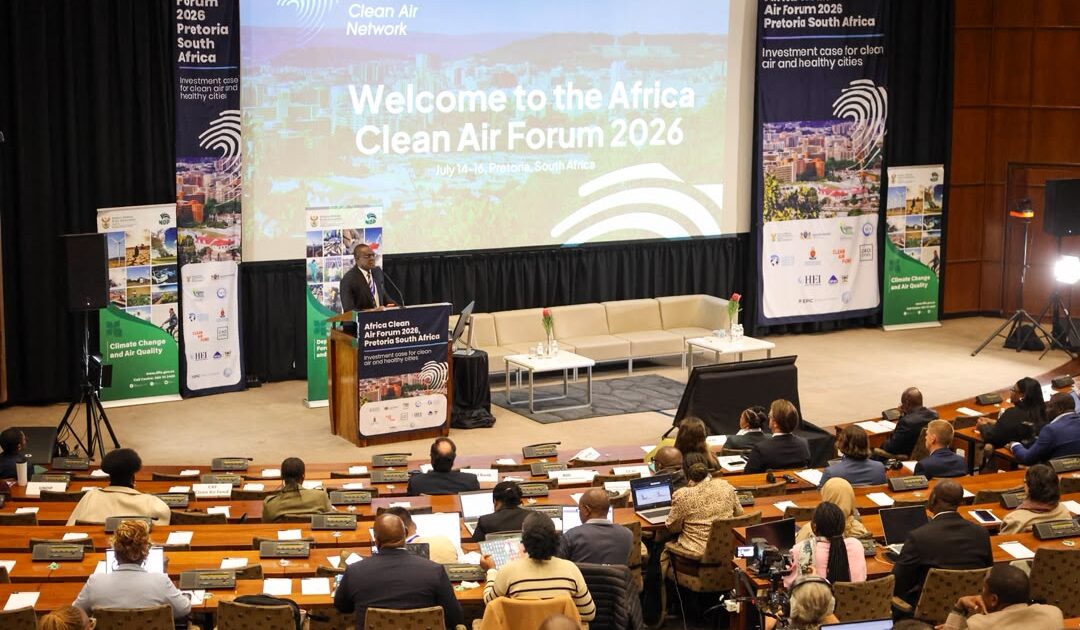
Africa's fragmented approach to air pollution is giving way to a unified continental effort. The Africa Clean Air Network (AfriCAN) has brought together more than 80 institutions across the continent and beyond, marking a historic shift from isolated pockets of research and activism to coordinated, cross-border action on one of the continent's most pressing public health challenges.
Speaking at the Africa Clean Air Forum in Pretoria, South Africa, leaders of the network outlined an ambitious agenda: to strengthen air quality monitoring, accelerate policy adoption and connect the scientists, policymakers, healthcare professionals and environmental advocates who have long worked in isolation. For Ghana and other African nations, this represents a critical opportunity to leverage shared expertise and resources in addressing air pollution that kills thousands annually.
Why it matters for Ghana
Ghana faces significant air quality challenges, particularly in urban centres like Accra and Kumasi, where industrial activity, vehicular emissions and dust from the Sahara combine to create hazardous conditions. Yet air quality monitoring and policy frameworks remain underdeveloped compared to many developed nations. Ghana is among the African countries yet to establish comprehensive national air quality standards, despite growing evidence that poor air quality contributes to respiratory disease, cardiovascular illness and premature deaths.
AfriCAN's membership, which remains open to Ghanaian institutions regardless of size, offers local researchers, government agencies and civil society groups access to continental expertise and data. Through the network, Ghanaian organisations can learn from successful monitoring initiatives in other African cities, advocate for stronger national standards and participate in region-wide policy discussions that may influence Ghana's own air quality regulations.
From silos to collaboration
Deo Okure, Head of Research and Global Partnerships at AIRQo and AfriCAN co-facilitator, highlighted the challenge that prompted the network's creation: despite years of valuable work across Africa on air quality, much of it happened in isolation. Governments, universities, development organisations and researchers made progress independently, but few mechanisms existed for cross-country collaboration or experience-sharing.
"We did not have a dedicated platform to allow us to collaborate better within the continent or share experiences and ideas," Okure explained. AfriCAN aims to change that by offering a shared platform that enables collaboration across borders, disciplines and sectors.
The network's diverse membership—which includes environmental protection agencies, universities, research organisations, civil society groups, private companies and international partners—reflects the breadth of expertise needed to tackle air pollution. The annual Africa Clean Air Forum has emerged as a flagship event, attracting hundreds of participants and providing a space for members to exchange ideas, establish new collaborations and learn from one another's experiences.
Immediate priorities: monitoring and standards
Over the next five years, AfriCAN's most pressing goal is expanding air quality monitoring across Africa. Many African cities currently lack routine monitoring data, making it impossible for governments to understand pollution severity or track progress. Okure noted that some cities have yet to collect a single air quality measurement—a critical gap that prevents informed policymaking.
"We hope that in the next five years, maybe at least every city in the African region has at least one data point," he said. Establishing baseline data is essential for setting realistic targets and mobilising resources.
The network is also pushing governments to adopt national air quality standards. Nearly half of African countries lack explicit air quality standards, despite mounting evidence of pollution's health impacts. AfriCAN aims for at least 80 percent of African nations to establish standards within the next five years—a milestone that would provide a foundation for enforcement and progress measurement.
Membership in AfriCAN is free and open to any institution demonstrating work that improves air quality and aligns with the network's objectives. For Ghanaian organisations already engaged in air quality work—whether through research, advocacy or policy development—joining offers access to continental resources, peer networks and policy platforms without financial barriers.
Source: MyJoyOnline


Comments (0)
Be the first to comment.