
Ghana Education Service Distributes Food Funds to Senior High Schools for Student Meals
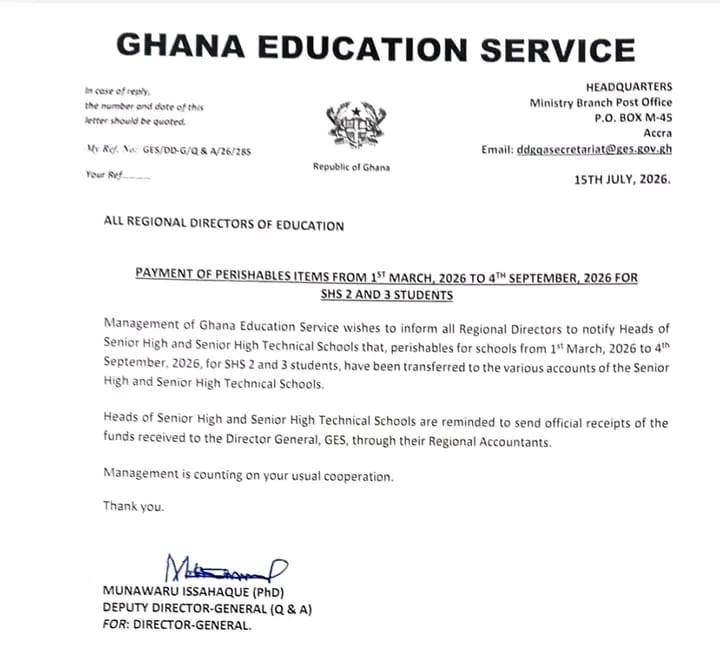
The Ghana Education Service has moved to strengthen food provision in senior high schools across the country by releasing dedicated funds to support the purchase of perishable food items for students. The funds, transferred directly to school accounts, are intended to cover the feeding needs of second and third-year students from March through September 2026.
The release of these funds represents an effort by the GES to address a persistent challenge in Ghana's secondary education system: ensuring consistent and adequate meals for boarding students. By allocating specific resources for perishable items—such as fresh vegetables, proteins, and other essential ingredients—the Service aims to improve the nutritional standards and overall welfare of students during a critical academic period.
Implementation and Accountability
All Regional Directors of Education received directives on July 15, 2026, instructing them to notify school heads immediately of the fund release. The GES has established clear accountability measures requiring schools to submit official receipts and payment documentation to the Director-General through their respective Regional Accountants. This ensures transparent tracking of how the funds are utilised and helps prevent misappropriation.
The Deputy Director-General in charge of Quality Assurance and Improvement, Munawaru Issahaque, signed the directive emphasising the importance of cooperation between regional education officials and school authorities. The structured approach suggests the GES is taking a hands-on role in monitoring implementation across the country's diverse school system.
Why This Matters for Ghana
Food security in boarding schools remains a contentious issue in Ghana's education landscape. Poor meal provision has historically led to student unrest, strikes, and in some cases, damage to school property. By proactively releasing funds for food purchases, the GES is attempting to prevent such disruptions and create a more conducive learning environment.
The focus on second and third-year students is significant, as these cohorts represent the bulk of the student population in most schools and have the greatest nutritional demands during their formative years. Adequate nutrition directly impacts student concentration, academic performance, and overall health outcomes—factors critical to Ghana's education quality agenda.
Additionally, this intervention demonstrates the government's commitment to supporting public education infrastructure. For many Ghanaian families, public senior high schools are the primary option, and consistent meal provision can be a deciding factor in school choice and student retention. Schools in remote or under-resourced regions particularly benefit from centralised funding mechanisms like this, as they often struggle to source funds independently.
Next Steps
School administrators are now expected to use these funds strategically to procure quality food items that meet nutritional standards. The requirement for documented accountability will help the GES assess the effectiveness of this initiative and make adjustments for future funding cycles if needed. Regional Accountants will play a crucial supervisory role in ensuring funds reach their intended purpose.
The directive underscores the GES's recognition that student welfare—particularly nutrition—is fundamental to educational success in Ghana's secondary schools.
Source: Today GH


Comments (0)
Be the first to comment.