
GES Releases Funds to Schools for Student Meals as New Academic Term Approaches
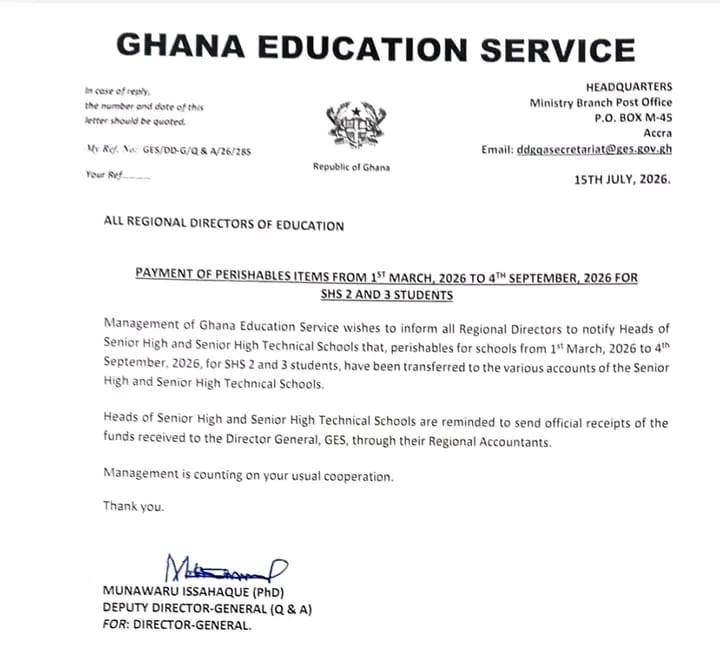
The Ghana Education Service has distributed funds to Senior High Schools and Senior High Technical Schools across the country to guarantee the consistent supply of perishable food items for second and third-year students. The financial allocation, which became effective from 1 March, is intended to support school feeding programmes through 4 September 2026, addressing a critical aspect of student welfare and academic performance.
This initiative reflects the GES's commitment to ensuring that students have access to adequate nutrition during their academic year. The funds have been directly transferred to individual school accounts, bypassing intermediaries to enable swift procurement of fresh food items including fruits, vegetables, proteins and dairy products that are essential for balanced student nutrition.
Implementation and Accountability Framework
Regional Directors of Education received formal notification on 15 July to communicate the fund release to all school heads. The GES has established clear accountability measures requiring schools to submit official payment receipts to the Director-General through their Regional Accountants, ensuring transparent use of public resources.
The directive, issued by Deputy Director-General Munawaru Issahaque, emphasises collaboration between regional education offices and school authorities. This structured approach aims to prevent delays in food procurement and ensure that the funds reach their intended purpose—supporting student nutrition rather than being diverted to other uses.
Why This Matters for Ghana's Education System
Reliable school feeding programmes have long been recognised as foundational to student attendance, concentration and academic achievement. When schools struggle to source perishable items consistently, meal quality deteriorates, affecting vulnerable students who may depend entirely on school meals for daily nutrition. By ring-fencing funds specifically for perishable foods—rather than combining them with general school budgets—the GES addresses a persistent challenge in Ghana's secondary education sector.
This allocation also supports local farmers and food suppliers. When schools have guaranteed funds for regular procurement, they can establish relationships with local producers, creating a steady market for agricultural products and supporting Ghana's informal economy. The timing through the peak academic months (March to September) covers the most critical learning periods when student concentration is essential.
School feeding programmes have documented links to improved school attendance rates and better classroom performance, particularly among disadvantaged students. By ensuring consistent access to nutritious meals, the GES indirectly supports equity in education, helping level the playing field between students from affluent and lower-income backgrounds.
The initiative also places responsibility on school management to operate transparently. The requirement for official receipts and regular reporting creates accountability that protects against misappropriation and ensures public funds deliver measurable results in student welfare.
Source: MyJoyOnline


Comments (0)
Be the first to comment.