Ghana can learn from India's ancient water systems as climate crisis deepens
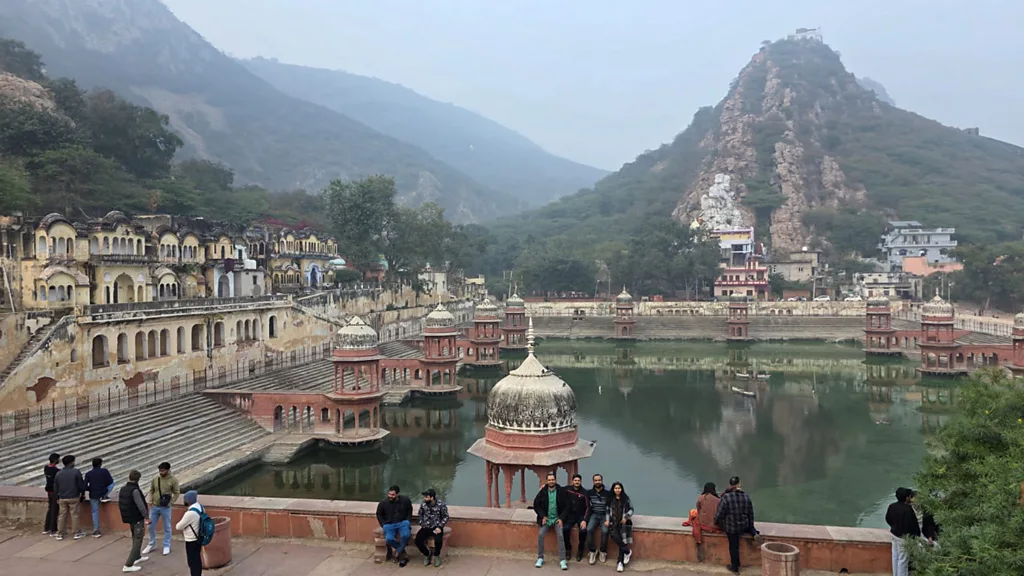
India's battle against water scarcity is revealing lessons that could prove invaluable for Ghana and other African nations: sometimes the most effective solutions to modern water crises lie in ancient infrastructure that has been abandoned or forgotten.
Across India, communities are restoring traditional water-harvesting systems built centuries ago—stepwells, johads, and other structures—as groundwater depletion and climate change threaten water security for billions. The success of these projects raises important questions for Ghana, which faces its own intensifying water challenges driven by population growth, urbanisation, and increasingly erratic rainfall patterns.
How ancient systems address modern scarcity
India's stepwells, or baoris, are large underground structures with carved stone tiers and descending steps that allow access to groundwater. Unlike modern open reservoirs such as dams and canals, these structures are highly efficient: they reduce water loss to evaporation by directing rainfall deep into aquifers, keeping it cool and accessible through nearby wells and hand pumps. Thousands of these stepwells, built between the 7th and mid-19th centuries, are now being restored across Indian cities and rural areas.
Equally important are johads—simple crescent-shaped earthen dams that capture monsoon runoff and allow it to percolate into the ground rather than run away. In Alwar, Rajasthan, the revival of johads has transformed entire watersheds. In the 1980s, Rajendra Singh, an Ayurvedic practitioner, began building johads in villages where borewells had dried up. After the 1986 monsoon filled his first restored johad, wells across the region that had been dry for years suddenly had water again.
These structures share a fundamental principle: they slow water down, allowing it to soak into soil and replenish aquifers rather than drain away as surface runoff. This approach is particularly valuable in the face of climate change, which intensifies rainfall events while making conditions drier overall.
Why it matters for Ghana
Ghana's water sector faces mounting pressure. The country depends heavily on groundwater and surface sources, particularly the Volta River system, which supplies hydroelectric power and drinking water for millions. Climate change is making rainfall patterns less predictable, with some years bringing intense storms that cause flooding and erosion, whilst others bring extended dry periods. Urban water demand is rising as cities expand, whilst treatment and distribution losses remain significant.
Ghana also faces the legacy of colonial-era infrastructure designed for different climatic conditions. Many traditional water management practices used by Ghanaian communities for centuries—similar to those in India—have been displaced by dependence on boreholes and piped systems that require constant energy input and maintenance.
India's approach suggests that Ghana could benefit from a dual strategy: maintaining and improving modern infrastructure whilst systematically documenting and restoring traditional water systems. This is not about abandoning technology, but about integrating climate-resilient practices that communities have refined over generations. In regions with unreliable electricity supply, such systems would be particularly valuable.
Steps forward for Ghana
Ghana's water authority and regional governments could commission research into historical water management systems used in different areas—whether earthen dams, underground reservoirs, or infiltration structures. Pilot projects in water-stressed regions could test restoration alongside modern monitoring tools. Community involvement is essential; those living in affected areas often hold knowledge about where and how these systems once functioned.
Water security will be critical to Ghana's development over the coming decades. Learning from India's experience demonstrates that building climate resilience does not always require imported technology or massive capital investment. Sometimes it requires looking backward to systems that sustained communities for centuries, and adapting them thoughtfully for the challenges ahead.
Source: MyJoyOnline



Comments (0)
Be the first to comment.