
Ghana At 70: Are We Honest About What Independence Has Delivered?
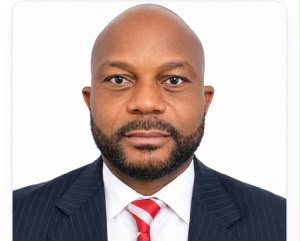

As Ghana counts down to its 70th independence anniversary on 6th March 2027, a leading voice in education and governance is urging Ghanaians to look beyond the bunting and fanfare and ask a harder question: has the country truly built the institutions and leadership that independence was meant to make possible?
Nii Armah Addy, Founder and Chief Executive of the Institute of Leadership and Management in Education (InLaME), says the milestone should prompt a frank national reckoning rather than another cycle of ceremonial celebration. Speaking ahead of InLaME's planned Ghana @ 70 national dialogue, he argued that decades of self-governance have yet to fully translate into the accountable, capable institutions that citizens deserve.
The gap between promise and delivery
Mr Addy's concern is not simply that Ghana has fallen short of lofty ambitions — it is that the country may not be asking itself why. He points to persistent weaknesses in accountability, public sector effectiveness and educational quality as evidence that structural problems remain unresolved, even as Ghana accumulates anniversaries.
His central argument is straightforward: natural resources and physical infrastructure alone cannot drive sustainable development. Oil revenues, roads and new hospitals mean relatively little without honest public officials, well-functioning oversight bodies and leaders who convert policy commitments into real improvements in people's lives.
"The strength of every nation lies not only in its natural resources or physical infrastructure, but in the quality of its people, the integrity of its leadership and the effectiveness of its institutions," he said.
Ghana's development record makes the point. The country has experienced sustained economic growth in certain periods, risen to lower-middle-income status and conducted a succession of peaceful elections that many on the continent have admired. Yet challenges around public service delivery, corruption, educational outcomes and youth unemployment remain deeply entrenched — suggesting that formal achievements have not always reached ordinary Ghanaians in meaningful ways.
Why it matters for Ghana
At 70, Ghana occupies an important symbolic position in Africa. As the first sub-Saharan country to gain independence, Ghana's story has always carried continental weight. How the country reflects on its own governance record therefore matters beyond its borders.
Domestically, the stakes are equally high. A youthful, growing population is demanding better schools, more jobs and public institutions it can trust. Mr Addy argues that unless Ghana deliberately invests in leadership development and institutional reform — particularly within the education sector — it risks squandering both its demographic dividend and its resource wealth.
He is especially focused on preparing the next generation, identifying knowledge, innovation and purposeful leadership as the foundations on which a genuinely prosperous Ghana must be constructed. "We cannot leave the future to chance," he stated plainly.
That framing has practical implications for policy. It suggests that investments in leadership training, educational reform and institutional accountability mechanisms are not soft or secondary concerns — they are prerequisites for the kind of development that actually improves living standards.
A national conversation in the making
To help drive that conversation, InLaME is convening a formal dialogue on Tuesday, 24th November 2026, at the British Council Auditorium in Accra. The event, themed "Standing Here, Looking Back to Look into the Future," will draw together policymakers, academics, education professionals and development partners to examine leadership, governance and institutional transformation in depth.
The gathering is designed not as a celebratory occasion but as a working forum — one that takes seriously the gap between where Ghana is and where it could be. With the actual anniversary still months away, the hope is that substantive dialogue now can shape the kind of reflection that marks 70 years in a genuinely meaningful way.
Whether Ghanaians in government, civil society and everyday life choose to engage honestly with those questions may well determine what the next 70 years look like.
Source: MyJoyOnline




Comments (0)
Be the first to comment.