
GAYO Rolls Out School Waste Sorting Plan Across Greater Accra to Fix a System That Has Been Failing Students
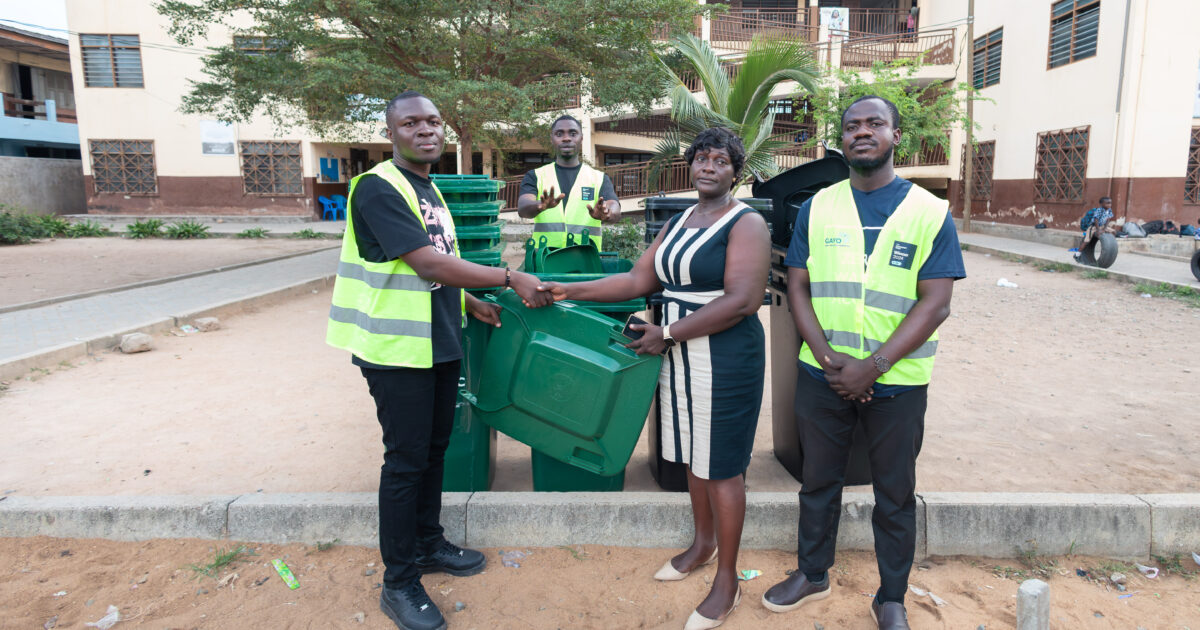

Schools in Accra that have tried to do the right thing — sorting their rubbish into organic and plastic waste — have repeatedly watched their efforts come to nothing the moment a collection truck arrives and tosses everything back together. That frustration, which has caused many schools to abandon waste sorting altogether, is now at the centre of a new initiative by the Green Africa Youth Organization (GAYO) aimed at finally making school-level recycling work in Ghana's capital.
How the system has been failing schools
The problem is not new. An earlier pilot scheme distributed sorting bins to schools in the La Dade Kotopon Municipality, but it fell apart at the point of collection. Madam Habiba Kotomah, the Education Director for that municipality, described the experience directly: schools sorted dutifully, but when the trucks came, everything was mixed back together. Over time, most schools simply stopped bothering.
Beyond collection failures, schools have also struggled with a basic shortage of bins. Despite repeated requests to district assemblies, many schools say they have never received enough equipment to make sorting practical at scale. The result has been a cycle of good intentions meeting structural failure.
The financial stakes are significant. GAYO's Zero Waste Project Coordinator, Antonio Yayrator Korkuvi, noted that roughly 60 percent of the financial resources allocated to district assemblies is spent on waste management — a burden driven largely by organic waste and plastics. Waste audits conducted at schools found that about 60 percent of school-generated waste is organic, followed by paper and then plastics.
What GAYO's Zero Waste initiative proposes
Under the Zero Waste initiative, GAYO plans to collect separated organic and plastic waste directly from schools across seven municipalities in Greater Accra, including La Dade Kotopon, Ledzokuku, Accra Metropolitan and Ablekuma West. By removing the unreliable link in the chain — the mixed-waste trucks — the organisation hopes to make sorting sustainable and worthwhile for schools.
Organic waste collected from schools will be composted and used to grow vegetables in school gardens. Mr Korkuvi noted that produce grown with this compost is free from the chemicals found in synthetic fertilisers. Plastics will be sent to GAYO's material recovery facility, where they will be processed into pellets for reuse.
Crucially, schools will not just be asked to participate for free. Madam Kotomah confirmed that GAYO has agreed to pay schools a token amount in exchange for their sorted waste — effectively creating a small but meaningful stream of internally generated funds (IGF) for participating schools. She described this as a significant motivation for headteachers who have long seen waste as a problem rather than an opportunity.
The model has already proven itself at a larger scale. The La Dade Kotopon Municipal Assembly's material recovery facility is currently diverting more than 50 tonnes of waste per month, covering both organics and plastics. GAYO's Operations and Programs Director, Betty Adjei, said the initiative will eventually extend to markets.
Why it matters for Ghana
Ghana is under growing pressure to manage its waste more effectively, particularly as environmental and climate commitments tighten. Officials of the Accra Metropolitan Assembly have warned that Ghana risks missing its target of cutting methane emissions from the waste sector by 30 percent by 2030 — a target made harder by the fact that more than half of all waste produced in Accra is organic and most of it ends up in landfills. When organic waste decomposes in landfills, it releases methane, a greenhouse gas considerably more potent than carbon dioxide.
Beyond the climate dimension, poor waste management has immediate human costs. Ms Adjei pointed to the flooding that struck parts of Accra in June and July, when waste-choked drainage systems worsened the disaster. Keeping waste out of drains and gutters is not just an environmental concern — it is a public safety one.
Schools are also being targeted now because of timing. The government is expected to require all households to begin separating waste from next year, and Ms Adjei argued it is vital to build that habit early. "It's very important to catch them young," she said.
At Forces Senior High School, Assistant Headmistress Rosina Lawal has taken the culture of cleanliness particularly seriously, working toward the ambitious goal of providing every student with their own bin. She acknowledged that strict enforcement of cleanliness standards has not always made her popular, but said she remains committed. Her message to GAYO: do not slow down. "Like Oliver Twist, we want more," she said.
Source: MyJoyOnline



Comments (0)
Be the first to comment.