
Five Critical Sectors Need More Investment in Ghana's 2026 Budget Review, Says Prof. Quartey
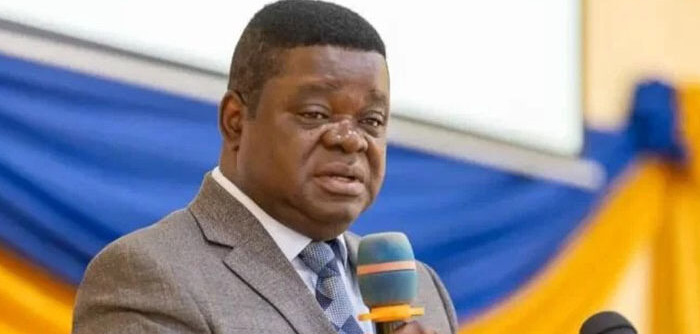

Ghana's economic management must shift focus towards strengthening productive sectors and generating employment, according to Professor Peter Quartey, former Director of the Institute of Statistical, Social and Economic Research. Speaking ahead of the 2026 Mid-Year Budget Review presentation to Parliament, Prof. Quartey outlined five priority areas he believes Finance Minister Dr Cassiel Ato Forson should address to sustain macroeconomic stability whilst creating meaningful job opportunities for Ghanaians.
The economist acknowledged that Ghana has made commendable progress in stabilising its macroeconomic fundamentals but warned that the country cannot rest on these gains alone. The next phase of economic policy, he argued, must be anchored on expanding sectors with genuine capacity to generate employment and drive sustainable long-term growth.
Agriculture and Manufacturing: The Job Creation Imperative
Prof. Quartey placed particular emphasis on agriculture and manufacturing as the twin pillars of Ghana's employment strategy. These sectors, he stressed, employ more Ghanaians than any other industries and hold the greatest potential for economic transformation. However, both sectors have been underinvested in relative to their importance.
A critical gap the professor highlighted is the lack of adequate irrigation infrastructure. Ghana, despite its agricultural potential and favourable climate, lags significantly behind neighbouring countries like Burkina Faso in irrigated farming. This shortfall has created a paradox: whilst Ghana imports onions and other produce from less agriculturally-endowed nations, local farmers struggle with rain-dependent production. Improving irrigation systems and the broader enabling environment for agricultural expansion, Prof. Quartey argued, should become a national priority to strengthen food security and reduce import dependency.
For manufacturing, he called on the government to design and implement incentives that encourage private sector participation. The budgetary review, he suggested, should detail concrete tax breaks, financing mechanisms and other supports that would attract manufacturers and boost value-added production.
Infrastructure, Poultry and Sanitation: Completing the Picture
Beyond agriculture and manufacturing, Prof. Quartey identified three additional areas requiring sustained attention. The government's flagship infrastructure programme, the Big Push, deserves continued funding, but the pace of implementation has been disappointing. Road networks and other critical infrastructure remain incomplete, and Prof. Quartey called for accelerated spending to deliver visible improvements across the country more rapidly.
The poultry sector, which has received renewed policy focus, also requires urgent attention to resolve implementation problems. Prof. Quartey noted that whilst the strategic direction is sound, execution has been poor. Direct engagement with major poultry farmers to address bottlenecks is essential. Finally, sanitation infrastructure and public service delivery deserve sustained investment as complements to economic growth.
Why It Matters for Ghana
The 2026 Mid-Year Budget Review is a critical juncture for Ghanaian policymakers. The country faces persistent unemployment, particularly among young people, and remains vulnerable to external shocks. Prof. Quartey's framework emphasises that macroeconomic stability alone is insufficient; genuine economic transformation requires strategic investment in sectors that create jobs and strengthen resilience.
His call for improved domestic revenue mobilisation paired with productive spending reflects a deeper truth: Ghana cannot sustainably grow through consumption-driven spending or reliance on external financing. Building irrigation, supporting farmers, incentivising manufacturers and completing infrastructure projects are long-term investments that yield returns far beyond their initial cost. Food imports drain foreign exchange reserves, whilst local manufacturing and agricultural development create domestic value chains and employment.
The timing is also significant. With global economic uncertainty and Ghana's own fiscal challenges, the mid-year review must demonstrate to both domestic stakeholders and international creditors that the government is serious about structural economic reform, not merely maintaining stability. Prof. Quartey's five-point agenda offers a roadmap for that transformation.
Source: MyJoyOnline
-1-752x622.webp)

Comments (0)
Be the first to comment.