
Fire Guts 11 Rooms in Eastern Region Compound House as Residents Lose Belongings and Vehicles
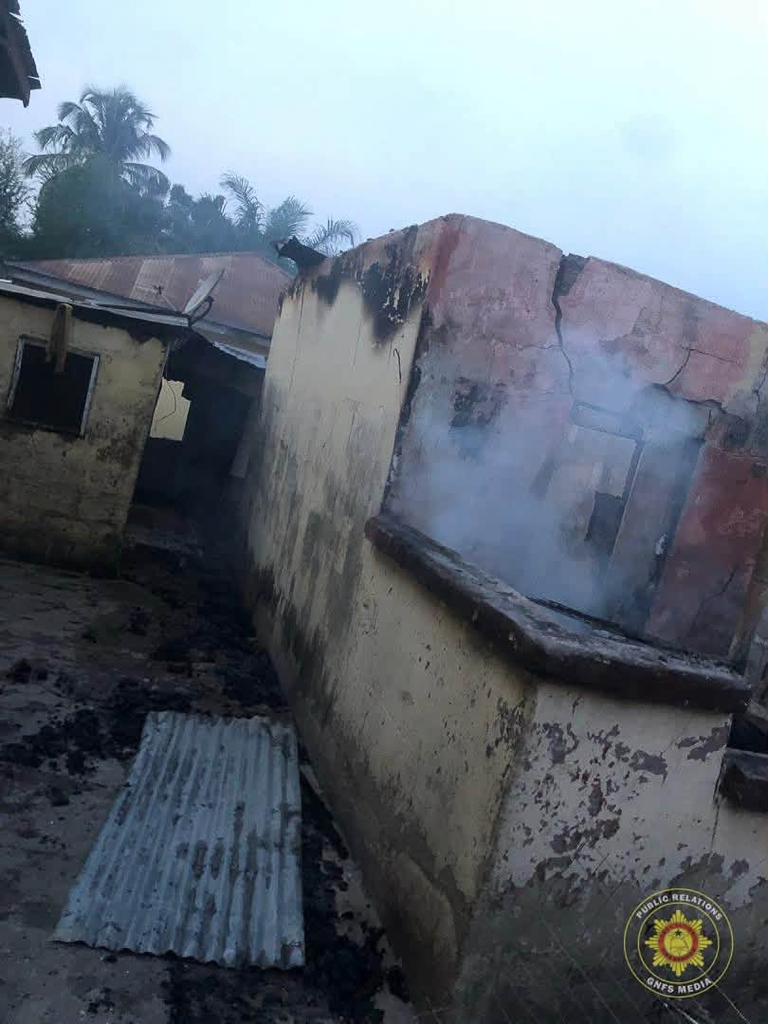

A devastating fire outbreak has left residents of a compound house in Anlo Town, near the Old Slaughter House in the New Juaben North Municipality of the Eastern Region, counting their losses after flames tore through 11 of the building's 23 rooms. The Ghana National Fire Service (GNFS) confirmed the incident on Friday, 6th November, noting that a swift response by firefighters helped prevent an even more catastrophic outcome.
Swift response limits the damage
A 10-member crew from the New Juaben North Municipal Fire Station was deployed to the scene and worked to bring the blaze under control before it could spread beyond the affected wing of the building. Their intervention is credited with saving the remaining 12 rooms and protecting neighbouring properties from catching fire.
Despite the successful containment, the destruction within the affected section was significant. Several personal belongings belonging to residents were lost in the blaze, along with two electric motorbikes and a bicycle — items that represent considerable financial value for ordinary households. The GNFS has since restricted access to the damaged portion of the building, citing fears over its structural safety following the fire's impact on the walls and roofing.
Senior officers from both the Ghana National Fire Service and the Ghana Police Service visited the scene following the incident. Preliminary investigations are currently underway to determine the exact cause of the fire, though no official finding has yet been announced.
Why it matters for Ghana
Compound houses — large shared residential buildings common across Ghana — present a particular fire risk because of the high number of families living in close proximity, often sharing cooking spaces, electrical connections and limited exits. When fire breaks out in such structures, the potential for mass displacement and injury is significant.
The Eastern Region, like many parts of Ghana, has seen recurring incidents of domestic fires, many of which are linked to faulty electrical wiring, the improper use of cooking gas, or open-flame cooking in confined spaces. The destruction of electric motorbikes in this particular incident raises questions about the storage and charging of electric vehicles in residential settings — a concern that is likely to grow as more Ghanaians adopt electric mobility options.
The GNFS regularly appeals to Ghanaians to take basic fire prevention measures, including ensuring that electrical installations are carried out by certified professionals, switching off appliances when not in use, and storing flammable materials safely away from heat sources.
What residents and landlords should know
Incidents like this serve as a reminder of the vulnerability of compound house residents across Ghana, many of whom have limited or no insurance coverage for their belongings. Those who lose property in domestic fires often have no financial safety net, making recovery an enormous personal burden.
- Residents are advised to identify fire exits and ensure they are never blocked.
- Electrical faults are among the leading causes of domestic fires in Ghana — regular checks by a qualified electrician can reduce the risk.
- Landlords have a responsibility to ensure that common areas, wiring and cooking facilities in compound houses meet basic safety standards.
- The GNFS emergency line should be saved and readily accessible for all households.
As investigations continue, authorities are expected to release a formal report on the cause of the Anlo Town fire. Residents of the affected compound are currently unable to access the damaged section of the building, and it remains unclear when structural assessments will be completed to determine whether the rooms can be safely rebuilt or occupied again.
Source: MyJoyOnline


Comments (0)
Be the first to comment.