EOCO's handling of Baffour Awuah arrest attempt breached parliamentary protocol, says Agalga

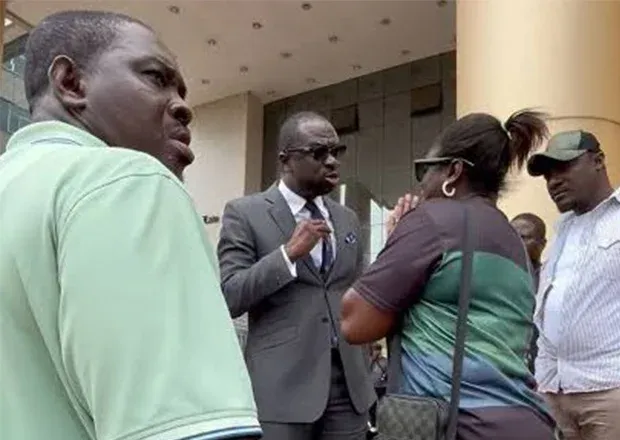
The Economic and Organised Crime Office (EOCO) has faced criticism over its handling of an attempted arrest involving Member of Parliament Baffour Awuah, with observers pointing out that the agency failed to follow established parliamentary protocols in its approach.
According to commentary on the incident, EOCO's method of attempting to apprehend the legislator fell short of professional standards expected when dealing with sitting members of Parliament. The core issue centres on parliamentary immunity and the proper legal channels that must be observed when law enforcement seeks to take action against MPs.
Parliamentary immunity and proper channels
Members of Parliament in Ghana are afforded certain protections under the Standing Orders of Parliament, a set of rules governing how the legislature operates. These protections exist to allow MPs to perform their duties without fear of arbitrary harassment or interference. When the EOCO or any other law enforcement agency needs to take action against a sitting MP, specific procedures must be followed to respect these constitutional safeguards.
The correct procedure, as highlighted in the criticism, requires that EOCO should have formally channelled its request through the Speaker of Parliament, Alban Bagbin, rather than attempting direct action. This isn't merely bureaucratic red tape—it's a fundamental protection embedded in Ghana's parliamentary system designed to maintain the separation of powers and protect legislative independence.
By bypassing the Speaker's office, EOCO's approach raised questions about whether the agency understands or respects the constitutional framework within which it must operate when dealing with members of the legislature.
Why it matters for Ghana
This incident touches on critical questions about institutional accountability and the rule of law in Ghana. When law enforcement agencies ignore established procedures—even when pursuing legitimate investigations—it undermines public confidence in the system as a whole. Ghanaians deserve assurance that all institutions, including EOCO, operate within clear legal boundaries.
The proper handling of such cases also protects ordinary citizens. If powerful agencies can disregard procedures when dealing with MPs, it signals that processes exist only when convenient, which has broader implications for how the state interacts with all Ghanaians. Conversely, ensuring that parliamentary immunity is respected reinforces that Ghana has functioning checks and balances.
Furthermore, this situation highlights the need for clearer guidance and training within law enforcement agencies regarding parliamentary procedures. EOCO's apparent unfamiliarity with the correct process suggests systemic gaps that could benefit from coordination between the agency and Parliament to prevent similar incidents.
The path forward
For Ghana's institutions to function effectively, agencies like EOCO must operate with full transparency and adherence to established procedures. This doesn't diminish law enforcement's ability to investigate suspected crimes—rather, it ensures such investigations maintain legitimacy and public trust.
The incident serves as a reminder that institutional strength in Ghana depends on each body—Parliament, the judiciary, and law enforcement—respecting the roles and protections that exist for all.
Source: 3News

Comments (0)
Be the first to comment.