
Egypt Train Crash Kills Seven and Injures Over 100 Near Giza in Latest Rail Disaster
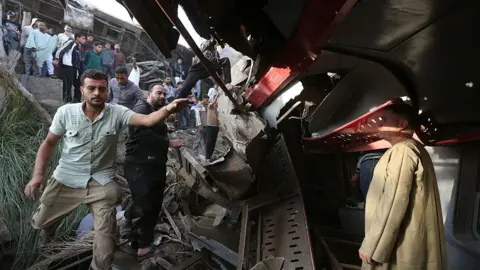

A serious train collision near the Egyptian city of Giza has claimed at least seven lives and left more than 100 people injured, in what is shaping up to be one of Egypt's most significant rail disasters in recent years. Egyptian authorities have launched a full-scale emergency response, with hospitals placed on heightened alert and cranes dispatched to clear the wreckage from the tracks.
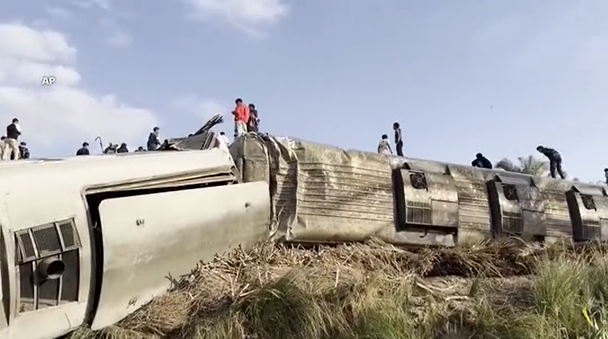
The crash occurred when a passenger train travelling from Giza to Fayoum ploughed into the rear of a stationary service that was heading south from Cairo to Aswan. The impact caused several carriages to derail and tumble down an embankment, with some overturning completely and at least one appearing to have split apart. The driver of one of the trains was among the fatalities confirmed by the transport ministry.
Rescue efforts and government response
Dramatic scenes from the crash site showed uninjured passengers and bystanders climbing into the wreckage to search for survivors, even as a large emergency response was being organised. Egypt's health minister, Dr Khaled Abdel Ghaffar, confirmed that those receiving treatment were suffering from broken bones and head injuries. The Egyptian Red Crescent mobilised teams to provide both medical aid and psychological support to victims and their families at the scene.
Egyptian President Abdul Fattah al-Sisi moved swiftly to address the disaster publicly, ordering state authorities to thoroughly investigate the circumstances surrounding the accident and to hold accountable any individuals found to have been negligent. The public prosecutor's office has warned that the death toll may yet rise as rescue and recovery operations continue. Rail services between Giza and the Upper Egypt region have been suspended while cranes work to remove the destroyed trains from the tracks.
Calls have already emerged within Egypt for the transport minister to resign over the latest fatal rail incident, reflecting deep public frustration with the state of the country's railway infrastructure. Several foreign governments offered their condolences, including Saudi Arabia's ministry of foreign affairs, which expressed solidarity with Egypt, and Turkey's ambassador to Egypt, who conveyed heartfelt sympathies to the victims and their families.
Why it matters for Ghana
Egypt and Ghana share deep continental ties through the African Union, and rail safety is a pressing concern across Africa more broadly. Ghana has long grappled with its own ambitions to revamp its railway network — a system that has largely fallen into disrepair since its colonial-era peak. The government has repeatedly announced plans to restore and expand rail infrastructure as part of broader development strategies, with the aim of reducing the burden on the country's roads and boosting economic activity.
Disasters like the one in Egypt serve as a stark reminder of what happens when rail infrastructure is neglected and safety systems are not rigorously enforced. For Ghana, which is still in the early stages of rehabilitating its rail network, the Egyptian tragedy underscores the critical importance of investing not just in laying tracks, but in robust maintenance regimes, modern signalling systems, and thorough staff training before any significant expansion of passenger rail services.
Beyond infrastructure, this tragedy also highlights the human cost of systemic failures in public transport — a lesson relevant to any African nation with aspirations of building a modern, reliable rail system.
A troubling history of rail disasters in Egypt
The collision took place near Al-Ayyat, a location that carries painful historical resonance. It was close to this same stretch of track that Egypt's deadliest ever train disaster unfolded in February 2002, when a fire engulfed a passenger train travelling from Cairo to Luxor, killing more than 370 people — with some estimates placing the toll considerably higher. Further crashes in the same general area in 2009 added dozens more fatalities to the region's grim record.
Egypt has faced persistent criticism over the years for underinvestment in its rail network and slow progress on safety reforms despite repeated fatal accidents. The latest disaster is likely to intensify pressure on the government to accelerate meaningful improvements to one of Africa's oldest and most heavily used railway systems.
Source: MyJoyOnline


Comments (0)
Be the first to comment.