
UN Peacekeeping Mission in Western Sahara Collapses After US-Russia Deadlock — What It Means for Africa
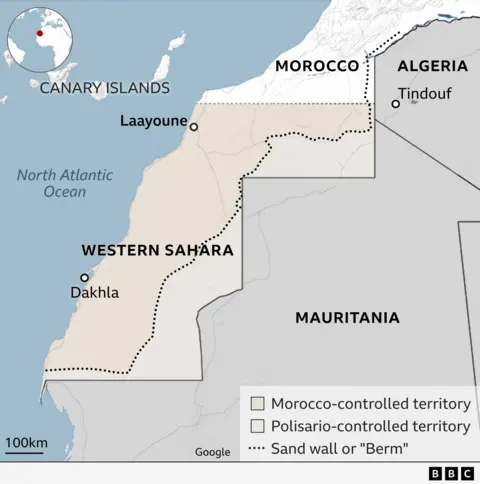

The United Nations peacekeeping mission in Western Sahara — one of the longest-running in African history — has effectively come to an end after a dramatic diplomatic deadlock between the United States and Russia paralysed the UN Security Council. The mission, known as Minurso, formally entered a liquidation period on 1 November 2025 after its mandate expired the previous day without renewal, leaving Africa's most enduring territorial dispute in an increasingly uncertain state.
What happened at the Security Council?
The United States put forward a draft resolution to extend Minurso's mandate for another year, but with significant changes. The American proposal would have removed the word "referendum" from the mission's official name and effectively made Morocco's autonomy plan — which would allow Sahrawis to govern their internal affairs while Rabat retains control of defence and foreign policy — the only basis for future negotiations. Eleven of the Security Council's fifteen members, including France and the United Kingdom, backed the US draft. Russia, however, cast a veto, arguing the proposal was too favourable to Morocco.
Russia then tabled its own counter-proposal: a straightforward extension of Minurso's mandate without altering its terms. That draft went nowhere, securing just two votes in favour. With both proposals dead, Minurso's mandate expired at midnight on 31 October 2025. UN Secretary-General António Guterres confirmed that the mission had entered a liquidation phase, with a reduced team managing the handover of military equipment and other assets.
Morocco welcomed the development. Rabat has long viewed Minurso — particularly the referendum element embedded in its mandate — as a vehicle for legitimising the Polisario Front's independence push. The collapse of the mission is widely seen as a diplomatic victory for Morocco after decades of lobbying.
The background: A conflict older than many African nations
Western Sahara's dispute stretches back to 1975, when Spain withdrew from its colonial territory on Africa's northwest coast. As Spain prepared to leave, Morocco's then King Hassan II organised the Green March — a dramatic mobilisation of approximately 350,000 Moroccan civilians who crossed into Western Sahara on 6 November 1975 to press Morocco's claim. Within days, Spain signed the Madrid Accords, transferring administrative control to Morocco and Mauritania. Mauritania later renounced its claim in 1979, but Morocco pressed on.
The Polisario Front, an independence movement founded in 1973 and backed militarily and diplomatically by Algeria, has been fighting for Sahrawi self-determination ever since. After sixteen years of armed conflict, a UN-brokered ceasefire was agreed in 1991. Minurso was established to monitor that ceasefire and organise a referendum on the territory's future — a vote that was originally scheduled for 1992 but never took place due to deep disagreements over voter eligibility.
The ceasefire itself broke down in November 2020, when Polisario declared it was resuming armed struggle. Despite this, the Security Council voted in 2025 to endorse Morocco's autonomy proposal as the "most feasible" path forward — a significant shift in the UN's public posture on the issue.
Why it matters for Ghana and Africa
For Ghana and the broader African continent, the collapse of Minurso carries real implications. Western Sahara remains the only African territory whose decolonisation question has not been formally resolved under the African Union's framework. The AU has long recognised the Sahrawi Arab Democratic Republic as a member state — a position that puts it at odds with Morocco, which rejoined the AU in 2017 despite that membership remaining a sticking point.
The end of the UN mission raises immediate concerns about the fragile ceasefire between Moroccan forces and the Polisario Front. With no international monitors on the ground, the risk of renewed armed clashes increases. Any escalation would affect regional stability in a part of the continent already under pressure from security crises further south.
There is also an economic dimension that resonates for African states. Western Sahara holds some of the world's largest phosphate reserves — a critical input for fertilisers — as well as rich Atlantic fishing grounds. Control of these resources has long been a driver of the conflict and a matter of interest for African economies dependent on agricultural inputs.
For Ghana, which has consistently championed multilateralism and peaceful resolution of African disputes through ECOWAS and the AU, the breakdown of a UN-mandated peace process is a troubling precedent. It underscores the limits of international institutions when great-power rivalry — in this case between Washington and Moscow — overrides the interests of affected African populations.
- Phosphate and fishing: Western Sahara's natural resources remain a key driver of the territorial contest.
- AU position: The African Union recognises the Sahrawi Arab Democratic Republic, keeping the bloc at odds with Morocco.
- Ceasefire risk: Without Minurso monitors, observers warn of a heightened danger of renewed armed conflict.
Source: MyJoyOnline


Comments (0)
Be the first to comment.