
Ghana's Sam George Takes Helm of African Union Digital Leadership as AU Pushes Continental Tech Integration
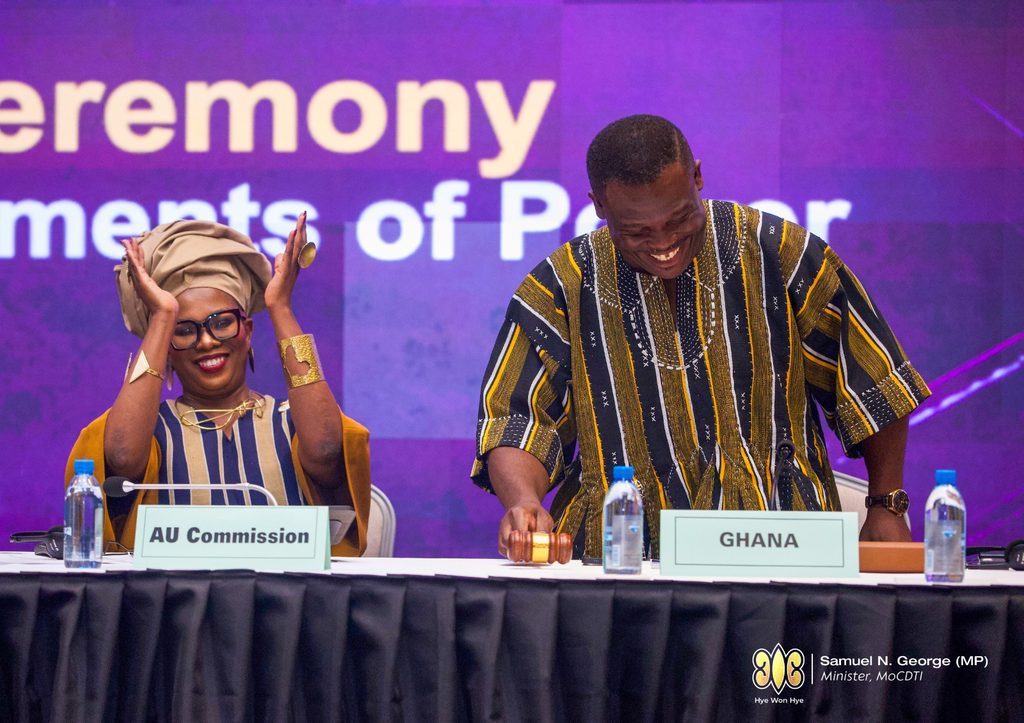

Ghana has secured a significant continental leadership role with the confirmation of Communications Minister Samuel Nartey George as Chair of the African Union Specialised Technical Committee on Communication and ICT (AU STC-ICT). The appointment, sealed at the committee's 6th Ordinary Session in Libreville, Gabon, positions Ghana at the forefront of Africa's push to accelerate digital development and reshape the continent's role in global technology conversations.
In his inaugural address, Minister George framed the two-year chairmanship not as a national honour but as a collective responsibility. "I accept such responsibility not as a privilege for one country, but as a duty to our entire union," he stated, signalling an approach centred on pan-African consensus-building rather than individual advancement.
From Policy Papers to Tangible Results
A central theme of George's opening remarks was frustration with Africa's implementation gap. The continent, he observed, has developed robust frameworks on digital transformation, artificial intelligence and data governance—yet struggles to execute them at the pace citizens demand. This critique strikes at a persistent challenge across African governments: sophisticated policy documents that fail to translate into on-the-ground change.
George identified four priority areas demanding urgent, coordinated continental action: digital connectivity, data governance, cybersecurity and artificial intelligence development. He pledged that success would be measured not by declarations adopted but by concrete deliverables achieved during his tenure—a commitment that sets a performance standard for the committee's work.
The Minister also referenced Ghana's One Million Coders Programme as a practical example of skills-building initiatives that can unlock youth potential, hinting that similar models may feature in the committee's broader implementation strategy across member states.
Why It Matters for Ghana and Africa
This appointment carries multiple layers of significance for Ghana and the broader continent. First, it elevates Ghana's profile as a serious player in digital policy leadership within Africa—a positioning that could attract tech investment, partnerships and expertise-sharing opportunities. Second, it signals that Ghana's digital initiatives are gaining continental recognition, providing domestic credibility to government programmes.
More broadly, the timing is critical. African nations are grappling with severe digital divides, with rural and low-income populations still lacking reliable internet access. Simultaneously, the continent risks being sidelined in global conversations shaping AI regulation, data governance and digital trade—areas where wealthy nations already dominate negotiations. George's metaphor was pointed: "When we negotiate alone, we are 55 separate markets, but when we negotiate together, we are a market of nearly 1.5 billion people."
For Ghana specifically, this chairmanship offers an opportunity to champion policies that align with domestic priorities—particularly expanding broadband access, developing local tech talent and building cybersecurity resilience—while positioning these as continental imperatives.
The Road Ahead
The AU STC-ICT oversees one of the most dynamic policy spaces on the continent as African governments race to keep pace with rapid technological change. Member states are under pressure to balance innovation with regulation, digital inclusion with cybersecurity, and local capability-building with international competitiveness.
George's emphasis on implementation suggests the committee will shift from aspirational planning toward enforcing accountability among member states. This approach, if executed effectively, could establish a template for how African Union technical bodies drive change—moving beyond the rhetoric that often characterises continental summits.
Over the coming two years, the success of Ghana's chairmanship will be tested by whether member states adopt bolder decisions on digital market harmonisation, agree on common cybersecurity standards, and commit to skills programmes that prepare Africa's youth for the digital economy. The stakes are high, but so is the opportunity to reshape Africa's relationship with global digital power.
Source: MyJoyOnline



Comments (0)
Be the first to comment.