
Competition watchdog flags cartel risk in cement industry's uniform surcharge plan
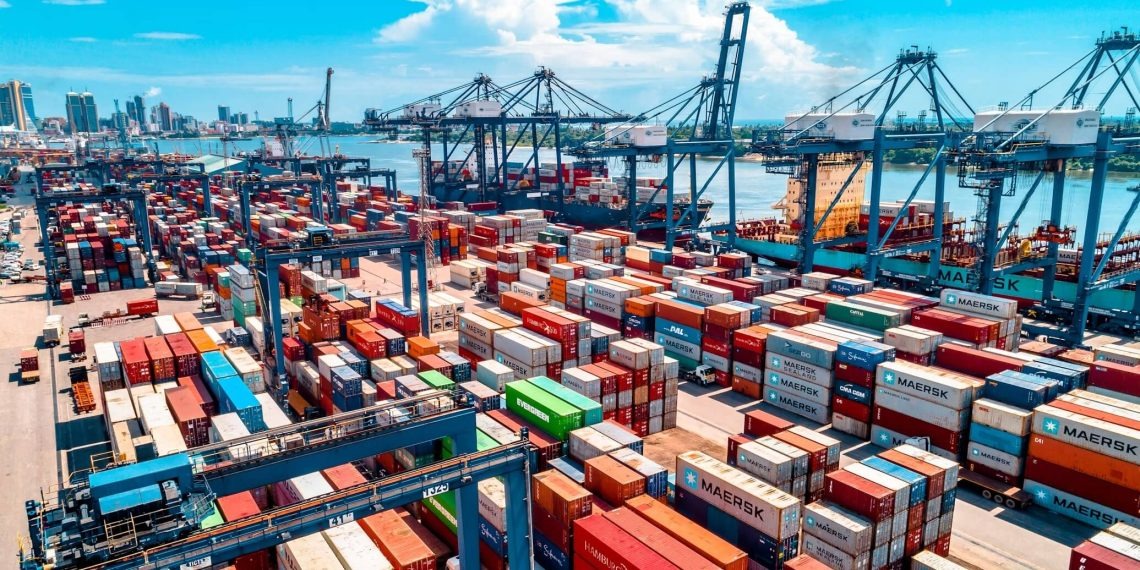

Ghana's leading competition policy think tank has sounded an alarm over the cement industry's decision to impose a uniform GH¢12 per bag surcharge to recover demurrage costs at Tema Port, arguing that the coordinated pricing move bears hallmarks of illegal cartel conduct.
CUTS International acknowledges the genuine financial pressures facing cement manufacturers. Port congestion has intensified dramatically, with vessel waiting times ballooning from an average of seven days in January to 30–40 days by August 2026, leaving the industry facing combined demurrage bills of US$45–50 million in the first eight months alone. The surcharge itself—comprising GH¢10 before tax and GH¢2 in levies—was adopted at an emergency COCMAG (Chamber of Cement Manufacturers, Ghana) meeting on 28 August and will remain in effect until 31 December, subject to monthly review.
Yet CUTS warns that however justified the cost recovery may be, the method of implementation crosses a critical legal line. When competing firms jointly agree on a uniform price element rather than calculating costs independently, the conduct mirrors textbook cartel behaviour—a serious breach under Ghana's competition framework.
Why it matters for Ghana
This dispute touches on fundamental competition principles central to Ghana's economic integrity. If rival cement manufacturers are permitted to collude on pricing under the guise of industry coordination, the precedent threatens other sectors and undermines consumer welfare. Cement is a critical input for construction, housing and infrastructure—any price coordination directly affects the cost of living for ordinary Ghanaians and projects funded by government and private developers.
The row also exposes a tension in how trade associations operate in Ghana. Industry bodies play legitimate roles advocating collectively to government on shared challenges like port efficiency. But once they shift into coordinating member pricing decisions, they transition from advocacy to anticompetitive conduct. CUTS emphasises this boundary must be rigorously maintained.
Furthermore, the issue signals weakness in Ghana's port infrastructure. While the cement makers' cost pressures are real, they reflect systemic port congestion that government, the Ghana Ports and Harbours Authority and shipping stakeholders must address urgently. Allowing price coordination to proceed unchallenged, rather than fixing the underlying problem, simply masks the real issue and burdens consumers.
Economic logic demands differentiated costs, not uniform pricing
CUTS' core argument is economically straightforward: cement manufacturers have vastly different demurrage exposures and cost structures. Each operates distinct shipping contracts, clinker volumes, vessel arrangements, inventory positions and operational efficiencies. One firm might genuinely need a GH¢12 surcharge to recover demurrage costs; another might require only GH¢8. A more efficient producer might absorb part of the additional cost to maintain market share and retain customers—this is how competition functions.
The airline industry offers a practical parallel. Fuel represents a major operating cost for all carriers, yet when fuel prices spike, airlines independently determine their own fuel surcharges rather than agreeing on a common amount. CUTS notes that Africa World Airlines and PassionAir both operating on the Accra–Kumasi route levy markedly different fuel surcharges (GH¢220 versus GH¢75 respectively) because they operate different aircraft and have distinct fuel consumption profiles. Notably, if competing airlines met and collectively fixed an identical fuel surcharge for all passengers, such conduct would trigger immediate cartel investigations.
The cement industry operates under identical competitive logic. A shared industry problem does not necessitate a shared industry price.
The path forward
CUTS does not dispute cement manufacturers' right to recover legitimate costs—businesses must remain financially viable. Nor does the organisation question COCMAG's legitimate advocacy role in pressing government and port authorities to resolve congestion, improve berth allocation and reduce vessel delays. But trade associations must erect a clear firewall between sector-wide advocacy and commercial coordination among rival members.
The broader solution requires urgent action on port efficiency. Ghana's government and GPHA must prioritise congestion relief to reduce demurrage pressures industrywide, preventing recourse to pricing coordination as a workaround. Until port performance improves, individual manufacturers should independently determine surcharges based on their own cost circumstances—not collective agreement. This preserves competition, protects consumers and maintains the integrity of Ghana's competition framework.
Source: The Ghana Report




Comments (0)
Be the first to comment.