
Cashew Traders Warn Mahama: Export Ban Will Hurt Farmers, Call for Levy Instead
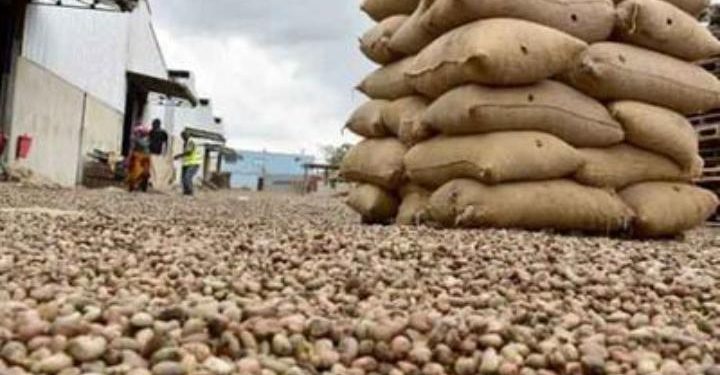

Thousands of cashew traders, exporters, and farmer associations have issued a formal warning to President John Mahama: a proposed three-month ban on raw cashew exports could devastate the very farmers the policy is meant to protect. In a joint petition submitted on 17th November 2026, the groups called on the presidency to withdraw the restriction and instead pursue a carefully designed export levy that balances the interests of local processors with those of farmers and traders.
What sparked the petition
The controversy began on 16th November 2026, when the government announced its intention to restrict raw cashew exports and introduce an export levy during the commissioning of the NADKANSCO processing factory in Techiman. The move was framed as part of a broader industrialisation push — encouraging more cashew to be processed domestically before it leaves the country, thereby adding value and creating jobs on Ghanaian soil.
However, the announcement was met almost immediately with alarm from those whose livelihoods depend on the existing trade structure. The petition, signed by Chairman Abdel Mumuni Musah and Secretary Adams Ayuba, represents approximately 3,500 traders and aggregators operating across Techiman, Nkoranza, and Kintampo, as well as farmer-led associations in Ghana's key cashew-producing communities.
Why a blanket ban could backfire
The associations are not opposed to local processing or the government's industrialisation agenda. Their objection is specifically to a blanket export restriction, which they argue would create more problems than it solves.
Among their core concerns:
- Reduced competition among buyers — with fewer buyers able to purchase raw cashew, farmers would lose bargaining power and farmgate prices could fall sharply.
- Financial exposure — traders and exporters have existing bank facilities, international supply contracts, and committed investments that a sudden restriction could place in jeopardy.
- Insufficient domestic capacity — the associations have questioned whether Ghana's local processors currently have the purchasing power and infrastructure to absorb the country's total raw cashew output. If they cannot, stockpiles would build up with no viable market, leaving farmers with unsold produce.
The petitioners are urging the government to conduct a thorough economic impact assessment and hold comprehensive stakeholder consultations before any restriction takes effect. They are also calling for formal representation of farmer, trader, and exporter associations in future policy decisions affecting the industry.
Why it matters for Ghana
Ghana is one of West Africa's significant cashew producers, with the crop providing income for a large number of smallholder farmers, particularly across the Brong-Ahafo and Savannah belt regions. The cashew sector is not simply an export commodity — it is a livelihood for rural communities that have few alternative sources of cash income during the farming season.
The government's desire to shift from exporting raw nuts to processed cashew products is economically sound in principle. Value-added exports fetch higher prices on international markets and generate more skilled employment domestically. Similar debates have played out across agricultural commodities in Africa, from cocoa in Côte d'Ivoire to cotton in Burkina Faso, with mixed results when export restrictions are introduced without adequate preparation.
The key sticking point in Ghana's case is timing and capacity. The associations' call for a structured export levy — rather than an outright ban — reflects a pragmatic middle ground. A well-designed levy could generate funds to support local processing infrastructure while keeping international market access open for traders, thereby protecting farmer incomes in the near term.
The petitioners have requested an urgent audience with President Mahama or his designated representatives to present alternative proposals. Whether the presidency responds before any policy is formally implemented will be closely watched by stakeholders across the cashew value chain.
Ghana's cashew industry stands at a crossroads — the decisions made in the coming weeks will determine whether the country's industrialisation ambitions are achieved in a way that lifts farmers up, or in a way that leaves them more vulnerable than before.
Source: The Ghana Report

Comments (0)
Be the first to comment.