
BoG Governor: Quality Economic Journalism Is a Pillar of Public Trust and National Development
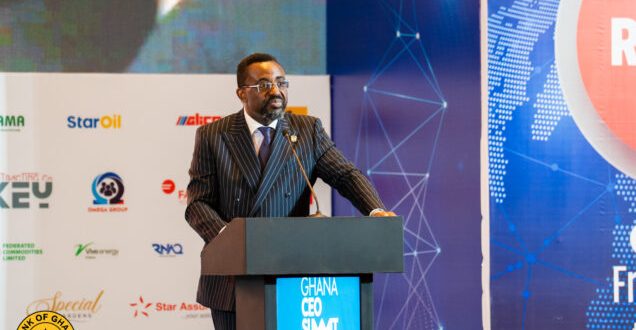

Bank of Ghana Governor Dr. Johnson Asiama has placed the media at the centre of Ghana's economic governance conversation, arguing that professional and accurate journalism is not merely a public service — it is a fundamental requirement for effective monetary policy. He made the remarks at the 30th Ghana Journalists Association (GJA) Awards, one of the most prestigious nights in the country's media calendar.
Communication as a Central Bank Responsibility
Dr. Asiama was emphatic that the era of central banks operating in secrecy is long over. In his view, transparent, sustained communication with the public — largely delivered through the media — is now as important as the policies themselves. When citizens understand why the Bank of Ghana adjusts its benchmark interest rate, why the cedi moves the way it does, or what a particular financial sector reform is designed to achieve, they are better placed to make sound financial decisions for their households and businesses.
He stressed that central bank policies are simply more effective when citizens grasp their objectives and implications. Without that understanding, even well-designed policies can be undermined by panic, speculation or misinformation — all of which can ripple through markets and livelihoods.
The Governor noted that quality journalism helps draw a clear line between verified facts and rumour, promoting the kind of informed public discourse that a functioning democracy and a stable economy both depend upon. Accurate reporting on inflation figures, exchange rate movements and financial sector reforms, he argued, translates complex institutional decisions into language that matters to everyday Ghanaians.
Why It Matters for Ghana
Ghana has experienced significant economic turbulence in recent years, including a currency depreciation that squeezed household incomes, elevated inflation that eroded purchasing power, and a debt restructuring programme under an IMF-supported recovery plan. During such periods, the way economic developments are reported can either calm or unsettle public sentiment.
Misinformation about banking sector health, for instance, can trigger depositor panic and bank runs — events that have real and damaging consequences. Conversely, clear, balanced reporting on what institutions like the Bank of Ghana are doing to stabilise the economy can help anchor expectations and build the public confidence that underpins economic recovery.
It is against this backdrop that Dr. Asiama's remarks carry particular weight. His call for stronger economic and financial journalism is not simply ceremonial praise for the press — it is a recognition that media capability directly influences how well Ghana navigates economic challenges.
Investing in Economic Journalism Excellence
Beyond the speech, Dr. Asiama pointed to a concrete institutional commitment: the Bank of Ghana's Governor's Economic and Financial Story of the Year Award. The award, he explained, was established with a straightforward objective — to invest in the development of journalists who can consistently raise the standard of economic and financial reporting in Ghana.
By recognising excellence in this specialist area, the Bank of Ghana is signalling that it views the media not as a passive receiver of press releases, but as an active partner in the country's development. High-quality economic journalism holds institutions accountable, informs policy debates and equips citizens to engage meaningfully with decisions that shape their daily lives.
- Specialist knowledge matters: Reporters covering monetary policy, banking and fiscal affairs require deep, ongoing training to do so responsibly and accurately.
- Trust is a two-way street: For the Bank of Ghana to build public trust, it must communicate clearly — and the media is the primary channel through which that communication reaches ordinary Ghanaians.
- Accountability journalism strengthens governance: When economic institutions know their decisions will be scrutinised by a capable press, the incentives for transparency and sound policy-making are reinforced.
The GJA Awards, now in their 30th year, remain a benchmark of professional recognition for Ghanaian journalists. Dr. Asiama's presence and remarks at the event underline the growing convergence between financial institutions and the media in shaping Ghana's economic narrative.
Source: The Ghana Report



Comments (0)
Be the first to comment.