
BoG Governor Defends 14% Policy Rate Hold, Cites External Risks and Inflation Concerns
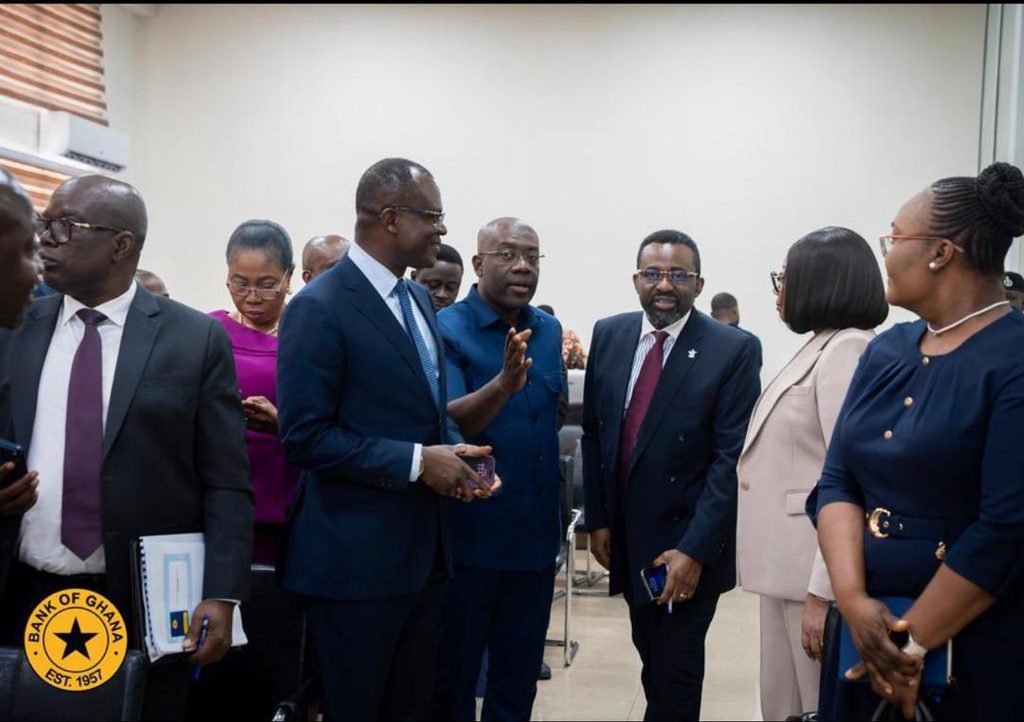

Bank of Ghana Governor Dr. Johnson Asiama has mounted a robust defence of the Monetary Policy Committee's (MPC) decision to keep Ghana's policy rate unchanged at 14% for five consecutive months between May and September 2026, telling Parliament that the hold was a deliberate and carefully considered move to protect the country's hard-won economic stability.
Dr. Asiama made the clarification when he appeared before the Parliamentary Committee on Economy and Development to present an update on monetary policy and macroeconomic developments during the first half of 2026 — a period that has drawn significant attention from economists and market analysts watching Ghana's post-IMF programme economic recovery.
Why analysts wanted a cut — and why the MPC said no
The Governor's defence comes against the backdrop of growing pressure from some market analysts who had argued that the central bank should have reduced the policy rate during this period, given that inflation fell sharply and several other macroeconomic indicators improved notably. When inflation declines, a lower policy rate would ordinarily make borrowing cheaper and stimulate further economic activity.
However, Dr. Asiama explained that the MPC's majority decision to hold steady was driven by a more cautious read of the broader picture. The Committee cited rising global oil prices and persistent domestic price pressures as key risks that could easily reverse gains if monetary conditions were eased prematurely. At the September 2026 MPC meeting in particular, members flagged external vulnerabilities as a primary concern, noting that inflation risks had not fully dissipated despite the headline numbers looking encouraging.
This kind of tension — between easing policy to support growth and holding firm to guard against inflation — is a central challenge for central banks everywhere, and the Bank of Ghana's position reflects a conservative approach that prioritises durability of stability over short-term stimulus.
What this means for Ghana's economy
Despite the policy rate debate, the macroeconomic picture Dr. Asiama painted before Parliament was broadly positive. Ghana's economy grew by 6.4% in the first quarter of 2026, a strong figure that reflects the combined efforts of fiscal authorities and the central bank. Inflation fell to 3.2% in March 2026, sitting well below the Bank of Ghana's target band of 6–10%, which is a significant milestone for a country that was grappling with inflation above 50% just a few years ago.
On the external front, Ghana recorded a trade surplus of US$8.81 billion and a current account surplus of US$5.1 billion — healthy numbers that suggest the country's export sector, including gold and oil revenues, continues to perform strongly. International reserves climbed to US$12.94 billion, equivalent to five months of import cover, providing a meaningful buffer against external shocks.
The banking sector also showed encouraging signs of recovery and growth. The average lending rate dropped sharply from 27% to 15.6%, making credit more accessible to businesses and individuals. Private sector credit grew by 41.2%, total banking sector assets rose by 30.7% to GH¢502.4 billion, and the Capital Adequacy Ratio stood at a healthy 20.4%. Non-Performing Loans also declined from 23.1% to 16.1%, signalling improved loan quality across the sector.
Reforms and the road ahead
Beyond the headline numbers, Dr. Asiama outlined several structural reforms the Bank of Ghana has introduced to strengthen the financial system over the long term. These include a uniform cash reserve ratio of 20% for banks, a more transparent and rules-based framework for foreign exchange interventions, and the Ghana Accelerated National Reserve Accumulation Programme — known as GANRAP — which sets an ambitious target of building reserves equivalent to 15 months of import cover by 2028.
If achieved, that target would represent a dramatic improvement in Ghana's resilience to external shocks — a vulnerability that has historically triggered economic crises.
The Governor closed his parliamentary appearance by reaffirming the Bank of Ghana's commitment to price stability, transparency, and accountability, signalling that the institution intends to maintain its current disciplined approach even as external conditions evolve.
Source: MyJoyOnline


Comments (0)
Be the first to comment.