
Beyond Bulldozers and Arrests: Why Ghana's Galamsey Fight Needs an Economic Rethink


Ghana's galamsey menace has endured decades of military crackdowns, equipment seizures and presidential pledges — yet polluted rivers, degraded farmland and poisoned communities remain a stubborn reality across the country's mining belt. The reason, analysts argue, is straightforward: the country has been treating a deep economic problem as though it were purely a policing challenge. Until the incentives that make environmental destruction profitable are corrected, enforcement will remain an expensive holding action rather than a lasting solution.
A Classic Market Failure Playing Out in Ghana's Rivers
The economics behind galamsey follow a pattern that scholars call the tragedy of the commons — a concept introduced by ecologist Garrett Hardin in 1968 and later refined by Nobel Prize-winning economist Elinor Ostrom. When a shared resource such as a river or watershed is open to exploitation, individual actors have every incentive to extract as much as possible, even when the collective result is ruin for all.
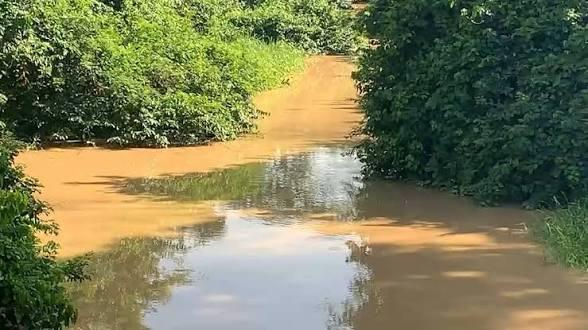
Along rivers like the Pra, Birim and Ankobra, this dynamic plays out daily. A galamsey operator earns income from gold but does not pay for the sedimentation, chemical pollution and water contamination left behind. Those costs fall on downstream communities, water utilities, cocoa farmers and, ultimately, Ghanaian taxpayers. Economists call these unaccounted burdens negative externalities — costs imposed on others that never appear in the operator's calculations.
A 2024 peer-reviewed study of selected Ghanaian farming communities found that 38 per cent of surveyed farmers reported mining-related land degradation, and a striking 79 per cent of those affected said degraded land had not been reclaimed. While these are localised findings rather than national figures, they point to the steady erosion of Ghana's agricultural and natural capital — assets that underpin rural livelihoods and food security.
The government announced GH¢200 million in October 2026 to reclaim 5,000 acres of mining-degraded land beginning in 2027. While environmental restoration is necessary, the arrangement effectively asks taxpayers to repair damage while those who caused it keep their profits — a dynamic that economic logic suggests will simply encourage more destruction.
Why Enforcement Alone Cannot Solve the Problem
Arrests, military operations and excavator seizures remain essential tools — especially in protected forests and river reserves — but they address symptoms rather than causes. Illegal mining persists wherever the expected profits comfortably outweigh production costs and the realistic risk of meaningful punishment. When enforcement targets only labourers at mining sites while financiers, gold buyers and commercial intermediaries face little consequence, the business model survives even as individual operators are replaced.
A more complete measure of success would look beyond arrest tallies and confiscation figures to ask harder questions: Are Ghana's rivers running cleaner? Is degraded farmland being restored? Is there a sustained, verifiable decline in destructive mining activity? Without those outcomes, enforcement spending — however significant — does not translate into lasting change.
Credible sanctions, enforceable rehabilitation liabilities and sustained monitoring of financiers and buyers must accompany any physical enforcement regime. The goal is to raise the real cost of illegal mining until it is no longer the most attractive economic option available.
What This Means for Ghana — and the Role of GoldBod
The Ghana Gold Board (GoldBod) represents one of the most promising levers available to policymakers because it controls access to Ghana's formal gold market. GoldBod already has a responsible-sourcing policy covering environmental compliance, pollution controls and supplier due diligence. The institution's Chief Executive acknowledged in August 2026 that GoldBod could not yet determine what proportion of its purchases came from responsibly mined sources, though a national gold-traceability system is planned.
The critical next step is moving from tracing where gold was mined to verifying how it was produced. Practically, this means:
- Purchasing only from licensed operations whose environmental compliance has been independently verified — a licence alone is not sufficient.
- Linking each gold lot to mine-level records covering environmental permits, pollution-control performance and rehabilitation obligations.
- Suspending access to authorised purchasing channels for operations found in serious violation, subject to fair review.
- Cross-checking transactions against plausible mine production data and independent audits to prevent legally sourced gold from masking illegally mined supplies.
- Publishing regular public reports disclosing what share of GoldBod purchases is traceable to environmentally compliant sources.
This approach would give responsible, licensed miners a competitive advantage — formal market access — while making it harder and costlier for destructive operators to sell their gold. Combined with robust anti-smuggling measures and controls on illicit buyers, it could begin to shift the economics of mining in Ghana's favour.
Galamsey will not be solved by bulldozers and arrests alone. Ghana needs a strategy that makes environmental responsibility the rational economic choice — not a burden that only responsible operators carry while others profit freely. The institutions, policies and resources to begin that shift already exist. The question is whether the political will to deploy them seriously can be sustained.
Source: MyJoyOnline



Comments (0)
Be the first to comment.