Behind the Bench: How Ghana's Judicial Staff Keep the Supreme Court Running
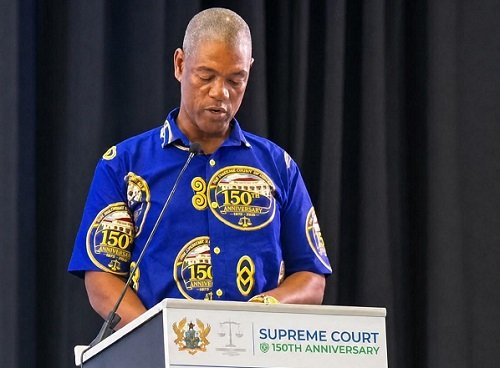
Ghana's Supreme Court relies on far more than its justices to deliver justice. At a Grand Durbar marking the court's 150th anniversary, the President of the Judicial Service Staff Association of Ghana (JUSAG), Samuel Afotey Otu, underscored the critical yet frequently invisible contributions of the administrative and support staff who enable the institution to function.
Speaking at the milestone celebration, Mr Otu emphasised that every judgment, hearing, and administrative process depends on a dedicated team working behind the scenes. "It is important to recognise that the Supreme Court is not made up of the Justices alone," he said, noting that these staff members ensure the smooth and efficient operation of the nation's highest court. The message resonated as a timely reminder that institutional excellence requires more than judicial talent alone.
The Unsung Contributors to Justice
While justices craft landmark rulings, it is the records managers, administrative officers, court clerks, security personnel, and support staff who translate judicial decisions into tangible outcomes. These individuals manage case files, schedule hearings, maintain court records, process applications, and handle the logistical complexities that allow the court to function daily. Their work, though essential, often goes unrecognised in public discourse about the judiciary.
Mr Otu called for this recognition to extend beyond celebratory moments. He stressed that JUSAG members remain committed to professionalism and excellence, and that their contributions over decades have been "immense" to the administration of justice in Ghana. The association's presence at the anniversary durbar underscored the need for judicial staff to be valued partners in the justice system, not merely background functionaries.
Building a Stronger, More Responsive Judiciary
Beyond honouring the past, Mr Otu articulated a vision for Ghana's judiciary that addresses current and future challenges. He called for adequate resourcing of the courts, technological advancement, and responsiveness to public needs. Investment in human capital—both judges and support staff—remains critical to this vision.
He highlighted four key priorities: improving the welfare of both judges and judicial officers, embracing technological innovation to enhance transparency, building public confidence in the system, and ensuring a motivated workforce committed to excellence. These points reflect broader concerns about the judiciary's capacity to handle Ghana's caseload efficiently and to maintain public trust in its institutions.
Why It Matters for Ghana
Ghana's judiciary faces mounting pressure. Court backlogs, lengthy case delays, and public perception of inefficiency have long plagued the system. The 150th anniversary of the Supreme Court provided an opportunity to reflect on institutional strength, but also to identify what needs improvement. Otu's message highlights that modernisation and efficiency cannot be achieved by focusing only on judicial appointments or training. The entire ecosystem—including staffing levels, welfare, technology infrastructure, and working conditions—must be strengthened.
For ordinary Ghanaians seeking justice, this matters significantly. A court system that is adequately staffed, well-resourced, and technologically equipped can process cases faster and more fairly. When judicial staff are motivated and valued, the quality of administrative support improves, reducing unnecessary delays. The Supreme Court's sesquicentennial offers a moment not just to celebrate achievement, but to commit to systemic improvements that benefit everyone who relies on the courts.
Mr Otu's call for unity among all stakeholders—guided by integrity and shared commitment to justice—reflects the recognition that the judiciary cannot operate in isolation. Support from the executive, adequate parliamentary budget allocation, and public understanding of the system's constraints are equally important to its success.
Source: The Ghanaian Times



Comments (0)
Be the first to comment.