
BECE Age Row: Private Schools Demand Adults Face Sanctions Too as Debate Over Gifted Pupils Heats Up
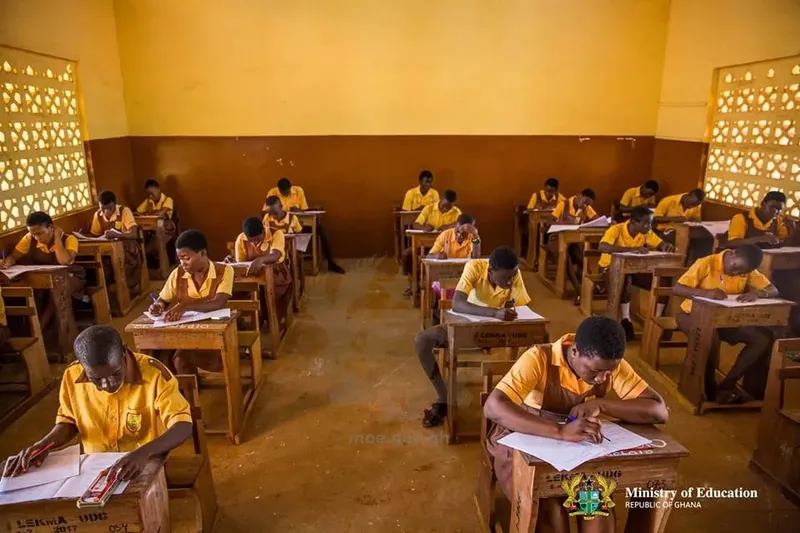

Ghana's private schools association, GNACOPS, has thrown its weight behind the Ghana Education Service's decision to impose a two-year ban on pupils who sit the Basic Education Certificate Examination (BECE) before the approved age — but with a firm caveat: the adults who facilitated those entries must not walk away unpunished. The position has reignited a broader national conversation about accountability in the education system, as well as the rights of exceptionally gifted children.
GNACOPS: Hold Schools and Parents Responsible
The Ghana National Council of Private Schools (GNACOPS) argues that it is fundamentally unjust to sanction young pupils while the school administrators who registered them early and the parents who pushed for or consented to such entries face no consequences whatsoever. The association maintains that headteachers and proprietors of schools found to have entered underage candidates should face disciplinary measures, including potential suspension of their operating licences. Similarly, parents who knowingly circumvented age requirements ought to be formally cautioned or penalised.
GNACOPS's stance reflects a wider concern that placing the full burden of punishment on children — who in many cases were simply following the decisions of adults around them — amounts to an unfair and perhaps legally questionable approach. The two-year ban means affected pupils cannot resit the BECE until two years after their initial, irregular attempt, a penalty that could significantly delay their secondary school education and life prospects.
Why It Matters for Ghana
The BECE is one of the most consequential examinations in a Ghanaian child's educational journey, serving as the gateway from Junior High School to Senior High School. The minimum age requirement exists to ensure that candidates are developmentally ready — academically, emotionally and socially — for the rigours of secondary education and beyond.
Early entries have long been an open secret in parts of Ghana's basic education sector, driven by a mix of parental ambition, institutional pressure to boost pass-rate statistics and, in some genuine cases, children who are academically far ahead of their peers. When schools register underage pupils, they are exploiting administrative loopholes that the Ghana Education Service is now moving firmly to close.
The implications of leaving adults unaccountable are significant. If only pupils are penalised, school owners face no financial or reputational disincentive to repeat the practice, and parents who believe their child is exceptionally bright may continue to push boundaries. Critics warn that without systemic accountability, the ban on pupils becomes a performative measure rather than a genuine structural fix.
The Case for a Gifted Pupils Pathway
Not everyone is convinced that a blanket ban is the right tool. Parents of children who genuinely excel academically, as well as a lecturer from the University of Education, Winneba, have called on authorities to consider creating a formal, regulated pathway for gifted pupils to sit the BECE early. Their argument is that a one-size-fits-all age policy risks holding back children with exceptional abilities, potentially dampening their enthusiasm for learning and denying the country the full benefit of outstanding young talent.
Proponents of a gifted-pupil route point to international precedents where education systems allow accelerated progression under strict assessment criteria, parental consent and psychological evaluation. They suggest Ghana could design a transparent application process — vetted by education professionals — that distinguishes between genuine academic giftedness and parental or institutional opportunism.
The Ghana Education Service has yet to formally respond to calls for such a framework, and it remains to be seen whether policy makers will seek a middle ground. For now, the two-year ban stands, and GNACOPS's demand for adult accountability adds fresh pressure on the GES to broaden the scope of its enforcement. How the authorities respond will send a strong signal about whether Ghana is serious about fixing the structural problems in its basic education system, or merely punishing the most vulnerable actors in the chain.
Source: 3News

Comments (0)
Be the first to comment.