Asantehene pushes GRA to tap informal sector, plug revenue leaks
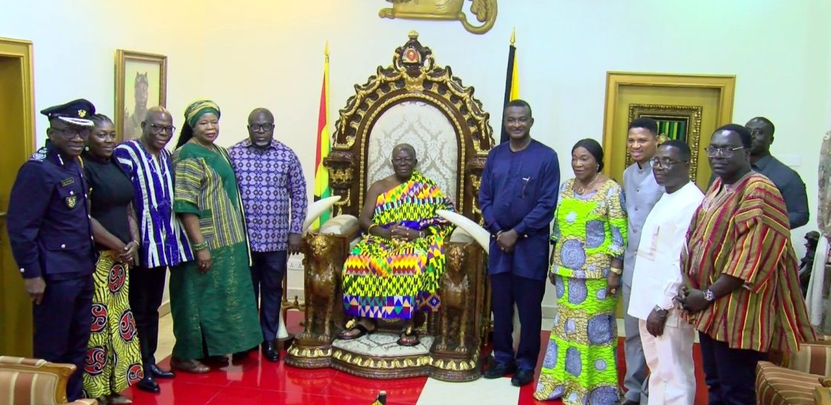
Ghana's informal economy—a thriving but largely untaxed sector—holds significant potential to boost government revenue, according to Asantehene Otumfuo Osei Tutu II, who has called on the Ghana Revenue Authority (GRA) to prioritise integrating informal traders and small businesses into the national tax system.
Speaking during a courtesy visit by the GRA Board and Management to Manhyia Palace, the Asantehene acknowledged recent improvements in revenue collection but argued that Ghana cannot sustainably finance development on external funds alone. He stressed that domestic taxation must be strengthened and expanded beyond the formal sector where most collection efforts have historically concentrated.
Closing the gap in informal sector taxation
The Asantehene identified a critical blind spot in Ghana's tax administration: millions of economic actors—hairdressers, mechanics, taxi drivers, traders and artisans—operate largely outside the tax net. While formal sector employees and registered businesses face regular deductions and compliance requirements, the informal sector remains largely untaxed despite generating substantial income.
Otumfuo proposed a practical approach: encouraging informal workers to form cooperatives. By bringing traders together into organised groups, the GRA could more easily identify economic activity, provide financial education, and simplify tax registration and payment processes. This model has shown success in other African countries where cooperative-based tax registration has improved compliance among micro and small enterprises.
The Asantehene also called for innovative collection methods tailored to the informal sector's realities—such as mobile payment integration, fixed-point collection at markets, and simplified tax obligations for low-income earners.
Why it matters for Ghana
Ghana faces a persistent fiscal challenge: government revenue collections rarely exceed 15–17% of GDP, below the target needed to fund essential services without heavy borrowing. Closing this revenue gap is critical as the country navigates debt sustainability concerns and seeks to reduce dependence on donor support and international loans.
The informal sector accounts for roughly 40% of Ghana's economic output but contributes minimally to tax revenue. Bringing even a fraction of informal traders into the tax system could unlock billions of cedis annually. This revenue could be redirected to healthcare, education, infrastructure and social programmes—areas consistently underfunded due to budget constraints.
Additionally, formalising the informal sector through taxation encourages business registration, improves financial record-keeping, and reduces opportunities for corruption and smuggling. A more transparent economy strengthens overall governance and attracts legitimate investment.
GRA reform efforts and obstacles
The GRA Board Chairman, Ricketts Hagan, outlined ongoing reforms, including the introduction of the Publican AI system, designed to improve data collection and revenue administration. However, the GRA's modernisation efforts have faced pushback from businesses struggling to adapt to new digital systems and stricter compliance measures.
The Commissioner-General has appealed for public understanding and support as these systems are implemented, acknowledging initial confusion but arguing that stakeholders are gradually becoming comfortable with the new approach.
For the reforms to succeed, the GRA will need to balance aggressive revenue mobilisation with taxpayer education and reasonable compliance timelines—particularly for informal operators unfamiliar with formal tax obligations.
Source: MyJoyOnline



Comments (0)
Be the first to comment.