
André Ayew breaks silence on Gyan's 2010 World Cup penalty: 'The team stood by him'
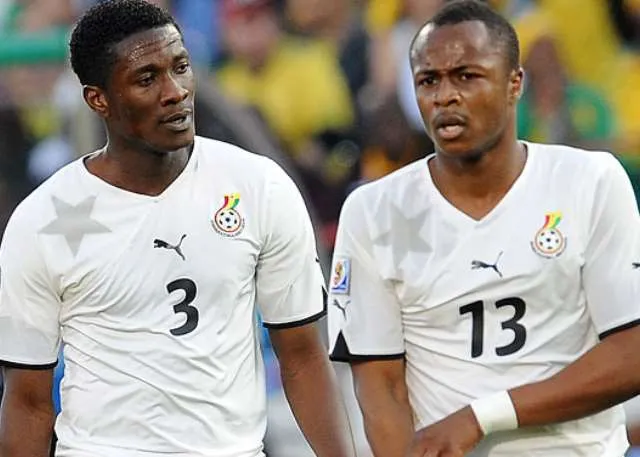

André Ayew has moved to clear the air around one of Ghana football's most painful memories, defending striker Asamoah Gyan following his missed penalty in the 2010 FIFA World Cup quarter-final against Uruguay. Speaking about the incident that has haunted the nation for over a decade, the ex-skipper insists Gyan deserves sympathy rather than blame for the loss that ended Ghana's fairytale run in South Africa.
The penalty miss occurred during the knockout stage of the tournament, with Uruguay ultimately progressing after the dramatic encounter. The moment became etched in the minds of millions of Ghanaians, often cited as a turning point that prevented the Black Stars from reaching an African nation's first-ever World Cup semi-final at the time.
Standing together through the pain
Ayew's intervention reveals the internal solidarity within the 2010 squad that often goes unreported. Rather than descending into recrimination, he portrays a team environment where players understood the immense pressure placed on a single moment. His defence suggests that, contrary to public perception, the squad did not fracture along lines of blame, but instead recognised the collective nature of the competition.
The 2010 World Cup represented a watershed moment for Ghana football. The nation had invested enormous hope in the Black Stars, and the quarter-final represented uncharted territory for African representation at the tournament. The pressure on individuals like Gyan was extraordinary—carrying the dreams of a nation on one's shoulders in such circumstances transcends the usual pressures of club football.
Why it matters for Ghana
This revelation carries significance beyond nostalgia. Ghana's football culture has a tendency to isolate individual players for high-profile failures, sometimes disproportionately. Ayew's perspective offers a corrective narrative: that football is a collective sport where outcomes depend on eleven players, not one moment. His willingness to publicly defend Gyan sends a message about accountability and unity in sports—values that resonate beyond the pitch.
The 2010 World Cup remains a defining reference point for Black Stars fans. Gyan went on to become Ghana's all-time leading scorer at the Africa Cup of Nations, proving his quality many times over. Yet the penalty miss has periodically resurfaced in public discourse, sometimes unfairly overshadowing his considerable achievements.
For younger generations of Ghanaian footballers, Ayew's comments provide an important lesson: that individual mistakes in sport should not result in permanent scapegoating. This culture of collective responsibility, rather than personal vilification, could foster healthier team dynamics in Ghanaian football moving forward.
Ayew's intervention also reflects the maturity that comes with time and reflection. Removed from the immediate aftermath of disappointment, he can articulate a more nuanced perspective—one that acknowledges both the pain of elimination and the human reality that penalties are inherently uncertain, even for exceptional strikers.
Source: 3News

Comments (0)
Be the first to comment.