Africa's industrialisation dream stalled without power, ECOWAS Bank warns at Accra conference
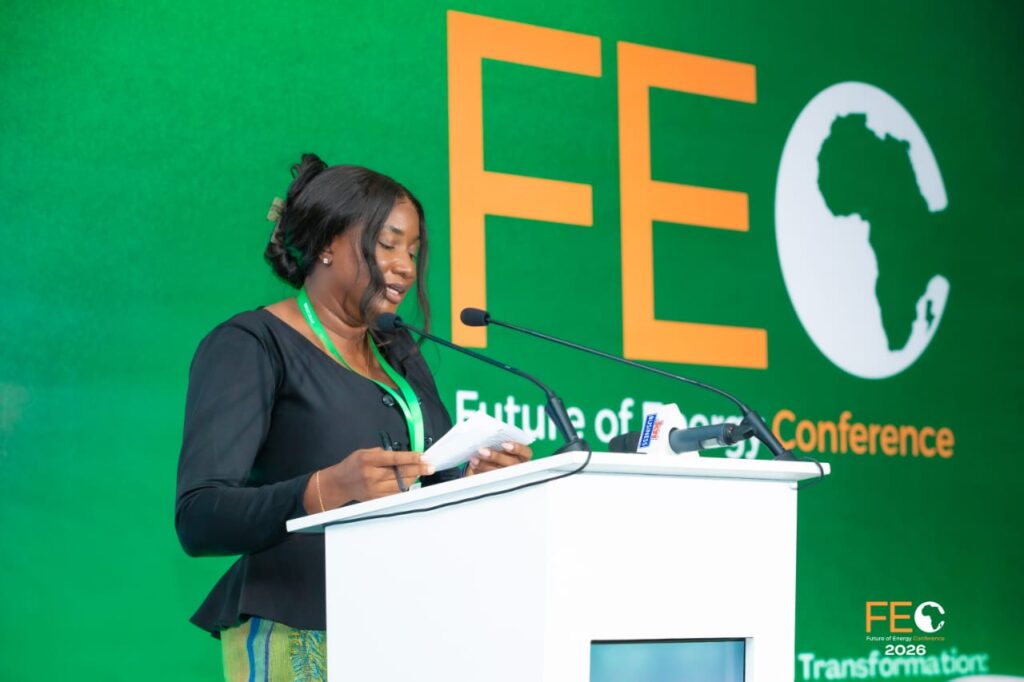
Africa's ambitious plans to industrialise and create wealth from its vast natural resources will fail unless the continent urgently addresses its crippling energy deficit, the President of the ECOWAS Bank for Investment and Development warned at a major conference in Accra this week.
Dr George Nana Agyekum Donkor drew a stark contrast between Africa's global role and its domestic reality: the continent supplies the world with cocoa, gold and bauxite whilst over 600 million Africans lack reliable electricity access. "We have lit up other continents while over 600 million of our own people remain in darkness," he told delegates at the Future of Energy Conference 2026. "Africa cannot industrialise in the dark."
The conference, themed "Powering Africa's Industrial Transformation: Energy Systems for Value Addition and Competitiveness", brought together policymakers and investors to tackle a fundamental constraint on African development. For decades, the continent has remained trapped in a cycle of exporting raw materials at low cost and importing expensive finished goods—a pattern that stifles job creation, prevents value addition, and perpetuates economic dependency.
The scale of investment required
Breaking this cycle requires transformative action. According to the African Development Bank, Africa needs approximately $25 billion annually just to achieve universal electricity access, underscoring the massive capital mobilisation required.
EBID has committed over $1 billion to energy projects as of June 2026, spanning electricity generation (both conventional and renewable), transmission, distribution, and fuel procurement. More ambitiously, the bank plans to deploy at least $2 billion to the energy sector by 2030 under its Growth, Resilience and Optimisation Strategy.
However, Dr Donkor emphasised that investment alone is insufficient. Policymakers across West Africa and the broader continent must coordinate strategically, implement deliberate policies, and build robust energy infrastructure capable of supporting manufacturing and productive industries.
A four-pillar strategy for Africa's energy future
Dr Donkor outlined a comprehensive approach to closing Africa's energy gap:
- Strengthening national and regional electricity grid systems to reduce transmission losses and improve reliability
- Deploying large-scale renewable energy projects to harness solar, wind and hydroelectric potential
- Exploiting Africa's domestic natural gas reserves to provide baseload power whilst reducing import dependency
- Expanding embedded generation within industries themselves, enabling distributed energy solutions
The strategy rejects the notion of relying on a single energy source. Instead, it advocates for a mixed energy system combining reliable grid electricity, renewables, natural gas and distributed solutions—all calibrated to deliver affordable, dependable power to manufacturers and exporters.
Why it matters for Ghana
Ghana stands at the centre of this energy transition narrative. The country possesses significant gold reserves, cocoa production, bauxite deposits and growing minerals exploration, yet continues to export these raw commodities rather than processing them locally into finished goods. Energy constraints have historically limited Ghana's ability to attract and retain manufacturing investment, particularly in mineral processing and value-added sectors.
The ECOWAS Bank's strategic pivot toward energy investment directly benefits Ghana as a member state. Similarly, Ghana's own energy mix—comprising hydroelectric, thermal and increasingly renewable capacity—offers a model for regional coordination. However, speakers at the conference made clear that Ghana, like other African nations, must do more: integrating its energy planning with industrial policy, ensuring competitive electricity pricing for manufacturers, and investing in skills and supply chains needed to transform raw materials into competitive products.
The Africa Mineral Development Centre reinforced this message, warning that minerals alone do not create industrialisation. What Africa needs, according to interim Director-General Claudine Sigam, is "competitive energy to transform minerals into materials, industrial capabilities to transform materials into products, and markets capable of sustaining those industries."
For Ghana and West Africa, the path forward is clear: energy security and industrial transformation must be pursued as a single integrated agenda, not as separate policy domains.
Source: MyJoyOnline

Comments (0)
Be the first to comment.